



Deep Buttoned Velvet Seat
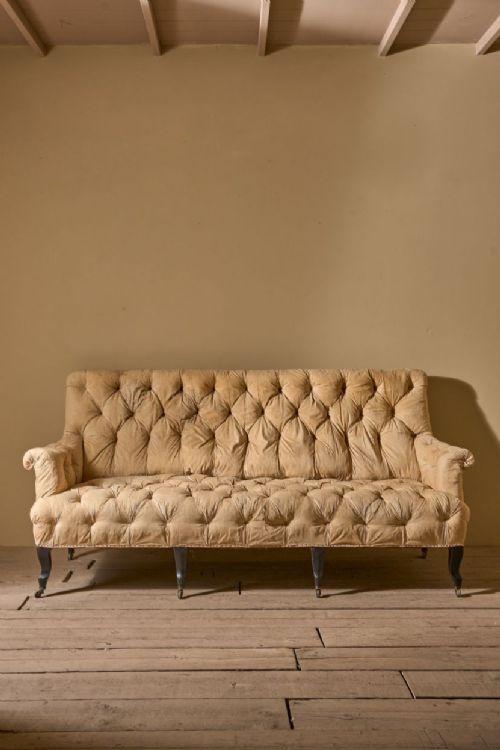
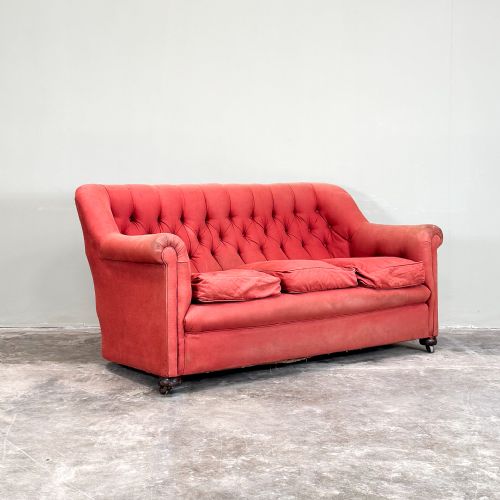
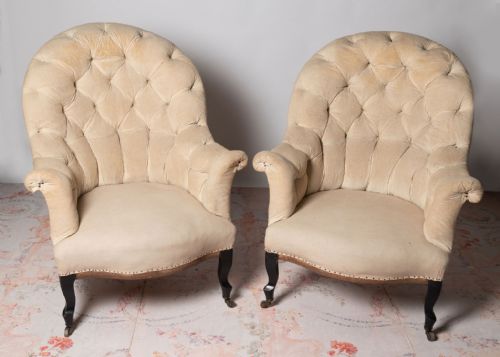
A deep buttoned velvet seat brings tactile depth and formal upholstery to a room, ranging from compact nursing chairs to expansive country house sofas.
Deep Buttoned Velvet Seat
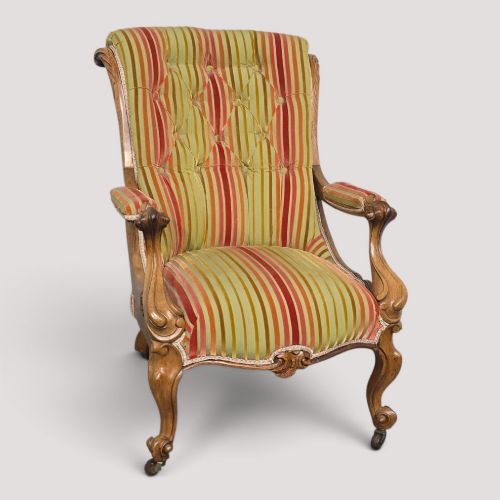
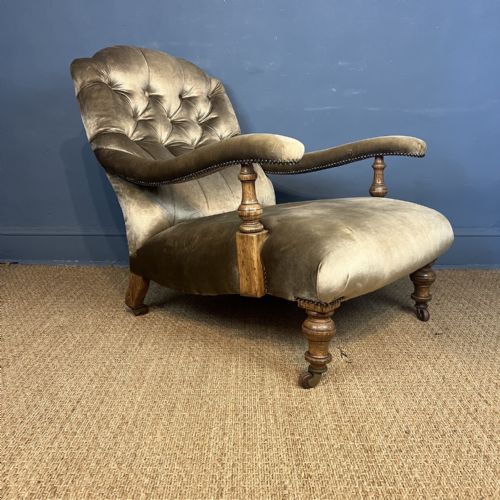
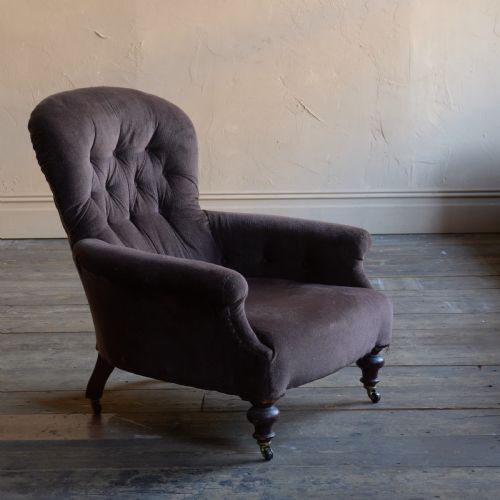
A deep buttoned velvet seat encompasses a variety of seating forms designed for comfort and reception, including armchairs, library chairs, slipper chairs, and larger settees. When you search for a deep buttoned velvet seat, you encounter pieces spanning the Regency, Victorian, and Edwardian periods, alongside later twentieth-century iterations.
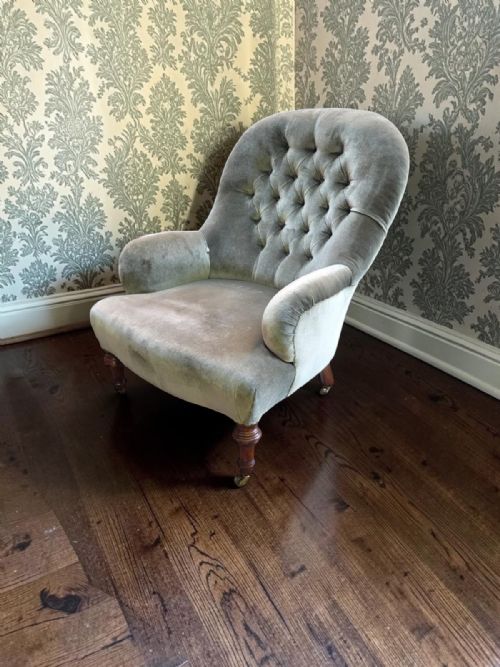
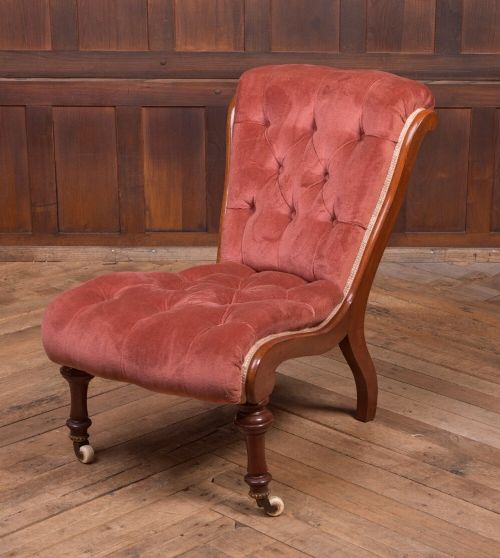
The most common formats on this page are nineteenth-century armchairs and chaise longues featuring tufted upholstery. These pieces demonstrate diverse silhouettes such as balloon backs, spoon backs, and tub chairs framed in woods like mahogany, walnut, and rosewood.
How they were made
Makers constructed the foundational frames from hardwoods including mahogany, walnut, rosewood, oak, and ebonised wood, joined to support heavy upholstery. Brass elements often appeared on castors or decorative detailing.
Upholsterers applied velvet over dense padding, pulling the fabric through with deep tufting secured by stitches to create the characteristic indented pattern across the seat and back.
Listings feature hardwood frames in mahogany, walnut, rosewood, and oak, alongside ebonised finishes across nineteenth-century and Edwardian periods.
What varies in quality
Quality rests in the integrity of the timber frame and the precision of the upholstery work. Finer examples retain robust hardwood frames that support the tension of deep buttoning without compromising structural stability.
The distinction between standard pieces and exceptional ones lies in the proportion of the silhouette and the quality of the timber grain, particularly on exposed rosewood or mahogany framing.
Howard and Sons·Gillows
The Deep Buttoned Velvet Seat Glossary
- Deep buttoned
- Upholstery technique where buttons are pulled deep into the padding to form a geometric pattern of indents. This method secures the internal stuffing and creates a textured surface.
- Velvet
- A woven tufted fabric with a dense pile that yields a soft texture. It reflects light differently depending on the direction of the pile.
- Spoon back
- An upholstered chair back shaped like the bowl of a spoon, popular during the Victorian period. It curves to fit the contours of the sitter.
- Balloon back
- A rounded chair back resembling the shape of a balloon, frequently seen on nineteenth-century nursing and bedroom chairs. The wooden frame arches outward at the top.
- Chaise longue
- An upholstered sofa shaped for reclining, combining a chair with an extended seat. Nineteenth-century examples often feature a single scrolled end.
Deep Buttoned Velvet Seat: Frequently Asked Questions
How do I identify a Victorian deep buttoned chair?
Victorian examples typically feature turned wooden legs, often with brass castors, supporting walnut or mahogany frames with curved balloon or spoon backs. The upholstery relies on dense stuffing secured by tight buttoning.
Look at the woodwork beneath the padding and the profile of the arms to distinguish mid-nineteenth-century proportions from later revival pieces.
What is the difference between a nursing chair and a slipper chair?
Nursing chairs were designed lower to the ground for comfort during domestic tasks, frequently featuring balloon or spoon backs in walnut or mahogany. Slipper chairs share a low profile but generally possess a more streamlined upholstered form without prominent wooden framing around the back.
Both sit lower than standard library or fireside armchairs.
How should I care for velvet upholstery?
Velvet requires gentle brushing with the pile to maintain the nap and prevent flattening. Keep these seats away from direct sunlight to preserve the colour of the fabric.
Professional cleaning is recommended for deep maintenance to avoid damaging the delicate pile and the underlying button tension.
Where were these pieces used historically?
These seats found placement in libraries, drawing rooms, and bedrooms of large country houses and urban residences. Armchairs served for reading and fireside relaxation, while chaise longues and ottomans offered spaces for reclining.
Larger settees accommodated multiple guests in formal reception spaces.