





Rose Velvet Salon Chair
These rose velvet salon chairs bring distinct Victorian and Edwardian seating into modern interiors.
Rose Velvet Salon Chair
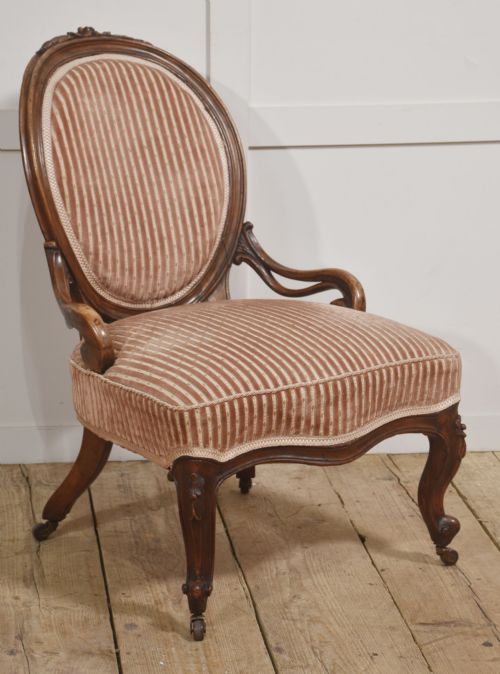
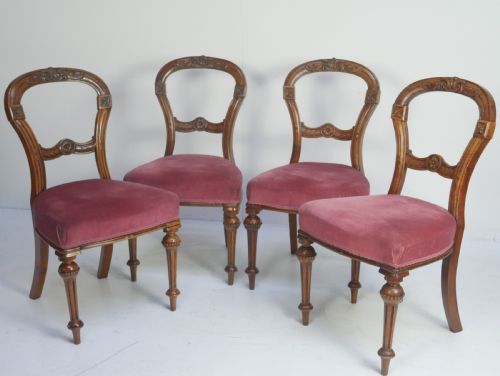
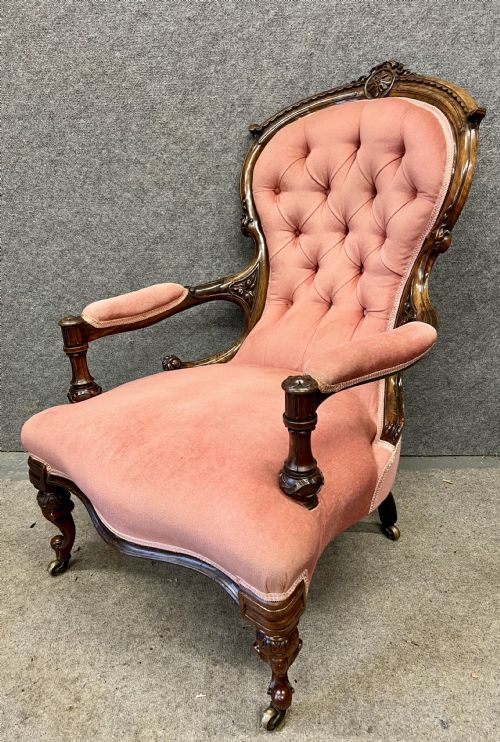
When you search for a rose velvet salon chair, you are looking at upholstered seating created during the nineteenth century and the early twentieth century. The selection ranges from Victorian open armchairs and spoonback fireside chairs to Edwardian dining sets.
Most examples found here utilise walnut or mahogany frames paired with pink or red velvet upholstery. These forms served as parlour, bedroom, and nursing chairs in period homes, designed for comfort and social display.
How they were made
Cabinetmakers constructed the supportive frames using hardwoods such as walnut and mahogany, frequently incorporating carved details into the woodwork. Some workshop pieces feature exposed show frames, shaped oval backs, and button-backed upholstery.
Finishing touches often included turned wooden legs supported by brass castors or ceramic wheels. The upholstery work relied on traditional padding methods secured beneath velvet textile coverings.
Some nineteenth-century chairs are attributed to Holland and Sons, showing that even formal sitting rooms once welcomed a touch of pink.
What varies in quality
The distinction between standard production and higher workshop output rests in the depth of the wood carving and the balance of the proportions. Attributions to established makers lift certain pieces above anonymous factory output.
Frame integrity and the crispness of the carved walnut or mahogany details dictate the standing of individual chairs. Show frames with well-defined contours and substantial hardwood construction represent the more accomplished end of the range.
Holland and Sons
The Rose Velvet Salon Chair Glossary
- Spoonback
- A chair back curved in three dimensions to resemble the bowl of a spoon, designed to fit the human spine. This form is particularly common in Victorian nursing and fireside chairs.
- Show frame
- A wooden structural frame left entirely or partially exposed around the upholstered elements of a chair. It allows the cabinetmaker's carved woodwork to remain visible.
- Balloon-back
- A dining or salon chair back shaped like a continuous rounded oval loop, popular during the mid-Victorian era. The wood is often carved with floral or scroll motifs.
- Open armchair
- A wooden armchair featuring un-upholstered open sides and armrests. These pieces were typically used in parlours and reception rooms.
Rose Velvet Salon Chair: Frequently Asked Questions
What is a salon chair?
A salon chair is a light, decorative seat designed for entertaining guests in a formal reception room or parlour.
These pieces typically feature exposed wooden frames and comfortable upholstered seats, making them both functional and ornamental.
How do I identify a Victorian armchair?
Victorian armchairs are identified by dark hardwood frames in walnut or mahogany, often featuring curved spoon backs or button-tufted upholstery.
They frequently display carved wooden details and may rest on ceramic castors.
Where were these chairs used?
These chairs were placed in nineteenth-century drawing rooms, bedrooms, and parlours for reading or receiving visitors.
Smaller versions, such as ladies or nursing chairs, were built lower to the ground to accommodate the heavy garments of the period.
Are these chairs comfortable for daily sitting?
Yes, many retain supportive sprung or padded upholstery beneath their velvet covers.
Their upright proportions and padded armrests make them suitable for use as occasional chairs in a modern living space.