



Red Upholstered Fauteuil
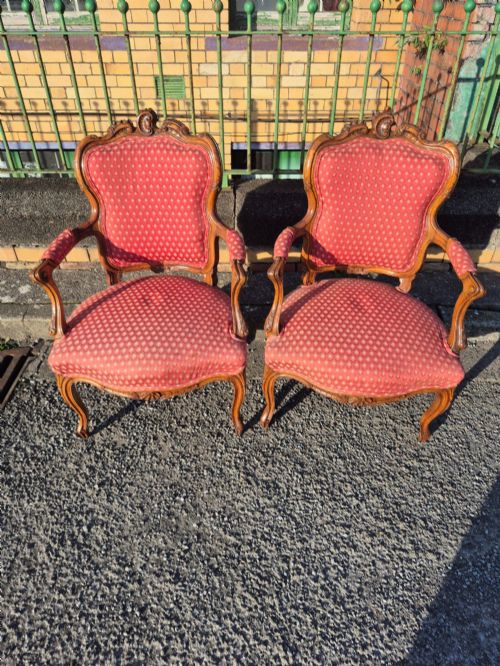
A red upholstered fauteuil brings open-arm French elegance and comfortable library seating into a room.
Red Upholstered Fauteuil
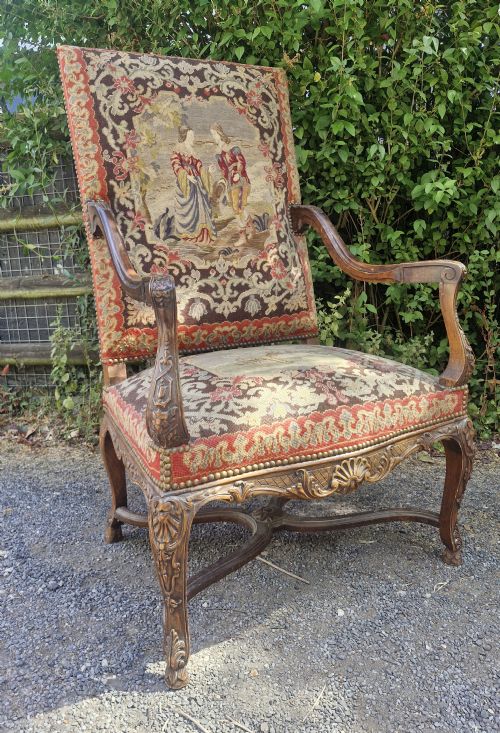
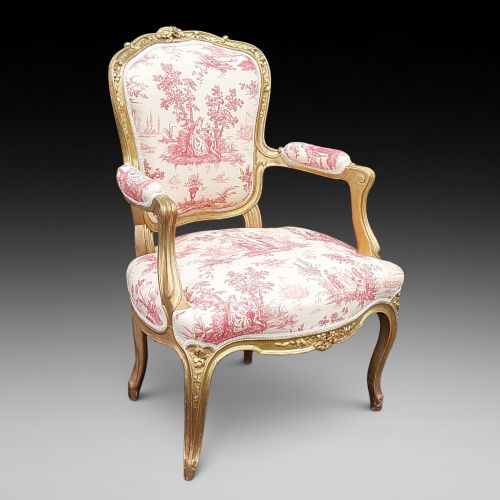
A red upholstered fauteuil is an open-armed seating form designed in continental traditions and frequently encountered through nineteenth-century revivals. These pieces function as library, reading or salon chairs, combining exposed wooden frames with upholstered backrests and arm pads.
The variants appearing on this page span eighteenth-century origins to early twentieth-century interpretations, including Empire style, Rococo Revival, and Louis XV design. Walnut and mahogany frame construction dominates the selection, paired with textiles ranging from velvet and tapestry to needlework.
How they were made
Makers shaped structural frames from hardwoods such as walnut, mahogany, and rosewood, often applying giltwood finishes or intricate hand-carved ornamentation. Joinery relied on traditional mortise and tenon methods to support the open elbow design of the chair.
Upholstery techniques combined traditional stuffing methods with textile coverings like leather, tapestry, and needlework. Frames frequently display decorative brass detailing alongside exposed carved wood.
Red Upholstered Fauteuil Retail Price Guide 2026
Typical asking prices for red upholstered fauteuil among the pieces listed under this phrase on Sellingantiques today, from the lower quarter to the upper quarter. They describe what is for sale here now, not the wider market.
Listings feature walnut, mahogany, and giltwood frames paired with textile, velvet, and tapestry upholstery.
What varies in quality
Quality rests in the crispness of the hand-carved woodwork and the integrity of the underlying hardwood frame. Finishes applied to walnut or giltwood structures show varying degrees of preservation and depth.
The execution of the upholstery work, from hand-stitched needlepoint to fitted leather, dictates the refinement of the finished piece. Well-proportioned open armways and balanced structural lines separate standard production from superior examples.
Holland and Sons
The Red Upholstered Fauteuil Glossary
- Fauteuil
- An open-armed upholstered armchair originating in France during the seventeenth century. These seats feature exposed wooden frames around the back and armrests.
- Giltwood
- Wood that has been coated with a thin layer of gold leaf. This finish appears frequently on decorative nineteenth-century frames.
- Gainsborough armchair
- A wide, upholstered mahogany or walnut armchair with short cabriole or straight legs and open padded elbows. They date back to the eighteenth century and reappear in later revivals.
- Needlework
- Decorative stitching executed on canvas or yarn mesh to create patterned upholstery. This textile appears commonly on nineteenth-century chair backs and seats.
- Rococo Revival
- A nineteenth-century design movement characterised by asymmetrical scrollwork, floral motifs, and curved cabriole lines. This style draws inspiration from mid-eighteenth-century French aesthetics.
Red Upholstered Fauteuil: Frequently Asked Questions
How do I date a fauteuil?
Dating depends on the wood species, carving style, and upholstery techniques used in the construction. Stylistic revivals often mimic eighteenth-century forms using nineteenth-century manufacturing methods.
Examine the frame joinery and secondary timbers to establish the period of manufacture.
Where should I place a fauteuil?
These open-arm chairs suit studies, libraries, and living rooms as occasional seating or reading chairs. Their compact width allows them to fit comfortably beside desks or fireplaces.
Ensure the room has sufficient space to display the carved wooden frame and armrests properly.
What materials are used?
Frames are constructed primarily from hardwoods including walnut, mahogany, and rosewood, occasionally finished with giltwood or paint. Upholstery materials include tapestry, needlework, velvet, and leather.
Brass elements sometimes accent the carved wooden frames.