


Red Uniform Portrait Painting
A red uniform portrait painting captures the pageantry and colour of military service through centuries of oil and watercolour.
Red Uniform Portrait Painting
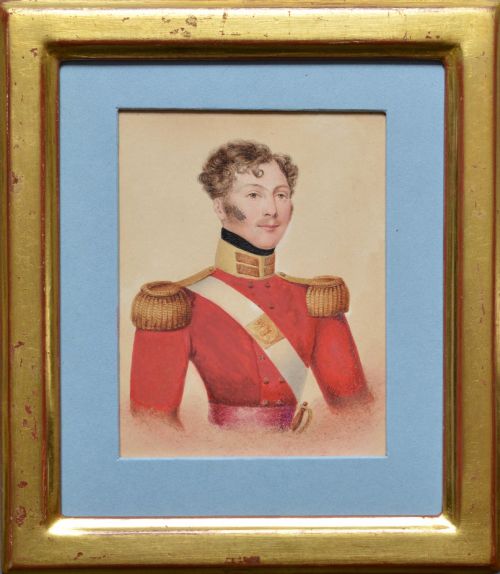
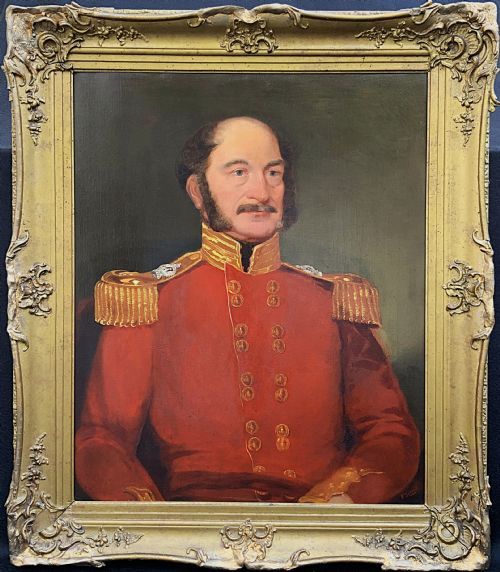
A red uniform portrait painting depicts officers, generals, and gentlemen dressed in the distinctive scarlet tunics and coats of British military service. These works range from small portrait miniatures on paper to large canvas oil paintings created during the eighteenth and nineteenth centuries.
The subjects include named figures such as wool manufacturers in ceremonial dress and decorated commanders from the Bengal Army. Many pieces originate from the Georgian, Regency, and Victorian periods, reflecting shifting military dress codes and portraiture conventions.
Buyers encounter both accomplished works by named artists and works by the British School or primitive practitioners. The selection balances intimate watercolours with substantial oil paintings framed in wood.
Materials and construction
Artists painted these subjects primarily in oil on canvas or applied watercolour to paper. Pigments captured the vibrant reds of military tunics against darker backgrounds, whilst wood provided structural support for stretchers and decorative frames.
Miniature portraits introduced glass to protect delicate watercolours and small painted surfaces. Skilled hands utilised fine brushes to render facial likenesses alongside the intricate gold braid and insignia of the uniform.
One military gentleman is accompanied in his portrait by hardworking King Charles Spaniels.
Elements of distinction
The condition of the canvas, paper, and original wood framing influences the character of each piece. Works that retain their historical pigment vibrancy and structural integrity command greater attention from collectors.
Edward Pugh·John Irvine·Henry Walton·Henry Hoppner Meyer·William Edward Millner·Leslie Moore·Sir Richard Westmacott·Harry Ashby
The Red Uniform Portrait Painting Glossary
- Oil on Canvas
- Pigments bound in a drying oil applied to a stretched woven fabric support. This combination allowed artists to build rich layers of colour for military uniforms.
- Watercolour
- Finely ground pigments suspended in a water-soluble binder applied to paper. It provided a lighter medium suited for portable portrait miniatures.
- Portrait Miniature
- A small, highly detailed painting designed for intimate viewing or portable display. These works often utilised paper or vellum protected beneath glass.
- Regency
- The period spanning the early nineteenth century characterised by specific military fashions and portraiture styles. Paintings from this era often depict officers in transitional uniform designs.
- Folk Art
- Artistic creations produced by self-taught or provincial makers working outside academic traditions. These pieces often exhibit a direct, primitive charm distinct from formal academy portraiture.
Red Uniform Portrait Painting: Frequently Asked Questions
How do I date a military portrait?
Dating relies heavily on the style of the red uniform, the cut of the collar, and the specific military insignia visible in the composition. Costume historians use these uniform details to narrow the production period within the eighteenth and nineteenth centuries.
Secondary clues include the stretcher construction of canvas works, the framing materials, and any inscriptions or signatures recorded on the reverse of the piece.
Where should I hang an oil painting?
Select an interior wall that avoids direct sunlight to protect sensitive oil pigments and delicate paper supports from fading over time. Stable room temperatures prevent the wood and canvas from expanding and contracting.
Ensure the painting hangs at eye level in a space where the rich red tones of the uniform complement the surrounding room.
What is a portrait miniature?
A portrait miniature is a small-scale painting, often created on paper or ivory, designed to be held in the hand or worn as a keepsake. These works required immense skill to capture facial expressions on a restricted surface.
They frequently feature military officers and gentlemen from the Georgian and Regency eras, protected behind glass within modest frames.