





Red Turkmen Storage Bag
A red turkmen storage bag brings the tactile geometry of Central Asian nomadic life directly into a modern interior.
Red Turkmen Storage Bag
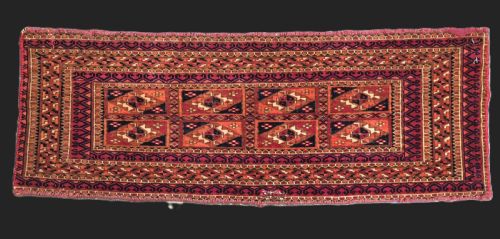
A red turkmen storage bag encompasses utility textiles woven by tribal groups across Central Asia, including chuvals, torbas, and mafrash. These utilitarian items served to store household goods within tents and yurts, featuring distinct tribal motifs that identified specific weaving communities.
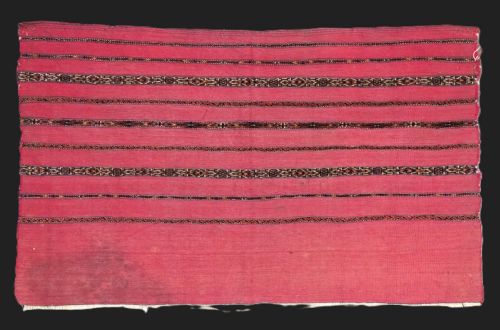
The selections available here lean heavily toward pieces produced by Yomut, Tekke, and Ersari tribes during the nineteenth and early twentieth centuries. Buyers frequently encounter bag faces preserved individually or complete storage containers retaining their plain weave wool backs and hanging loops.
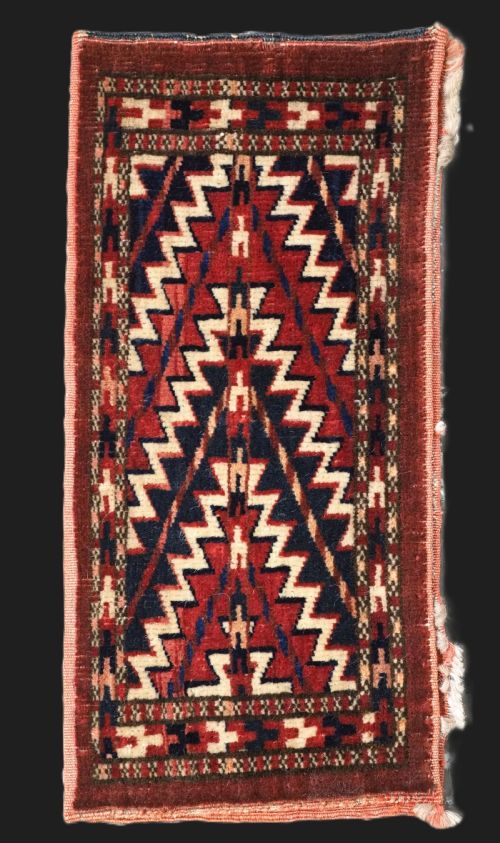
Specific functional forms such as spindle bags and tent pole bags also appear among the textiles. Each variation reflects the domestic requirements of nomadic life, adapted into durable formats defined by saturated red grounds and intricate secondary ornamentation.
Assessing the weaving
Knot density and structural fineness dictate the primary tier of execution, separating standard utility pieces from exceptionally delicate tribal work. Tighter knotting allows complex gul patterns and secondary motifs to retain crisp definition across the surface.
The preservation of original elements, such as complete plain weave backs, closing mechanisms, and intact hanging loops, elevates the integrity of a textile. Furthermore, the depth and vibrancy of the natural dyes used within the red ground influence the visual impact of the piece.
Tribal attributions represented here highlight Tekke, Yomut, and Ersari weavers from across the Trans-Caspian steppes.
The Red Turkmen Storage Bag Glossary
- Chuval
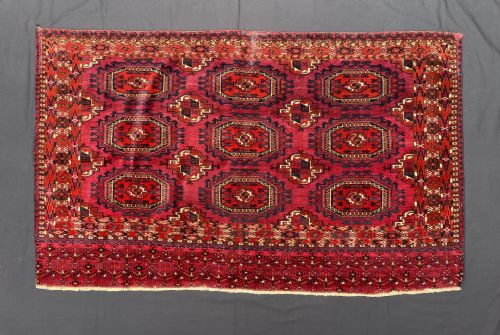
- A large tent storage bag traditionally used for bedding and household possessions. These pieces usually feature multiple primary guls arranged in strict rows across a red field.
- Torba
- A smaller storage bag format utilised for hanging within the yurt or tent. They frequently display refined border systems and structured medallion designs.
- Mafrash
- A rectangular storage container or bag face associated with nomadic transport and organisation. Flatweave banding and supplementary weft techniques often define this specific type.
- Gul
- The primary repeated medallion or octagonal motif central to Turkmen textile design. Variations in these motifs help designate specific tribal origins such as Tekke or Yomut.
- Okbash
- A specialised tent pole bag designed to fit over the ends of wooden framing elements. These unusual forms are shaped specifically to house structural components.
Red Turkmen Storage Bag: Frequently Asked Questions
What were red turkmen storage bags used for?
Nomadic families utilised these woven containers inside tents and yurts to organise bedding, clothing, and domestic equipment. Their durable construction protected belongings from damp earth and daily wear.
Over time, these functional objects became expressions of tribal identity and artistic skill within the community.
How do I hang a bag face on the wall?
Many textile pieces retain original hanging loops or sturdy wool backs that facilitate secure mounting. Textile conservators often recommend custom fabric sleeves or minimal-pressure display systems.
Avoid direct weight concentration on fragile wool areas to preserve the structural integrity of the weave.
How can I tell Yomut and Tekke bags apart?
Yomut weavings frequently employ distinct geometric motifs like the kepse gul and often incorporate banded flatweave designs. Their palettes tend toward rich red-brown tones with varied secondary highlights.
Tekke examples regularly feature crisp octagonal guls such as the aina or kizil designs, executed with exceptionally fine knot density across bright red fields.
Are these bags complete or fragments?
The inventory includes both complete storage containers with original plain weave backs and individual bag faces separated from their reverse panels over time. Surviving loops and backs offer additional context regarding the original utility of the textile.
Both complete structures and preserved faces represent authentic nineteenth and early twentieth-century nomadic craftsmanship.