





Red Turkish Kilim Rug
These red turkish kilim rug examples bring centuries of nomadic and village weaving traditions straight to the floor.
Red Turkish Kilim Rug
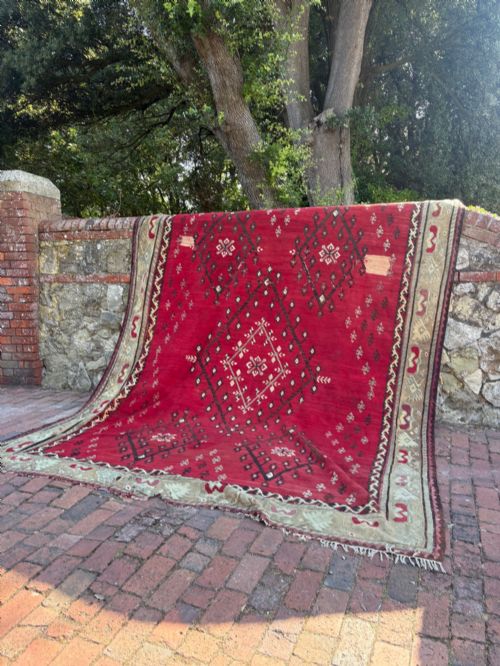
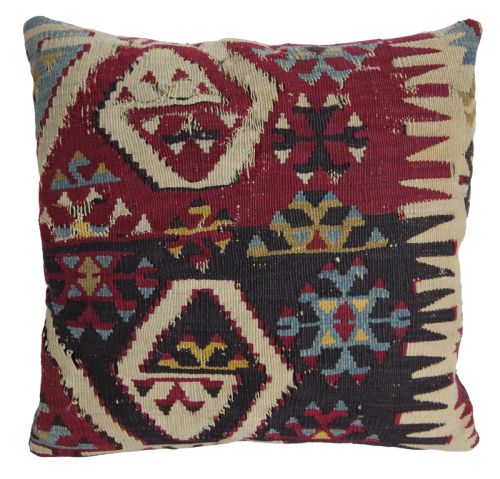
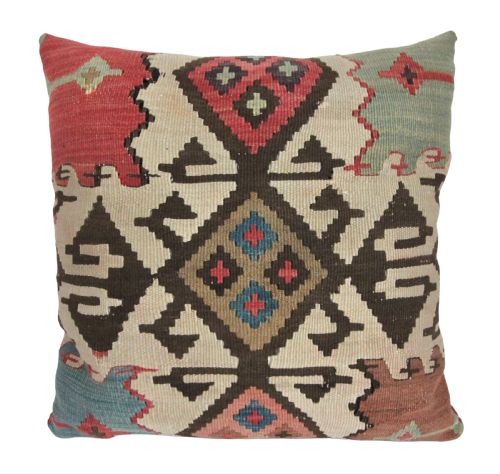
A red turkish kilim rug represents a distinct category of flatweave textiles originating from Anatolian regions, Balkan areas, and tribal communities. Buyers navigating this selection encounter various formats ranging from large room-sized carpets and long runners down to smaller bag faces and decorative cushions.
The specimens available span from the mid-nineteenth century through the early decades of the twentieth century. Common regional attributions include Malatya, Konya, Sarkoy, and Pirot, each bringing specific design vocabularies and structural characteristics to the flatweave tradition.
Materials and construction
These textiles rely primarily on hand-spun wool for the main structural warp and weft yarns, sometimes combined with cotton elements. Artisans also integrated leather details on specific utilitarian forms such as tribal saddle bags and storage pouches.
The production utilises a flatweave technique rather than pile knotting, allowing weavers to create geometric motifs by interlocking or slitting the coloured weft threads. Certain larger formats were woven in two separate parts and subsequently joined down the centre to achieve expansive room dimensions.
Listings feature textiles spanning the nineteenth and twentieth centuries, incorporating wool, cotton, and leather across regional styles from Anatolia and the Balkans.
Evaluating the pieces
Quality diverges according to the precision of the flatweave execution and the balance of the geometric or medallion composition. Finer examples display tight, consistent weft-faced structures that maintain structural integrity across large expanses.
The visual appeal depends heavily on the depth and condition of the dye palette, with superior pieces showing harmonious fading or rich saturation. Wear patterns and historical repairs also influence the character of the textile, distinguishing heavy degradation from acceptable age-related patina.
The Red Turkish Kilim Rug Glossary
- Kilim
- A flatwoven carpet or rug produced without a pile by tightly interlacing warp and weft threads. This technique creates a lightweight textile with identical patterns visible on both sides.
- Flatweave
- A method of textile construction where horizontal weft threads pass entirely over and under vertical warp threads without knotting. This produces a flat surface texture.
- Anatolian
- Pertaining to the geographical region of Asia Minor that constitutes the heartland of traditional Turkish rug production. Many historical pieces originate from specific villages and nomadic camps across this territory.
- Runner
- A long, narrow format of rug traditionally utilised in hallways or corridors. These pieces often feature repeating geometric borders and medallions scaled to fit restricted spatial dimensions.
- Juval
- A large tribal bag used historically by nomadic groups for household storage and transport. These items frequently feature intricate flatweave designs adapted from larger carpet traditions.
Red Turkish Kilim Rug: Frequently Asked Questions
What is a flatweave kilim?
A flatweave kilim is a textile constructed without knotted piles, created instead by tightly weaving coloured weft threads over structural warps. This method results in a durable, thin fabric suitable for floor coverings and wall hangings.
Because they lack pile, these rugs lie completely flat and were traditionally utilised by nomadic and village communities for easy transport and everyday domestic use.
How do I style a large kilim rug?
Large room-sized kilims provide a strong graphical anchor for living spaces and dining areas, working well over wooden floors or low-pile carpets. Their flat structure makes them practical for placement beneath furniture without creating uneven surfaces.
Smaller regional variants and runner formats suit hallways, entryways, or narrow spaces where traditional thick pile carpets prove too bulky to accommodate doors.
How are different regional styles identified?
Regional attribution relies on specific design motifs, colour palettes, and structural quirks associated with weaving centres such as Konya, Malatya, or Sarkoy. Local traditions dictated the repetition of certain medallions, border arrangements, and joining methods.
Examining the specific weave density and wool characteristics also helps determine whether a textile originated in Anatolia or the Balkan regions.
Why are some rugs woven in two parts?
Large format kilims were frequently produced on narrower portable looms by weaving two separate panels that were subsequently stitched together down the centre. This traditional technique allowed nomadic weavers to construct room-sized carpets despite the limitations of their portable equipment.
Visible centre seams serve as a standard structural feature on many antique large-scale pieces rather than indicating a fault.