

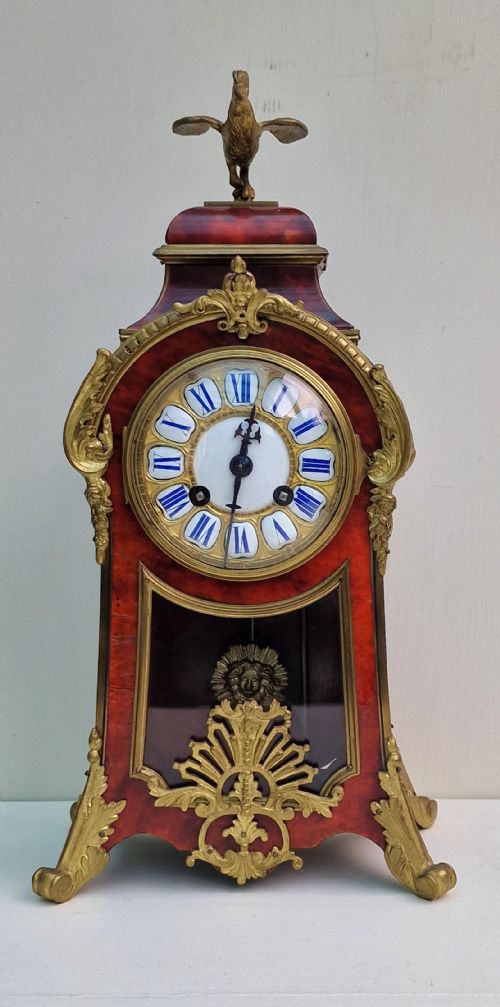


Red Tortoiseshell Desk
A red tortoiseshell desk brings unmistakable warmth and intricate brass inlay into a room, offering both a practical workspace and a striking antique centrepiece.
Red Tortoiseshell Desk
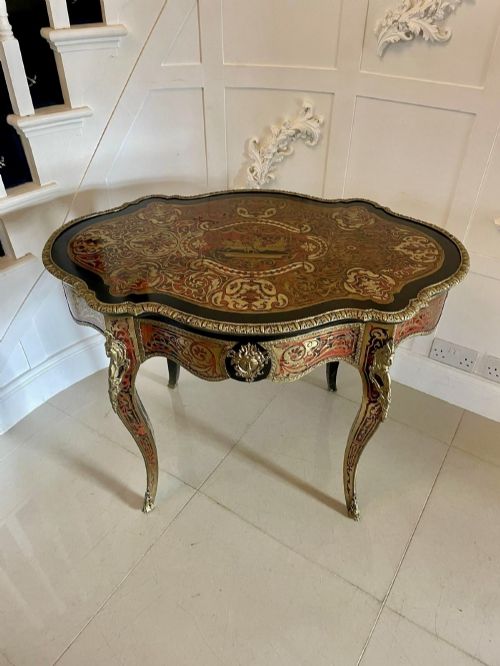
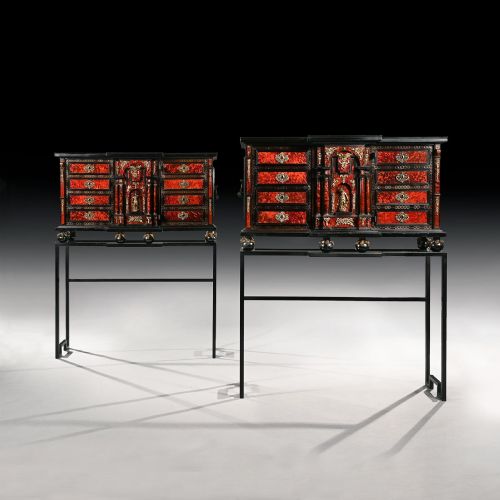
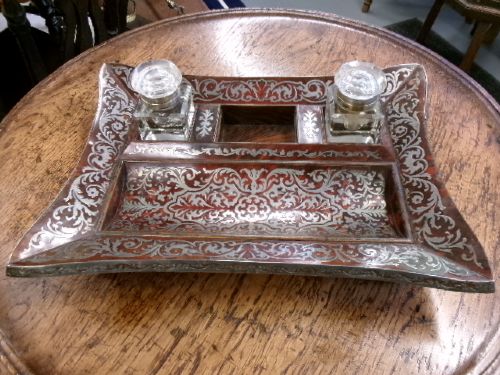
When you search for a red tortoiseshell desk, you are looking at writing furniture and smaller desk accessories finished in ornate Boulle work. The pieces appearing here span from writing cabinets like the bonheur du jour to flat-topped desks and smaller inkstands, often showing French influence.
The materials unite deep reddish tortoiseshell panels with polished brass and ormolu mounts set upon ebonised wood. These items cross several centuries, with nineteenth-century interpretations of earlier French styles forming the majority of what you will encounter.
How they were made
The characteristic surface relies on tortoiseshell laid over a reddish background or contrasting base, combined with precision-cut brass inlay arranged in elaborate scrollwork patterns. This technique, known as Boulle work, requires delicate sawing of metal and shell together so the pieces interlock perfectly.
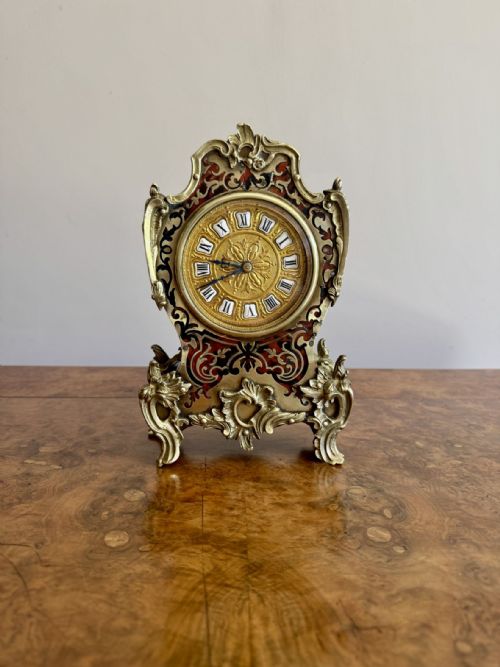
Ebonised wood provides the dark framing structures, while cast gilt bronze or ormolu mounts accent corners, feet, and edges. Glass and enamel components appear on associated items like inkwells and clock dials within desk sets.
Asprey of London once supplied a perpetual calendar housed in Boulle work, proving that even keeping track of the date deserved a coat of tortoiseshell.
What varies in quality
Quality rests primarily on the crispness of the brass marquetry and the depth of colour in the tortoiseshell panels. Finer examples display tight, seamless joints where the metal meets the shell without excessive filler or misalignment.
The execution of the cast bronze mounts also dictates the grade of the piece, with sharper chiselling and heavier metalwork distinguishing superior desks and accessories from simpler production.
The Red Tortoiseshell Desk Glossary
- Boulle work
- A form of marquetry using contrasting panels of tortoiseshell and brass, named after the famous cabinetmaker André-Charles Boulle. It creates a shimmering, highly decorative surface pattern across furniture and clocks.
- Bonheur du jour
- A small, light lady's writing desk featuring a set of drawers and compartments on the upper surface. This form gained popularity during the eighteenth century and saw revivals in the Victorian era.
- Ormolu
- Gilded bronze used for decorative mounts and feet on furniture and clocks. The technique involves applying a gold amalgam to a bronze base and heating it to leave a rich metallic finish.
- Ebonised wood
- Timber treated to resemble ebony, typically achieved by staining and polishing a dense hardwood black. It provides a dark, neutral border that highlights bright brass and tortoiseshell inlay.
- Bureau plat
- A freestanding writing desk with a flat top, usually finished with drawers beneath the surface. These tables often stand on cabriole legs decorated with bronze mounts.
Red Tortoiseshell Desk: Frequently Asked Questions
What is Boulle work?
Boulle work is an intricate form of marquetry that pairs tortoiseshell with brass or pewter inlay. Artisans cut stacked sheets of shell and metal together to create matching positive and negative patterns.
This technique produces luminous, contrasting surfaces that catch the light from different angles. It became a defining feature of luxury French furniture and decorative accessories.
Are these desks practical for daily work?
Many of these pieces were designed for correspondence and light writing rather than heavy administrative tasks. Smaller writing cabinets and flat desks provide adequate space for laptops or notebooks while adding character to a study.
Care should be taken with ink and writing implements to protect the historic surfaces from accidental scratching or staining. Using a blotter helps preserve the finish during regular use.
How can I tell the period of a desk?
Dating relies on examining the construction methods, secondary woods used in the drawers, and the style of the bronze mounts. Nineteenth-century revival pieces often interpret earlier seventeenth and eighteenth-century French designs with slightly different internal fixings.
Signatures or maker marks, when present, offer the clearest guide to origin and date. Comparing the wear patterns on the brass and shell also helps indicate age.