

Red Silk Textile
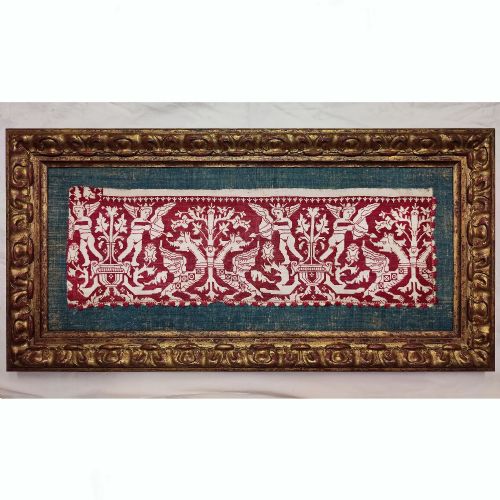
When searching for a red silk textile, collectors encounter hand-embroidered wall hangings, ceremonial hangings, and tribal panels originating from Central Asia, Persia, and the Ottoman regions.
Red Silk Textile
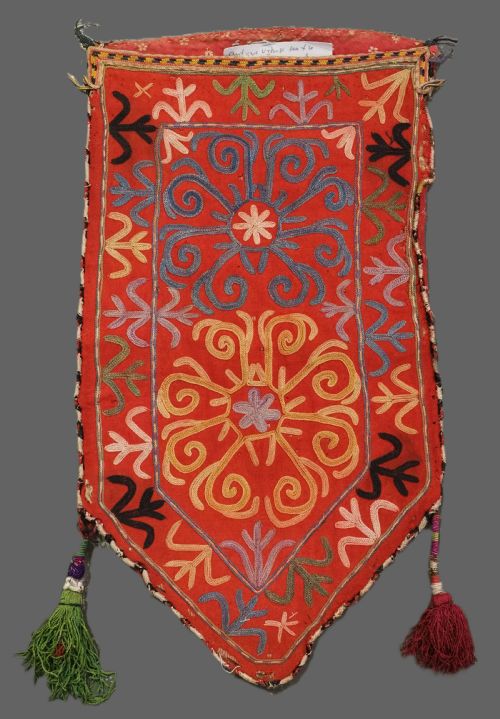
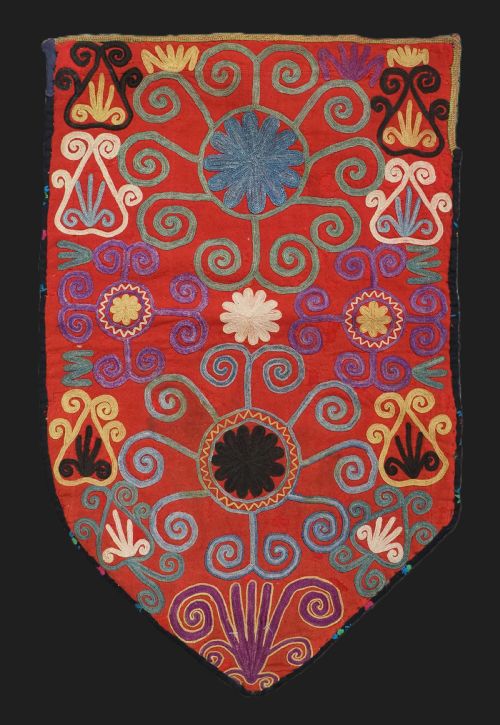
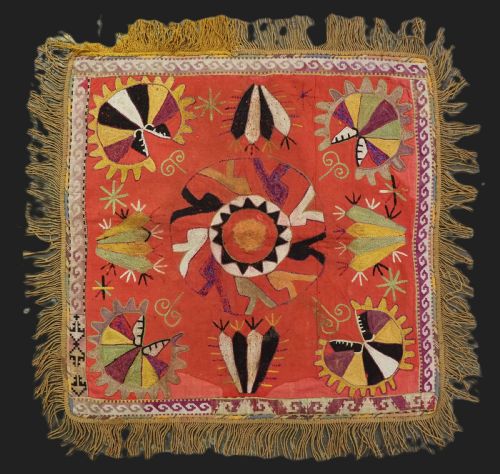
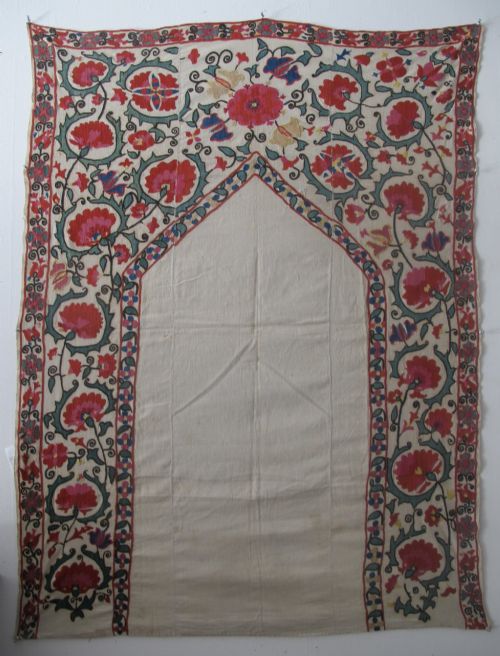
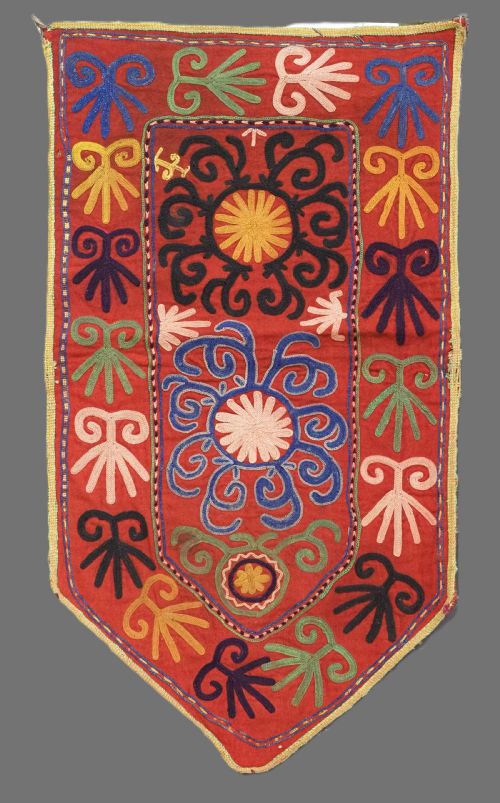
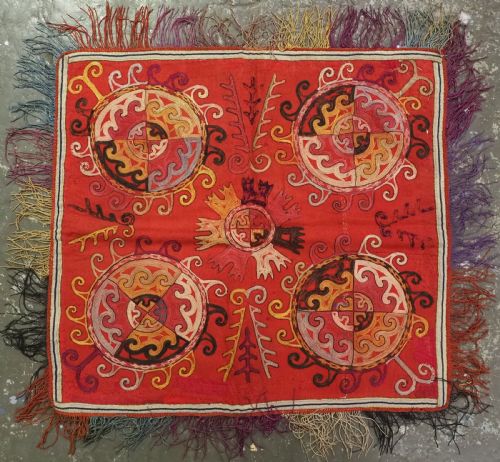
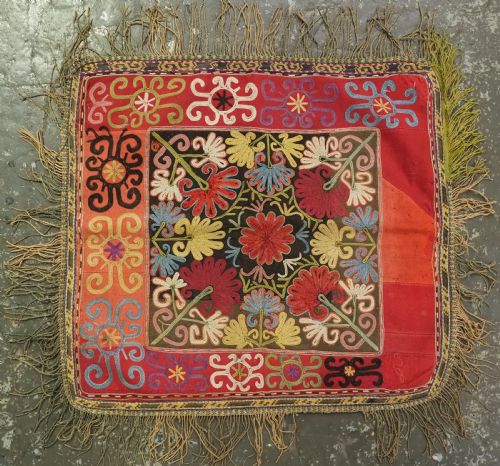
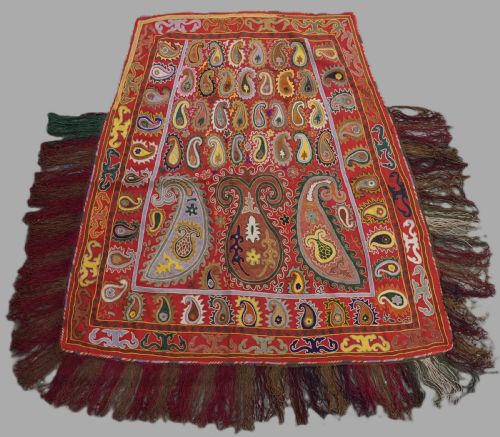
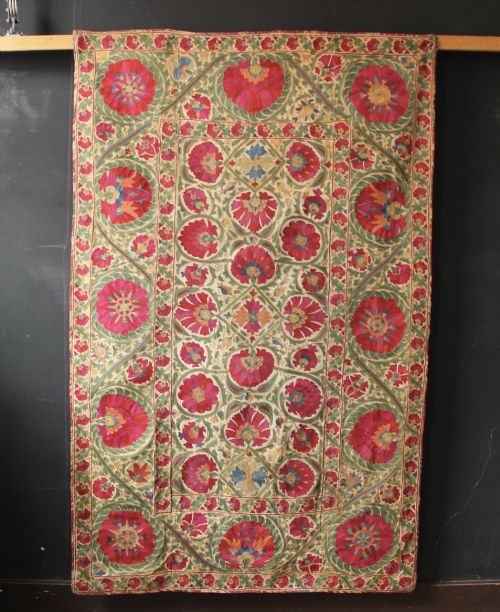
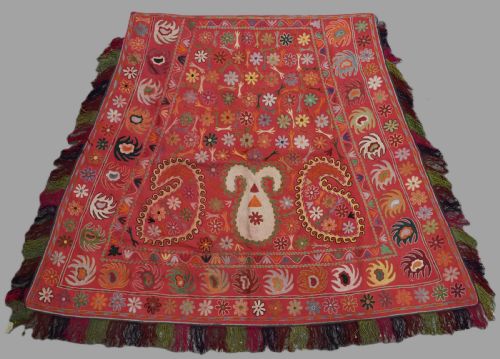
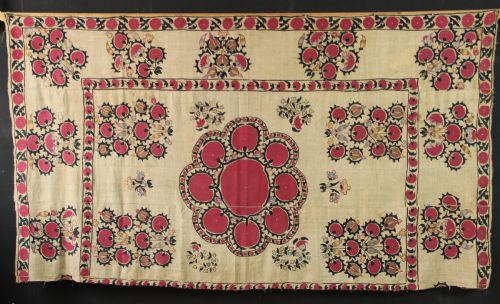
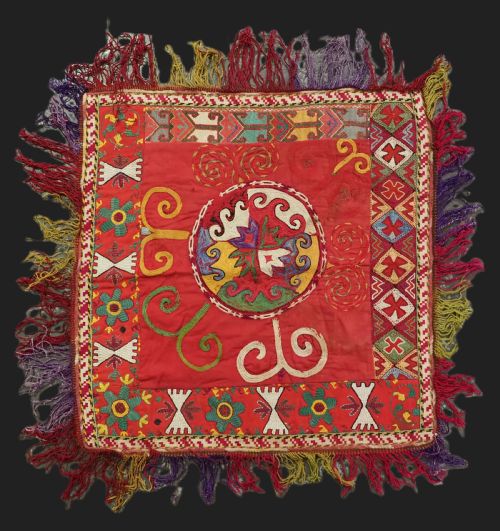
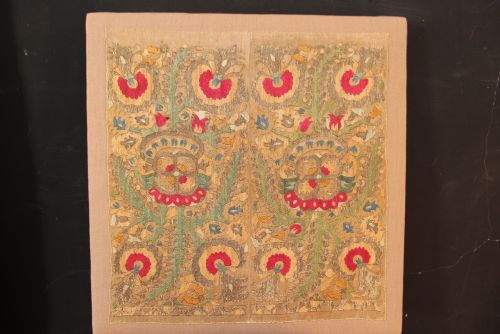
A red silk textile encompasses diverse historical pieces, including Uzbek Suzanis, Persian Rasht embroideries on red felt grounds, and Lakai tribal ilgiches created for dowries and wall displays. These objects frequently date from the eighteenth century through the early twentieth century.
The version most commonly met on this page is the Central Asian Suzani or tribal hanging, often featuring silk embroidery on wool or cotton grounds, alongside Persian Rasht panels utilising silk and felt applique work.
How they were made
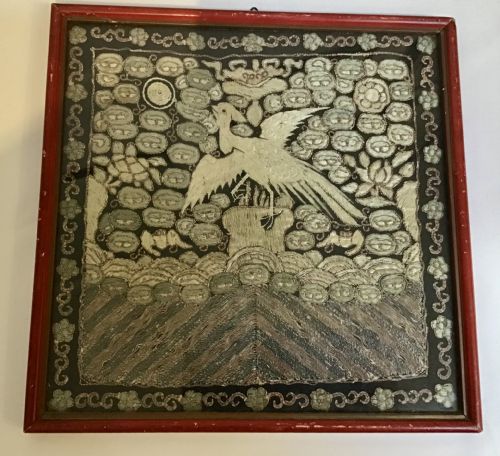
The creation of these textiles relies on silk embroidery threads applied to foundational grounds constructed from wool, cotton, linen, or felt. Artisans also integrated metallic thread and velvet in specific regional garments and decorative panels.
Techniques recorded in the listings include complex needlework, applique work, and ikat dyeing processes where warp threads are tied and dyed prior to weaving.
Several embroidered panels spent their early days decorating nomadic horses before retiring to gentleman's country houses as bell pulls.
What varies in quality
Quality in a red silk textile is determined by the density and precision of the needlework, the complexity of the design layout such as architectural motifs or medallion arrangements, and the preservation of the original ground material.
Variations also appear in the vibrancy of the natural dye palette, the intricacy of tribal patterns, and the overall structural integrity of the fabric panel.
The Red Silk Textile Glossary
- Suzani
- An embroidered tribal wall hanging originating from Central Asia, typically worked in silk on a cotton or linen ground.
- Igat
- A dyeing technique where yarns are tie-dyed before weaving to create patterned fabrics, commonly found in semi-silk adras panels from Bukhara.
- Rasht embroidery
- A traditional Persian textile technique involving intricate silk and felt applique work, frequently displayed on a red felt ground.
- Ilgich
- A specific type of dowry embroidery produced by the Lakai tribe in Central Asia, often used for wall hanging or as a horse cover.
- Torba
- A small storage bag or hanging panel produced by Turkmen and Central Asian tribal groups, often finished with silk highlights.
Red Silk Textile: Frequently Asked Questions
What were red silk textiles used for?
Many of these pieces served as dowry items, ceremonial wall hangings, or decorative coverings for horses and domestic spaces within tribal and regional households.
Others functioned as garments, bedsheet borders, or architectural panels designed to enrich the visual character of traditional interiors.
How do I care for a historic textile?
Display these delicate panels away from direct sunlight to prevent the fading of silk threads and natural red dyes.
Mount them professionally using conservation-grade support systems rather than hanging them by their edges to distribute weight evenly.
How are different regional styles told apart?
Uzbek Suzanis display bold floral or architectural motifs in vibrant silk stitches, whereas Persian Rasht pieces rely heavily on fine felt applique and floral medallions.
Lakai tribal ilgiches are distinguished by distinct geometric embroidery styles often created for ceremonial saddle covers and dowries.
Are these items antique or vintage?
The listings span from the seventeenth century through the early twentieth century, encompassing both antique and vintage periods.
Most items date from the nineteenth and early twentieth centuries, reflecting traditional craftsmanship from Central Asia, Persia, and Europe.