
Red Ruby Cluster Ring
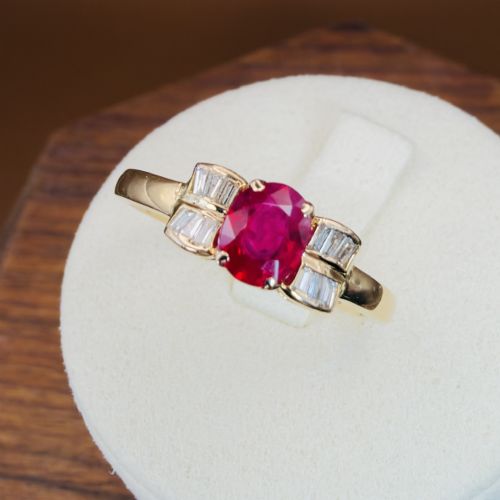
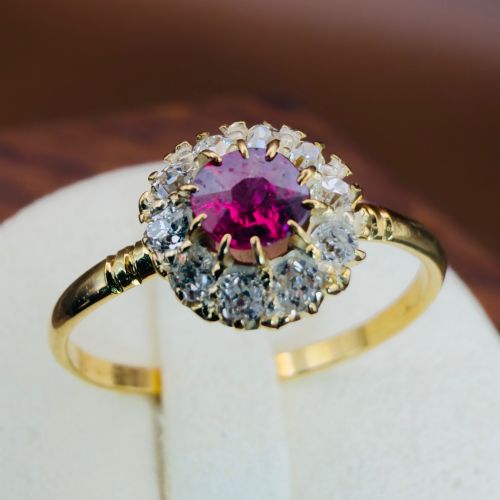
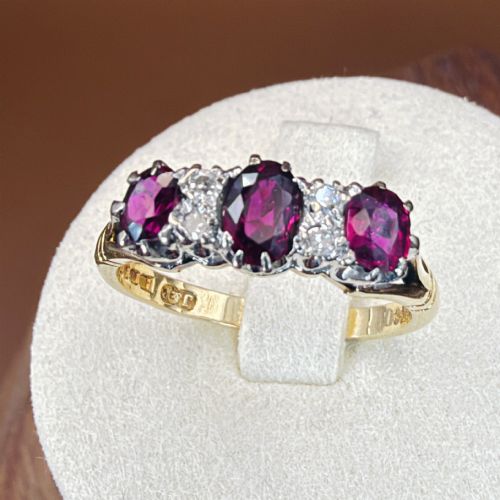
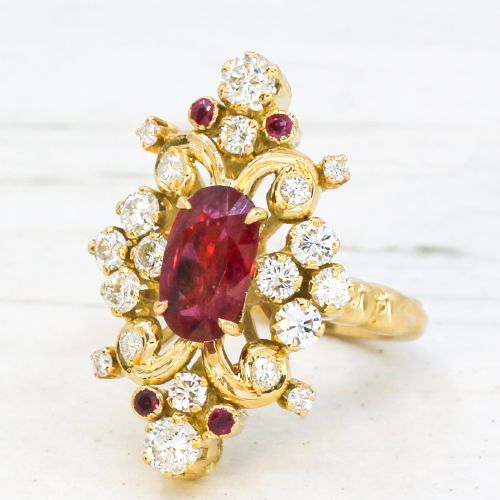
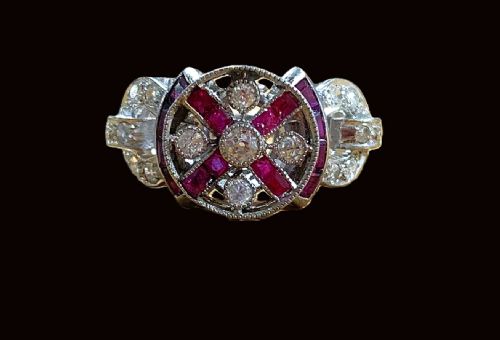
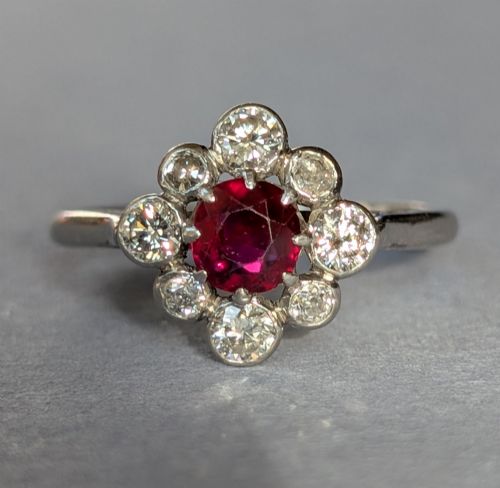
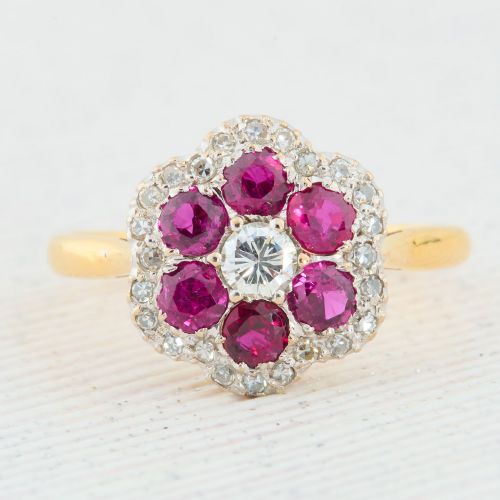
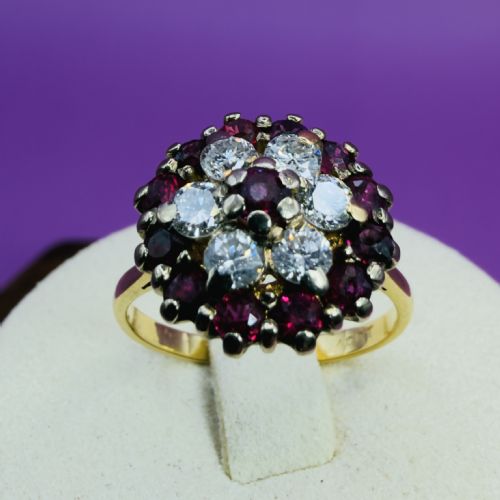
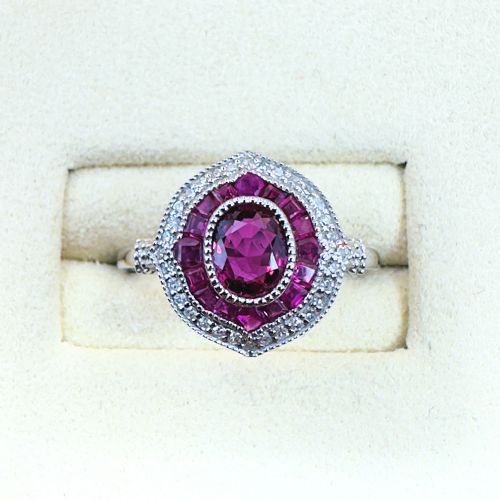
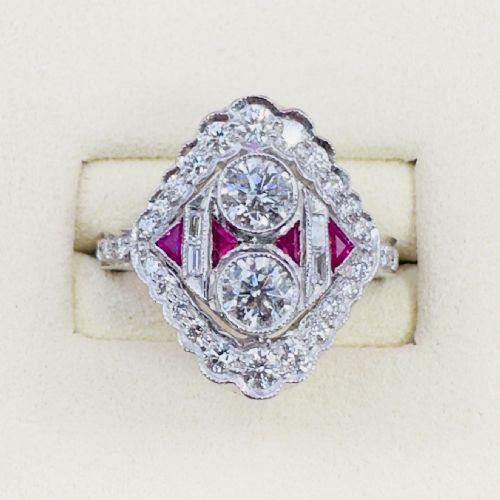
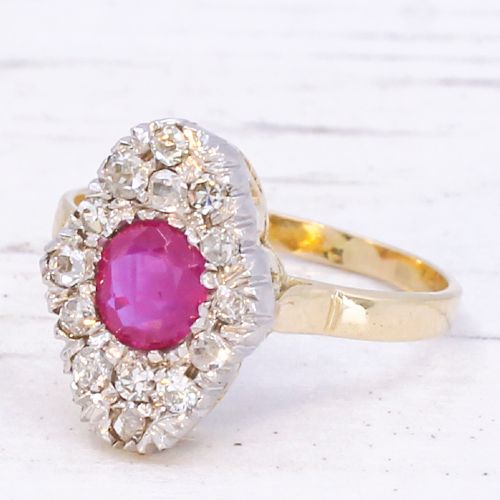
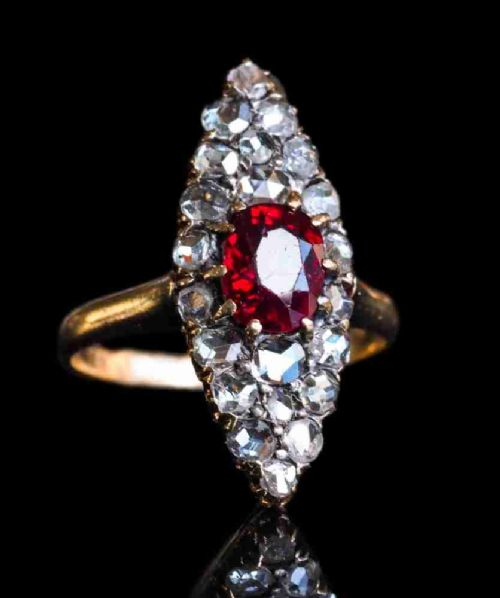
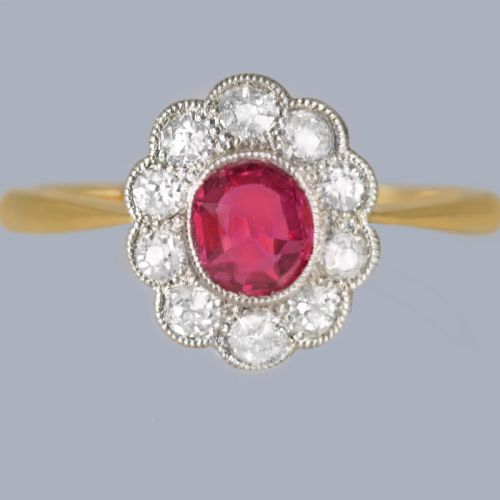
A red ruby cluster ring places a vibrant central corundum amid a border of diamonds, combining rich colour with strong architectural presence.
Red Ruby Cluster Ring
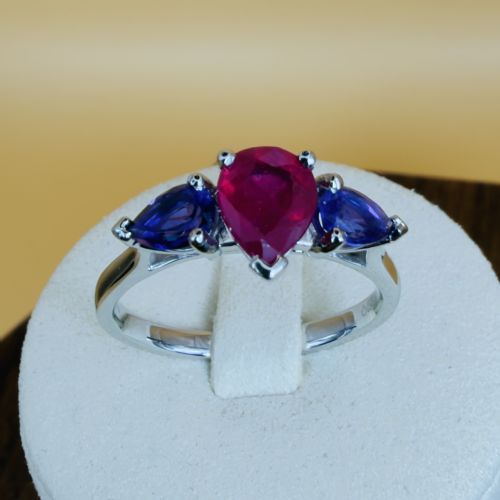
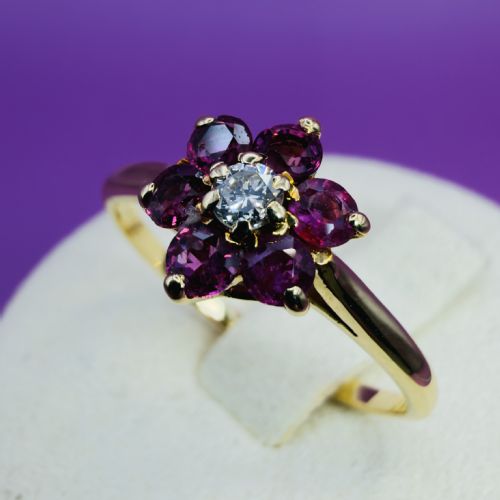
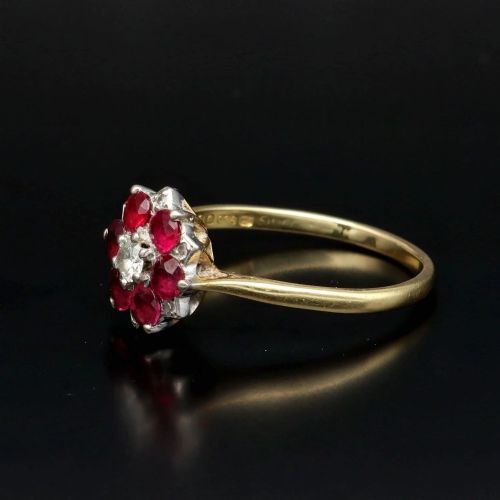
A red ruby cluster ring brings together a prominent crimson gemstone surrounded by smaller accent stones, typically configured in floral, oval, or geometric arrangements.
The selections span distinct periods including the Victorian era, Edwardian period, and Art Deco movements, alongside mid-century and vintage designs.
Buyers encounter various mountings, ranging from delicate daisy clusters to substantial target rings and elongated navette shapes.
Materials and Construction
Craftsmen set natural rubies alongside diamonds using platinum and multiple variations of gold, including 18ct yellow, white, and standard yellow gold.
Settings frequently pair traditional claw work with precise geometric framing, aligning baguette, old-cut, or princess-cut diamonds around the central stone.
Some floral cluster rings manage to pack an entire garden's worth of sparkle onto a single finger.
Quality and Distinction
Distinction rests upon the geographic origin and thermal treatment of the ruby, with unheated Burmese stones commanding particular attention alongside specific carat weights.
The precision of diamond cuts, the symmetry of the surrounding cluster, and the weight and purity of the precious metal mount determine the tier of the piece.
The Red Ruby Cluster Ring Glossary
- Cluster ring
- A ring design featuring a central gemstone encircled by a group of smaller stones, typically diamonds.
- Navette
- An elongated boat-shaped ring setting that stretches lengthwise along the finger, also known as a marquise cluster.
- Halo
- A concentric ring of smaller pavé or claw-set diamonds enclosing a larger central gemstone.
- Old cut
- An early diamond cutting style characterised by a high crown, small table, and deep pavilion, common in antique pieces.
- Unheated
- A descriptor for natural rubies that have undergone no thermal enhancement to improve colour or clarity.
Red Ruby Cluster Ring: Frequently Asked Questions
How do I care for a ruby ring?
Rubies rank high on the hardness scale, making them durable for regular wear, though settings still require periodic inspection by a professional.
Clean the metal and stones using warm soapy water and a soft brush, avoiding harsh ultrasonic cleaners if the piece contains treated or fracture-filled gems.
What periods do these rings come from?
The inventory spans multiple decades, encompassing late nineteenth-century Victorian pieces, Edwardian creations, and geometric Art Deco designs.
Later mid-century and vintage examples from the nineteen-fifties and sixties also appear frequently within the selection.
Are the rubies natural?
The selection includes natural rubies originating from notable sources such as Burma and Mogok, with several pieces accompanied by gemmological reports confirming their status.
Specific listings detail whether stones remain unheated or possess certification verifying their geological origin.
What metals are used in these mounts?
Jewellery makers utilised platinum and various forms of gold, including eighteen-carat yellow, white, and standard gold alloys, to secure the stones.
The choice of metal often reflects the era of manufacture, with platinum and white gold favouring Art Deco aesthetics and yellow gold appearing widely in Victorian and mid-century items.