



Geometric Platinum Ring
When choosing a geometric platinum ring, you select a piece defined by angular symmetry and enduring white metal from the early twentieth century.
Geometric Platinum Ring
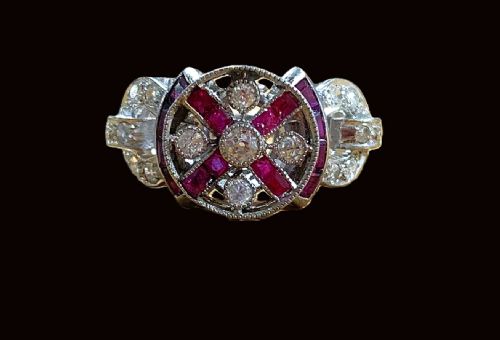
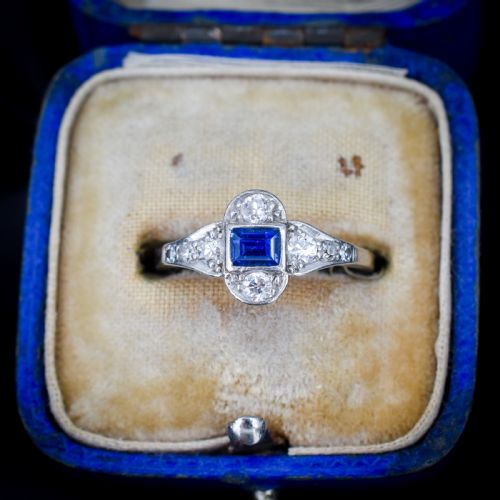
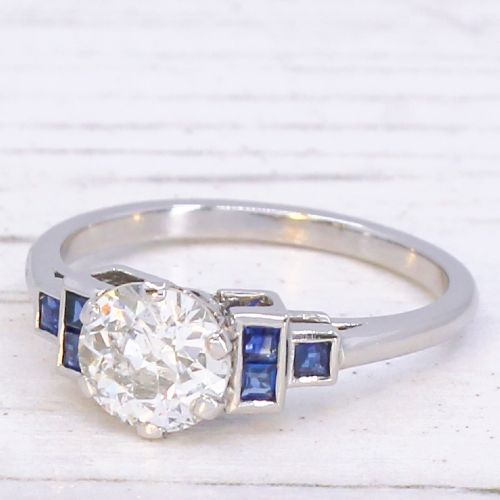
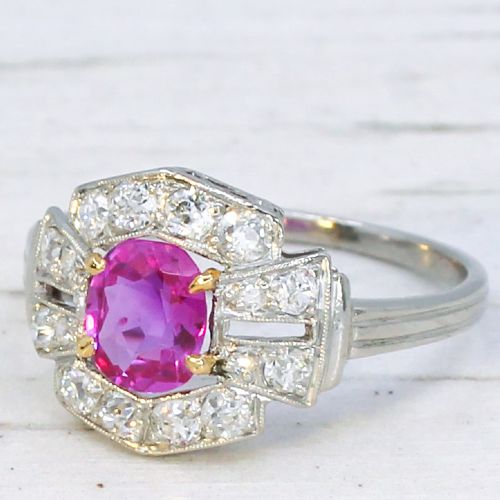
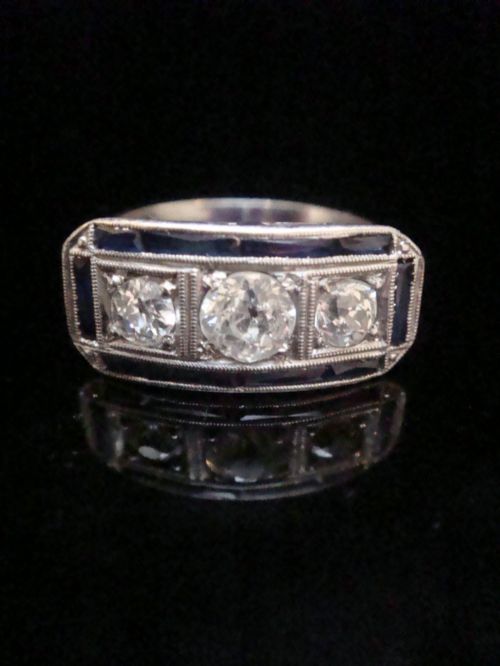
A geometric platinum ring combines straight lines, triangles, or concentric shapes with a durable white metal setting that holds central diamonds and coloured stones. Most examples originate from the 1920s and 1930s, manifesting the rigorous architectural aesthetics of the Art Deco period.
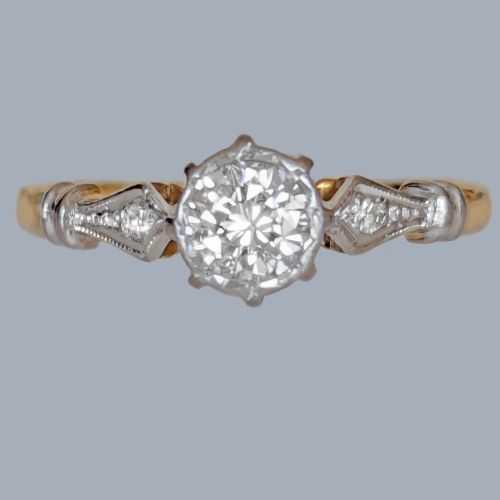
Buyers encounter engagement rings, cocktail rings, and dress rings displaying plaque, target, or starburst configurations. The surviving pieces frequently pair platinum tops with 18ct yellow or white gold bands, uniting structural strength with distinct period character.
How they were made
Master jewellers utilised heavy platinum settings to house old cut, transitional, and single cut diamonds alongside calibre-cut sapphires, emeralds, and rubies. The metal allowed for needle-thin bridges and knife-edge shoulders that kept the focus entirely on the precise arrangement of stones.
Setting techniques relied on hand-millegrain edges and meticulous channel or pave work to build rigid, rectilinear motifs. Many mounts combined a platinum face with 18ct gold bands to provide both the bright white backdrop required for the gems and the resilience needed for everyday wear.
Some Edwardian rings hide secret geometric symmetry entirely beneath the band.
What varies in quality
The distinction between standard commercial work and the finest outputs rests upon the precision of the stone geometry and the crispness of the hand-cut millegrain. Superior workshops aligned calibre stones with zero tolerance, ensuring the metal architecture remained uniform and invisible from the face.
Depth of design and the calibre of the central diamonds dictate the upper tier of the range. Plaque and target rings featuring unheated natural sapphires or vivid emeralds accompanied by substantial old cut diamonds represent the peak of period craftsmanship.
The Geometric Platinum Ring Glossary
- Plat
- Platinum, a dense, durable white metal utilised throughout the period to secure small stones in razor-thin settings.
- Old cut
- A vintage diamond cutting style characterised by a high crown, small table, and deep culet that catches candlelight.
- Plaque ring
- A flat, wide ring top, often pierced or engraved in geometric patterns, designed to display a large surface of diamonds.
- Target ring
- A circular design featuring a central stone encircled by concentric rows of contrasting gems, resembling a target.
- Calibre cut
- Coloured gemstones precisely shaped and faceted to fit tight, geometric channels within a metal framework.
Geometric Platinum Ring: Frequently Asked Questions
How do I care for a platinum ring?
Clean the metal and stones using warm soapy water and a soft brush to remove everyday oils. Avoid harsh chemical dips that can damage vulnerable emeralds or pearls set alongside the diamonds.
Store the ring separately from other jewellery to prevent the harder platinum or diamond edges from scratching softer metals in your collection.
Can these rings be resized easily?
Resizing depends heavily on the specific geometric pattern running along the shoulders of the band. Simple solitaire or plain shank versions allow a jeweller to adjust the circumference without disturbing the main design.
Complex plaque or full-eternity geometric motifs risk distortion of the outer symmetry if altered, so consult a specialist familiar with vintage settings.
Are these rings suitable for daily wear?
Platinum provides exceptional strength, making the metal claws and settings reliable for regular use. The underlying structure holds up well against daily friction, though antique settings still require careful handling.
Remove the ring during heavy manual tasks or swimming to protect delicate millegrain edges and secure the smaller pavé-set stones.
What defines the Art Deco style?
Art Deco design relies on stark symmetry, clean lines, and geometric repetitions influenced by industrial forms and modernist architecture. It breaks away from the flowing, organic curves of the preceding Edwardian era.
In jewellery, this translates into stark rectangles, chevrons, triangles, and sunburst motifs executed in high-contrast colour combinations.