

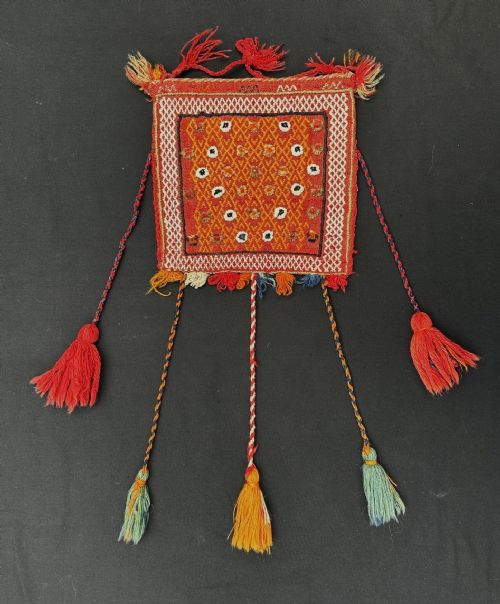


Red Qashqai Rug
A red qashqai rug brings the rich nomadic heritage of South-West Persia into a modern interior.
Red Qashqai Rug
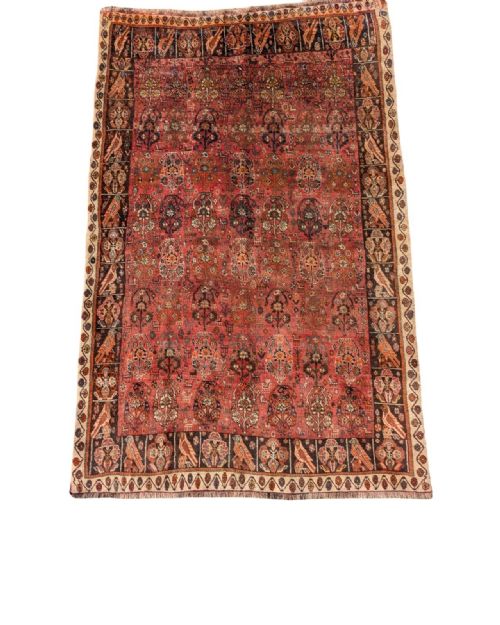
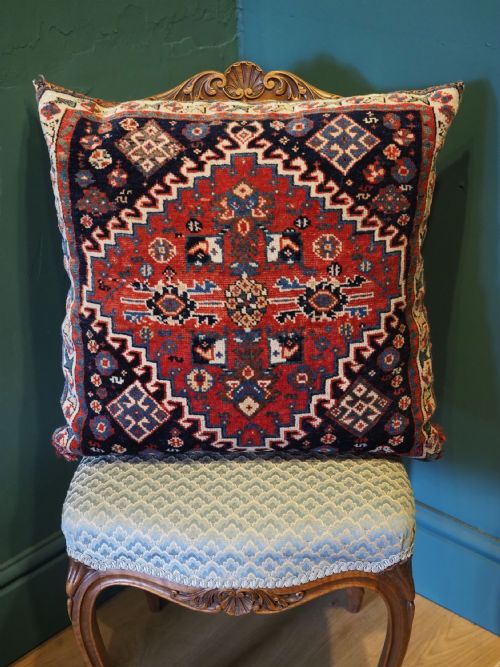
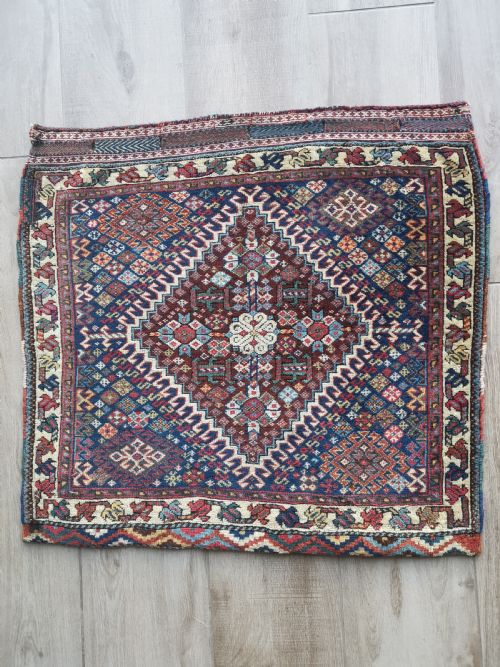
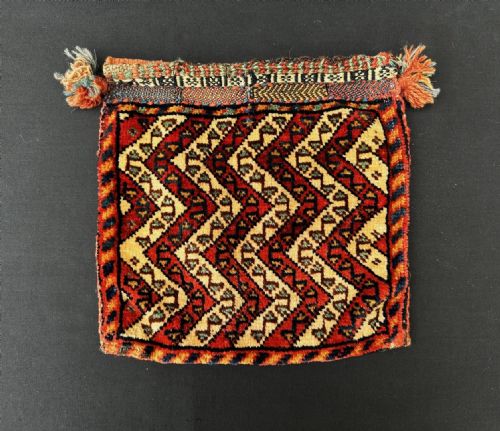
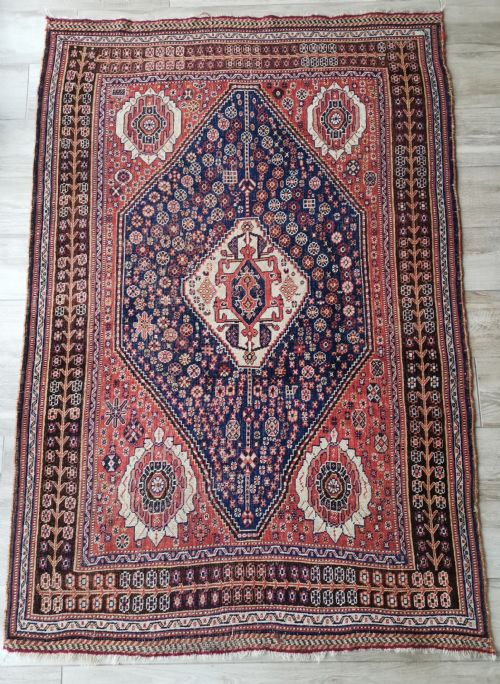
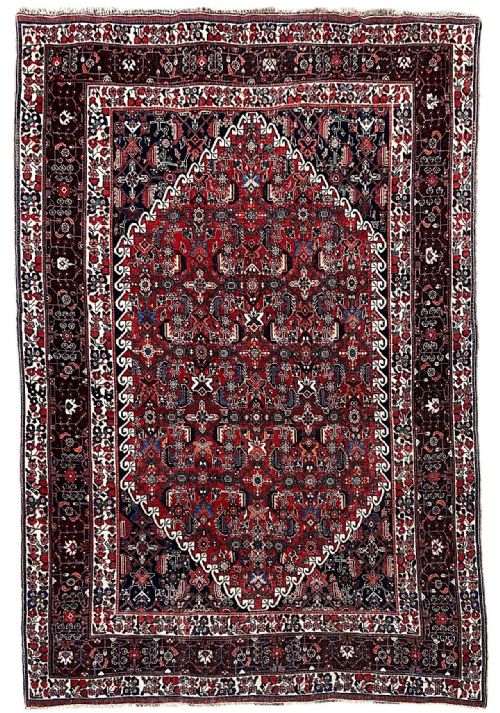
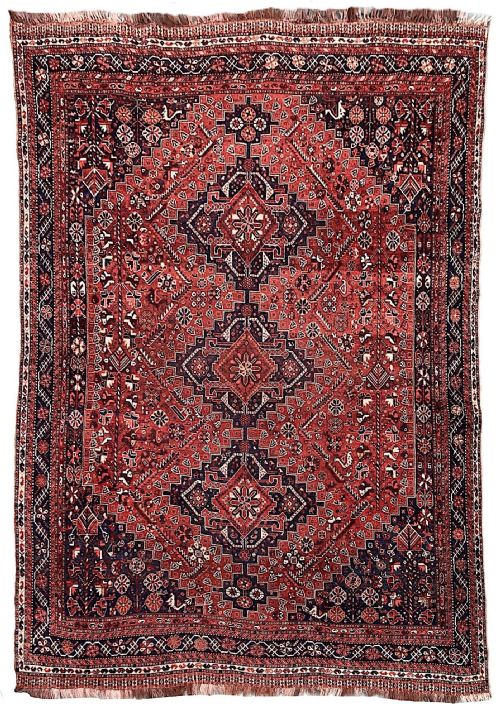
A red qashqai rug is a tribal textile woven by the nomadic confederacies of the Fars province in south-west Persia. These pieces range from full-size carpets and kellehs down to smaller utilitarian forms such as saddlebags, vanity bags, flatwoven kilims and gabbehs. The traditional palette relies heavily on rich madder reds set against contrasting blues and ivory.
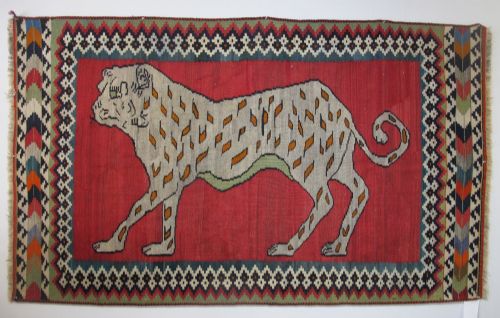
Most examples encountered on this page date from the late nineteenth century through to the early decades of the twentieth century. Alongside standard floor rugs, buyers frequently find specialised tribal formats including saddlebag faces, cradles and lion kilims. These smaller woven objects share the same distinct iconography and wool quality as the larger formats.
Materials and construction
The foundation and pile are constructed from wool, often hand-spun, combined with cotton elements in specific formats. Natural dyes derived from local plants and minerals provide the characteristic deep red tones that anchor the palette of these tribal weavings. Leather and wood occasionally appear in functional components such as bag fastenings or cradle structures.
Weavers utilised traditional upright tribal looms to produce both pile carpets and flatwoven kilims. The handling of hand-spun wool gives the surface a tactile depth that interacts directly with natural dye variations. Knotting and weaving densities vary according to whether the piece was intended for domestic floor use or nomadic transport.
Several antique examples incorporate small depictions of local fauna, including diminutive lions and peacocks woven directly into the field.
Assessing quality and character
Quality in a red qashqai rug rests on the handling of the wool, the saturation of the natural dyes and the crispness of the tribal geometry. Superior examples display subtle shifts in colour known as abris, which occur naturally through the batch-dyeing of yarn with plant materials. The handling of secondary details, such as animal motifs, peacocks or tree of life symbols, distinguishes standard weaving from exceptional tribal artistry.
Structural integrity and the retention of original side cordings and end finishes also determine the standing of an individual piece. Items that preserve their full dimensions and authentic tribal structures carry greater historical continuity. The vibrancy of the madder red ground field remains a primary measure of visual success.
The Red Qashqai Rug Glossary
- Gabbeh
- A coarsely knotted, thick pile rug traditionally woven for personal use by tribal groups rather than for trade. These pieces typically feature minimal geometric designs and expansive fields of colour.
- Kilim
- A flatwoven textile produced without a pile, utilising slit-weave techniques to create sharp geometric patterns. They serve variously as floor coverings, covers and utilitarian hangings.
- Kelleh
- A large, elongated format of carpet traditionally suited to the proportions of Persian domestic architecture. These longer formats provide expansive spaces for complex medallion and field designs.
- Tayefeh
- A sub-tribe or clan within the larger Qashqai confederacy of Fars province. Specific groupings such as the Kashkuli or Darrehshuri often exhibit distinct structural and stylistic traits.
- Abrash
- A natural variation in rug pile colour caused by changes in dye batches or hand-spun wool lots. This characteristic tonal graduation adds depth to the red ground fields.
Red Qashqai Rug: Frequently Asked Questions
How do I care for a tribal rug?
Vacuum gently without using a rotating brush bar to protect the wool pile and hand-spun foundations from unnecessary friction. Keep the textile out of direct sunlight to prevent the natural red dyes from fading unevenly over time.
Rotate the rug periodically to ensure even wear across high-traffic areas in your room. Professional cleaning should be undertaken sparingly and only by specialists familiar with antique Persian vegetable-dyed wool.
Where were these textiles made?
These pieces originate from the Fars province in south-west Persia, produced by the nomadic and semi-nomadic tribes of the Qashqai confederacy. The weavers lived a pastoral lifestyle, moving between seasonal highlands and lowlands.
This migratory existence influenced both the portable nature of smaller formats like saddlebags and the motifs drawn from their surrounding natural environment.
What does a medallion signify?
Central medallions function as the focal point of the composition, anchoring the geometric layout of the field. They frequently incorporate stylized floral, animal or tribal symbols handed down through generations of weavers.
While interpretations vary, these repeating motifs often represent garden spaces, protective talismans or cosmological elements significant to tribal culture.
Are these rugs suitable for daily use?
The durable construction of hand-spun wool and sturdy foundations makes these textiles well-suited for everyday living areas. Their historical resilience stems from utilitarian origins where items needed to withstand demanding nomadic conditions.
Placing a suitable underlay beneath the rug helps prevent slipping and reduces pile crushing in rooms with regular foot traffic.