






Red Porcelain Wall Platter
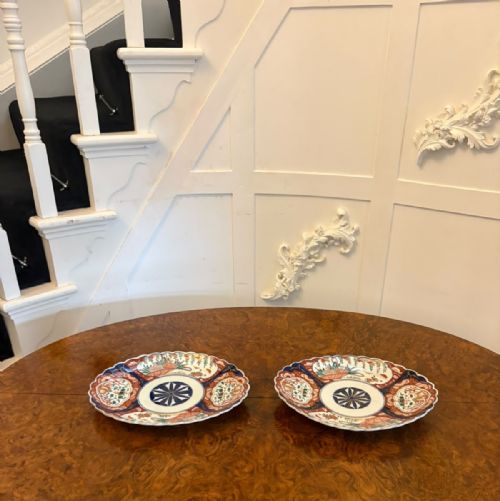
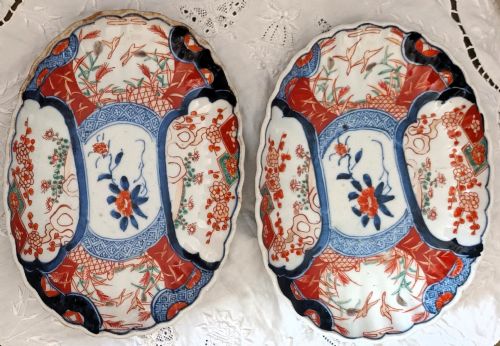
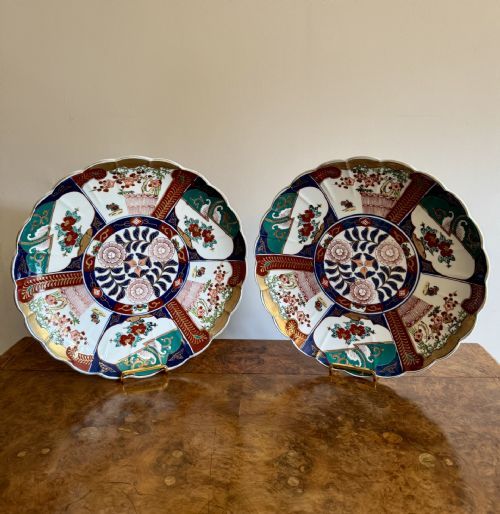
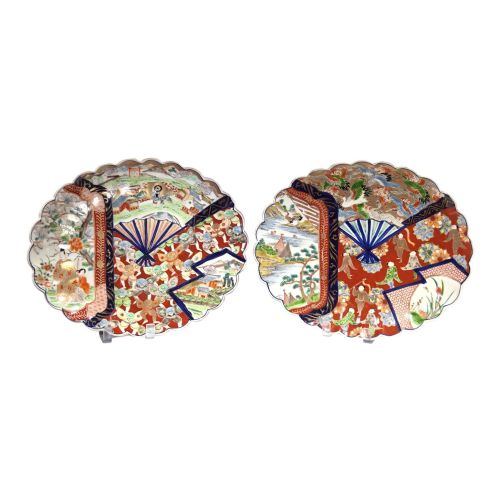
These red porcelain wall platter selections are decorative ceramic and porcelain chargers hailing primarily from Japanese Imari and Chinese export traditions, sought after for vivid wall display.
Red Porcelain Wall Platter
A red porcelain wall platter selection centres predominantly on Japanese Imari chargers and decorative plates spanning the late nineteenth century, alongside Chinese export wares and nineteenth-century European porcelain. These objects take the form of large round chargers, square plates, and scalloped dishes intended for prominent display.
The material record shows a strong presence of Japanese Meiji period manufacture and European Victorian adaptations, bringing diverse regional aesthetics into a single category. Pieces range from twelve-inch diameters to substantial twenty-two-inch display chargers.
How they were made
Potters utilised hard-paste porcelain and ceramic bodies finished with glaze, enamel, and cobalt underglaze decoration. Many examples incorporate hand-painted pigments alongside gilding.
Firing techniques allowed for complex polychrome schemes typical of the Imari and Arita traditions, integrating iron-red pigments with blue underglaze and gold leaf accents.
Listings feature porcelain and ceramic pieces spanning the seventeenth century through to the early twentieth century, with a strong concentration of Victorian and Meiji period examples.
What varies in quality
Quality rests upon the precision of the hand-painted brushwork and the vibrancy of the enamel and iron-red pigments applied to the porcelain surface. Superior examples exhibit intricate detailing in pictorial scenes, such as depictions of the Seven Lucky Gods.
The crispness of the moulding in shaped, square, or scalloped plates distinguishes finer studio output from standard utilitarian wares of the period.
The Red Porcelain Wall Platter Glossary
- Imari
- A style of Japanese export porcelain originating from the town of Arita, traditionally characterised by a palette of cobalt blue, iron-red, and gold. This decorative scheme became widely popular across Europe during the nineteenth century.
- Charger
- A large decorative plate or platter used traditionally for formal display on walls or sideboards rather than dining. These pieces measure significantly larger than standard dinner plates.
- Meiji
- The period of Japanese history spanning from 1868 to 1912, corresponding with the reign of the Emperor Meiji. Wares from this era often show a high degree of technical refinement for the export market.
- Cobalt Underglaze
- A blue pigment applied to ceramic bodies before the final glaze and high-temperature firing. This technique ensures the colour remains permanent and protected beneath a glassy layer.
- Arita
- A Japanese town renowned for its ceramic production and the primary manufacturing centre for Imari wares. Artisans here supplied both domestic markets and international export channels.
Red Porcelain Wall Platter: Frequently Asked Questions
How were wall platters displayed?
Historic interiors utilised heavy wire hangers or specialised plate rails to mount large chargers securely on walls.
This method of display placed intricate painted motifs at eye level for decorative impact.
What is Japanese Imari?
Japanese Imari designates porcelain decorated in contrasting tones of iron-red, cobalt blue, and gold leaf.
These pieces emerged from Arita kilns to satisfy international demand during the Edo and Meiji periods.
How do I clean antique porcelain?
Dusting with a soft, dry brush preserves the delicate enamel and gold leaf decorations found on these chargers.
Harsh cleaning agents and immersion in water risk damaging historic glazes and pigments.
Can these plates be used for food?
Nineteenth-century decorative chargers and wall platters served primarily as visual ornamentation rather than functional tableware.
Historic glazes and heavy enamel work mean modern dining use is generally discouraged.