




Red Overlay Glass Vase
These red overlay glass vase pieces bring rich colour and layered depth to any room, offering striking contrast through contrasting glass strata.

Red Overlay Glass Vase
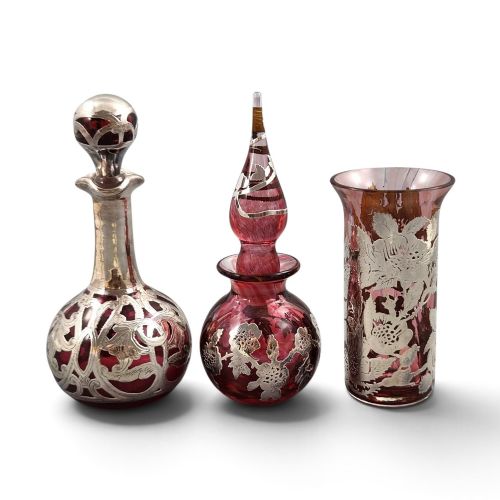
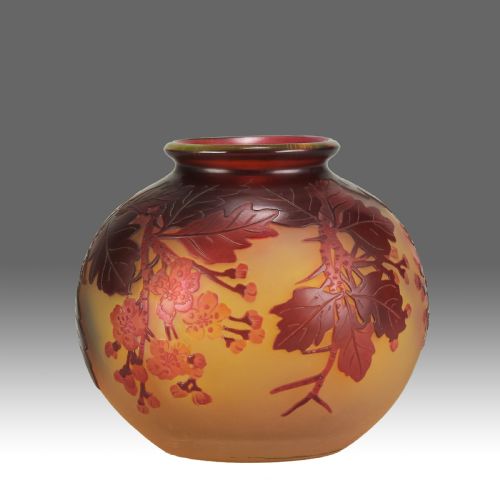
When you search for a red overlay glass vase, you encounter decorative vessels formed by fusing a distinct layer of red glass over a contrasting base body, most frequently clear crystal, frosted glass, or cranberry glass. These pieces span periods from the nineteenth century through the art nouveau and art deco eras, showcasing forms ranging from slender lily vases to substantial ovoid shapes and botanical vanity ensembles.
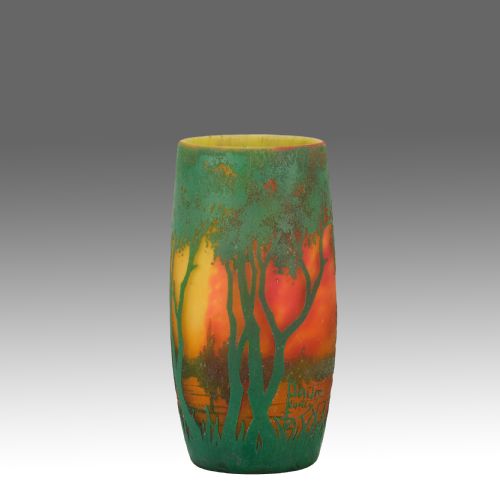
You are most likely to meet Victorian bohemian examples alongside french cameo glass creations on this page. The selection brings together English cranberry glass, Belgian crystal, and classical floral motifs, reflecting diverse craftsmanship across the nineteenth and twentieth centuries.
How they were made
Makers formed these vessels by gathering molten coloured glass over a contrasting core or lining before blowing the combined gather into shape. This layered construction allowed artisans to cut through the exterior stratum to reveal the contrasting glass beneath.
Acid-etching and cameo techniques served to carve intricate botanical patterns, such as apple blossoms and poppies, into the surface. Additional embellishments like gold leaf, sterling silver mounts, and lead crystal further defined the finish of these decorative glasswares.
Object forms span vanity ensembles and goblets alongside traditional vases featuring floral motifs like apple blossoms and poppies.
What varies in quality
Depth of colour and precision in carving separate finer examples from simpler production. The crispness of the edges where the red stratum meets the underlying crystal demonstrates the skill involved in cutting or acid-etching the design.
The integration of precious materials such as sterling silver mounts or gold leaf elevates certain pieces. Furthermore, the weight and clarity of the lead crystal base influence the overall presence of the vase.
Gallé·Thomas Webb & Sons·Val St. Lambert·Baccarat·Daum Frères·D'Argental·Emile Galle
The Red Overlay Glass Vase Glossary
- Overlay Glass
- Glass composed of two or more distinct layers of different colours, fused together while molten. This technique permits artisans to cut away the exterior layer to expose the contrasting colour underneath.
- Cameo Glass
- A form of luxury glassware produced by carving or acid-etching designs through a fused outer layer of glass to reveal a contrasting background. It requires immense precision and patience from the glassmaker.
- Ruby Glass
- Deep red decorative glass coloured with gold compounds or copper during the manufacturing process. It provides the striking exterior hue seen on many Victorian and bohemian pieces.
- Acid-Etched Glass
- Glass treated with hydrofluoric acid to eat away the surface and create frosted patterns or relief designs. This method was widely utilised during the art nouveau period for botanical motifs.
Red Overlay Glass Vase: Frequently Asked Questions
How do I clean a red overlay glass vase?
Wash the glass gently in lukewarm water using mild soap, avoiding harsh scrubbing brushes or abrasive detergents that might harm the surface. Dry the piece thoroughly with a soft lint-free cloth to preserve the clarity of the crystal and any metallic mounts.
Take special care if the vessel incorporates sterling silver mounts or delicate gold leaf detailing. Submerging mounted pieces in water can damage organic adhesives or tarnished metalwork.
What periods are these vases from?
The listings encompass items produced during the nineteenth and early twentieth centuries, spanning the Victorian era through art nouveau and art deco movements. Pieces reflect stylistic shifts from ornate nineteenth century bohemian designs to fluid botanical art nouveau forms.
Manufacturing dates stretch from the eighteen eighties into the nineteen thirties, capturing distinct periods of European glassmaking excellence in France, Belgium, Bohemia, and England.
Are these pieces made of crystal?
Many examples utilise lead crystal as the base material beneath the red exterior layer, providing weight and clarity. Other vessels consist of standard decorative glass or cranberry glass formations.
The combination of layered glass types allows the distinctive red overlay to create sharp visual contrast when carved or etched.
Where were these vases manufactured?
Production centres for these decorative objects included France, Belgium, Bohemia, and England. Each region developed distinct approaches to glass layering, cutting, and acid-etching.
French workshops excelled in cameo floral motifs, while Bohemian and English makers frequently produced panelled ovoid vessels and cranberry glass tableware.