


Red Oak Seat
A red oak seat brings heavy grain and deep warmth into a room, spanning sturdy Victorian armchairs to slender Edwardian dining chairs.
Red Oak Seat
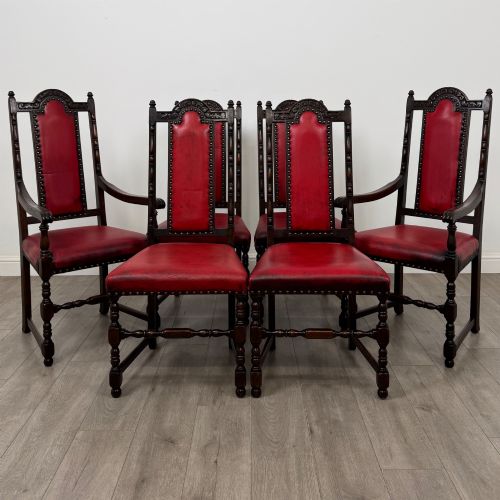
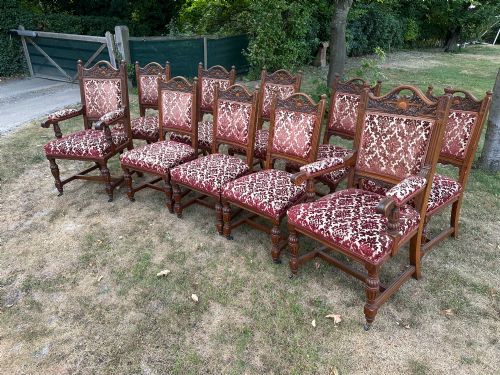
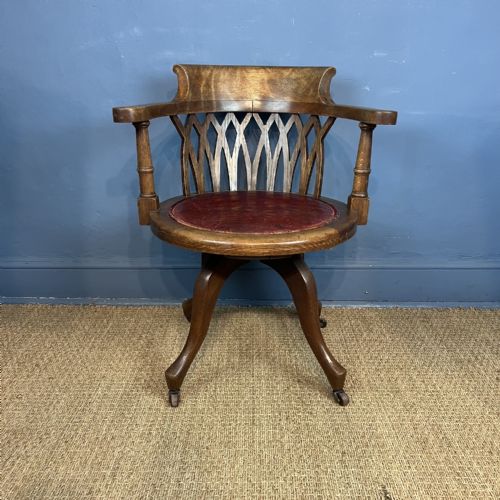
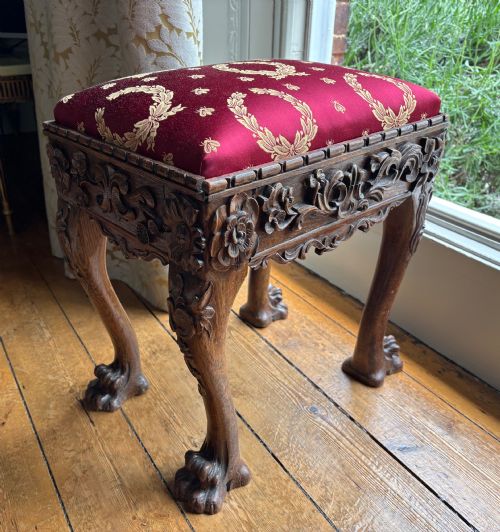
A red oak seat encompasses everything from single desk chairs and window benches to matched sets of dining chairs spanning the Victorian and Edwardian decades. Dining chairs and office seating predominate, alongside occasional stools, folding chairs, and larger hall benches.
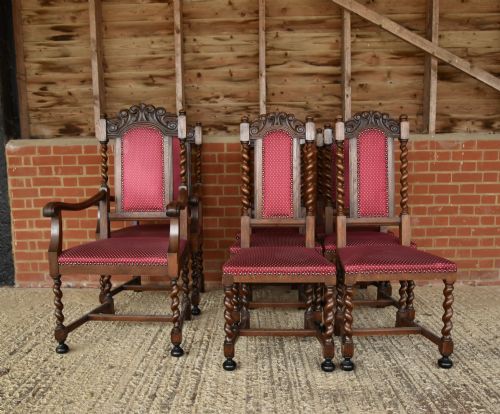
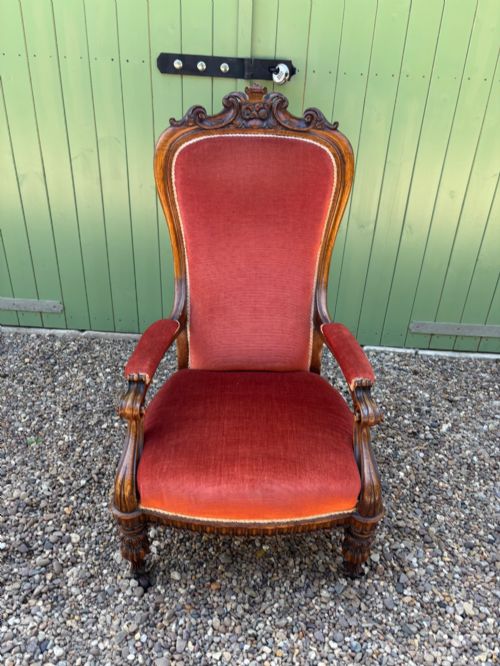
The material unites diverse styles, connecting heavy Gothic revival and Jacobean revival frames with cleaner Arts and Crafts forms. Pieces range from straightforward country seating to ornate carved library armchairs and revolving desk chairs.
Materials and construction
Solid oak provides the primary structural frame across these pieces, frequently shaped with barley twists, scroll carving, or crisply turned supports. Joinery relies on traditional pegged mortise and tenon construction to withstand heavy daily use.
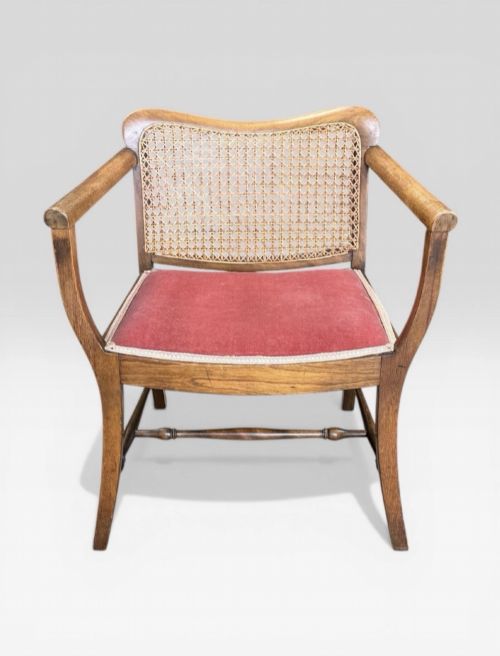
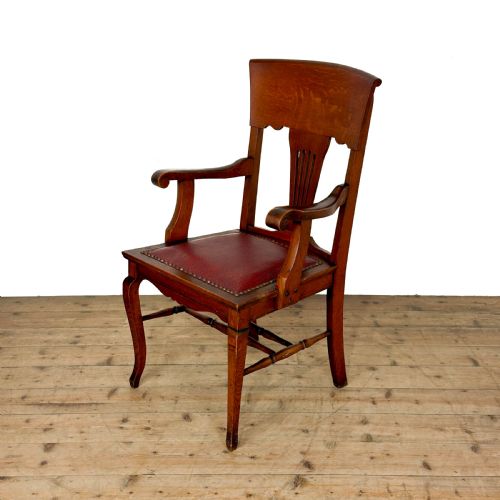
Upholstered elements introduce contrasting textures, utilising red leather, velvet, fabric, cane, and brass studs. Metal hardware appears in swivel mechanisms, tilt fittings, and structural bracing on campaign and folding chairs.
Listings span the 17th century through the 1920s, pairing solid oak frames with leather, brass, cane, and iron.
Assessing craftsmanship
Quality reveals itself in the depth and crispness of the oak carving, the weight of the timber, and the integrity of the underlying joinery. Stronger examples maintain rigid frames without excessive movement in the joints or legs.
The standard of upholstery and secondary materials also distinguishes the range, from simple replacement covers to period-appropriate leather, cane work, and hand-applied brass studding.
James Shoolbred·George Morant
The Red Oak Seat Glossary
- Barley twist
- A form of woodturning resembling a twisted rope, common on the legs and stretchers of late Victorian and 1920s oak chairs.
- Bergere
- An enclosed armchair with an upholstered back and sides, often featuring woven cane panels set into the oak frame.
- Gothic Revival
- A nineteenth-century design movement drawing on medieval architecture, characterised by pointed arches, tracery, and heavy proportions.
- Cross-frame
- A structural arrangement where intersecting wooden members form an X-shape beneath the seat or as arm supports.
Red Oak Seat: Frequently Asked Questions
How do I identify a Victorian oak chair?
Victorian oak chairs typically display darker finishes, robust proportions, and dense ornamentation such as foliate carving or barley twist supports.
They often incorporate functional elements like swivel mechanisms on desk chairs or padded leather inserts on the seat.
Where should I place a heavy oak bench?
Long oak benches and hall seats suit entrance hallways, large dining tables, or positioned beneath wide windows.
Their substantial timber frames provide a strong architectural anchor in high-traffic or open-plan areas.
Are swivel desk chairs sturdy enough for daily work?
Edwardian and late Victorian revolving desk chairs utilise heavy oak underframes and iron swivel mechanisms designed for constant movement.
When the joints remain tight and the central screw mechanism functions smoothly, they handle modern desk use reliably.
How do Arts and Crafts oak seats differ from Gothic Revival?
Arts and Crafts pieces emphasise simple construction, visible joinery, and functional honesty with minimal surface ornamentation.
Gothic Revival designs focus instead on historical architectural motifs, deep relief carving, and imposing proportions.