

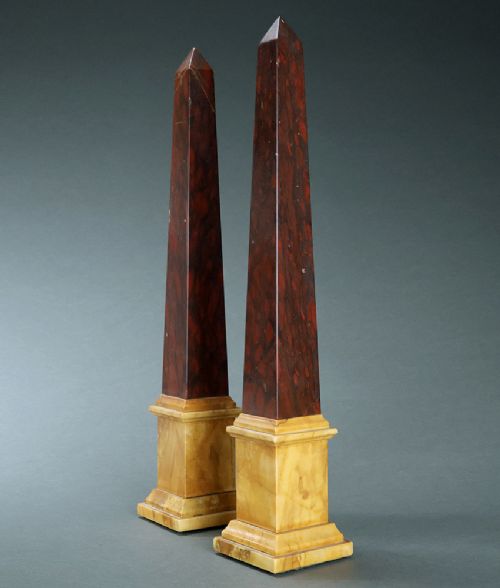


Red Marble Sculpture
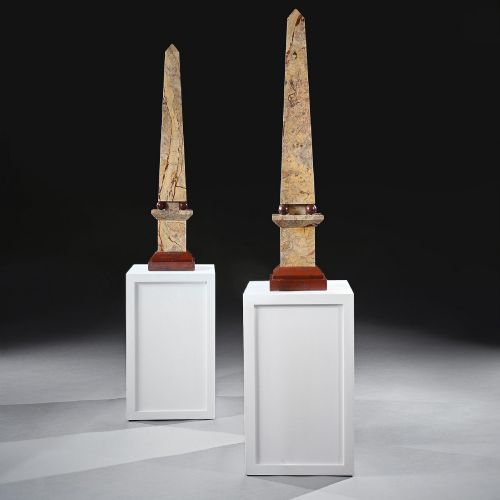
When you search for red marble sculpture, you encounter heavy stone figures and obelisks grounded in classical revival taste.
Red Marble Sculpture
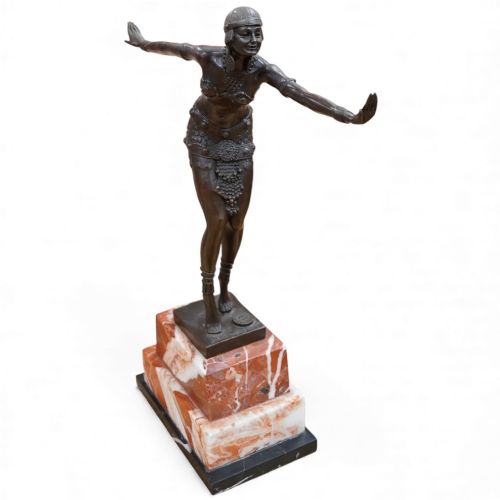
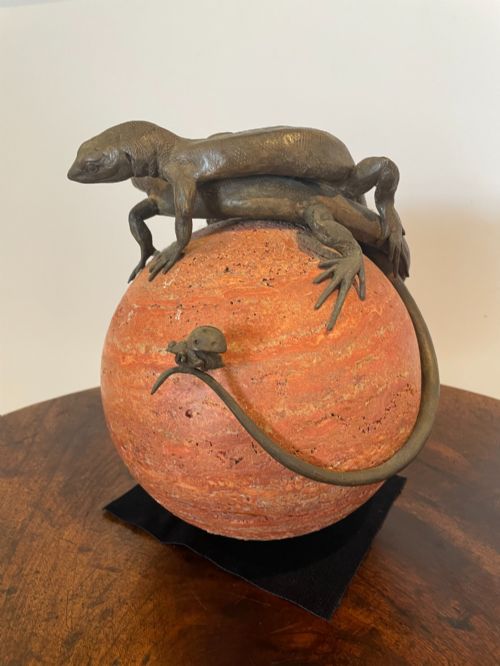
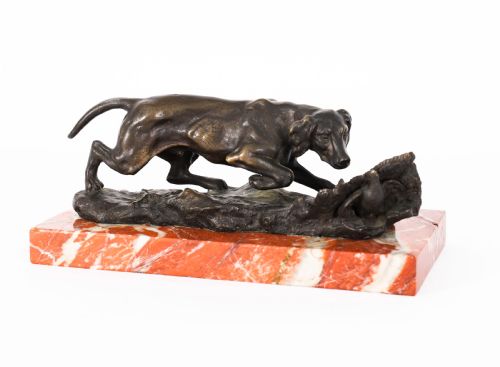
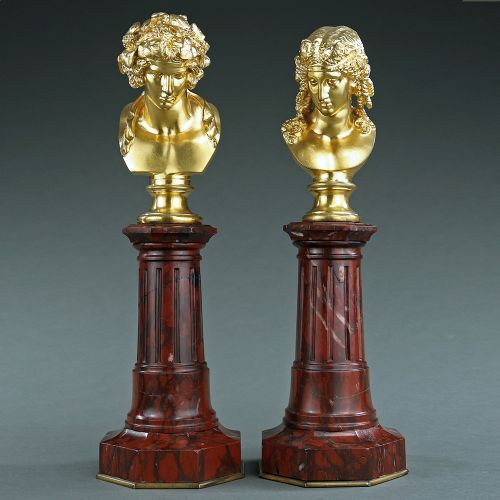
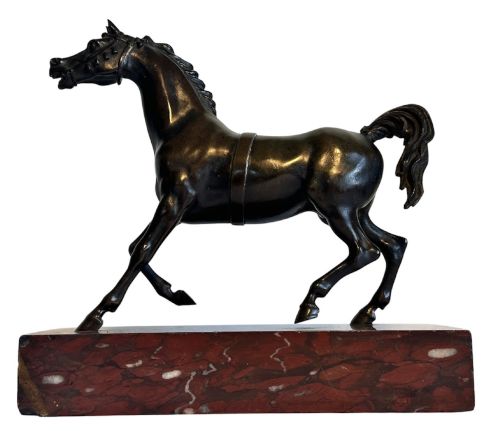
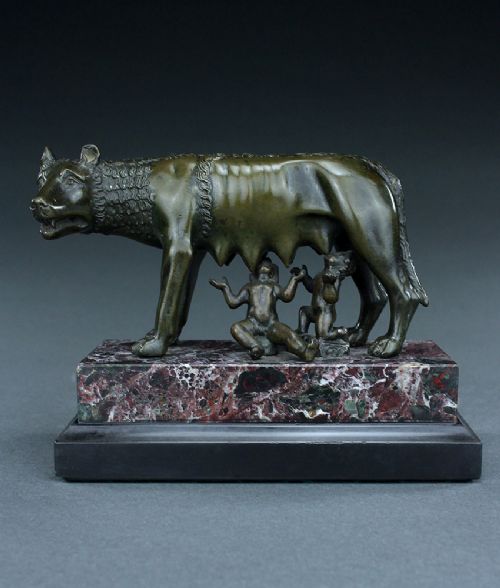
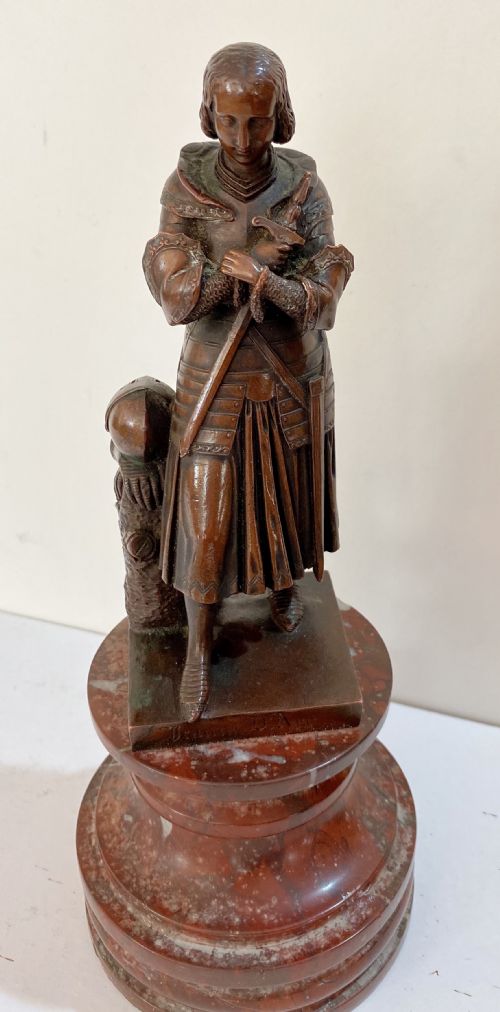
A red marble sculpture search uncovers a lineage of nineteenth-century Grand Tour souvenirs, animalier studies, and architectural ornaments carved from stones like Rosso Antico, Portasanta, and Rouge marble. These works range from monumental Italian obelisks and tazzas to French bronze figures mounted upon contrasting stone bases.
You will frequently meet items originating from nineteenth-century European workshops, particularly Italian stone-carving centres and French foundries producing classical reductions. The combination of dark red mineral veins with cast bronze or gilt mounts defines the predominant visual language of this category.
How they were made
The stone elements rely on traditional masonry techniques, hand-turned on lathes for columns and obelisks or carved by hand for figurative reductions like the Uffizi Boar and classical vases. Stones such as Rosso Antico and Portasanta are selected for their distinct fossiliferous patterns and deep ferruginous ground.
Metal components, including patinated bronze, gilt bronze, and ormolu mounts, utilise the lost-wax casting method or sand casting. These metal figures and decorative elements are then mechanically pinned or fitted directly into chased stone bases and pedestals.
Listings demonstrate a strong presence of nineteenth-century French and Italian manufacture, pairing cast bronze subjects with sedimentary red marbles.
What varies in quality
The distinction between ordinary and exceptional works rests upon the crispness of the stone carving and the fidelity of the bronze chase work. Superior pieces display sharply defined architectural edges on obelisks and minute anatomical detail in animalier or human subjects.
Material selection and assembly integrity further separate the tiers, as finer items utilise dense, uniform marble varieties paired with heavy, well-finished bronze rather than hollow or thin metal components secured with loose pins.
Carl Kauba·Prosper Lecourtier·Benedetto Boschetti·Christophe Fratin·Emmanuel Villanis
The Red Marble Sculpture Glossary
- Rosso Antico
- An intense dark red antique marble prized by classical sculptors and nineteenth-century Grand Tour souvenir makers for its rich ferrous colour. It mimics the prized quarries utilised in ancient Rome.
- Grand Tour
- A cultural journey undertaken by wealthy young Europeans in the eighteenth and nineteenth centuries, generating a massive market for miniature bronze and marble souvenirs. These reductions reproduced famous antique sculptures found in Italian collections.
- Animalier
- A nineteenth-century French artistic movement focusing on realistic depictions of animals in bronze and stone. Practitioners captured creatures in naturalistic poses, often mounted upon heavy marble plinths.
- Tazza
- A shallow ornamental cup or bowl raised on a stem and foot, frequently carved from decorative marbles like Rosso Antico. They served purely decorative functions on nineteenth-century mantelpieces and console tables.
Red Marble Sculpture: Frequently Asked Questions
What is a red marble sculpture?
These objects comprise carved stone figures, obelisks, and architectural ornaments fashioned from ferruginous limestones and breccias, often combined with cast bronze elements.
Originating largely from nineteenth-century European workshops, they capture classical antiquity and animalier subjects through dense, variegated red mineral surfaces.
How were grand tour sculptures used?
Travellers returning from Italy displayed these carved stone and bronze reductions on mantelpieces, desks, and dedicated pedestals as symbols of classical learning and refined taste.
They functioned primarily as decorative interior ornaments that commemorated famous ancient monuments, statues, and architectural fragments seen abroad.
How do I care for marble and bronze?
Dust the surfaces regularly with a soft, dry cloth to prevent particulate accumulation within the natural fissures of the stone and the crevices of the bronze.
Avoid liquid cleaners, waxes, and abrasive cloths, as moisture and chemical residues can stain porous red marbles and strip patinated metal finishes.
How to tell periods apart?
Nineteenth-century pieces typically exhibit hand-finished tool marks and dense, old-world quarry selections like Rosso Antico, Portasanta, or Rouge marble.
Later reproductions and twentieth-century items often feature more uniform machine cutting, standardised mounting pins, and different patination techniques on the accompanying bronze components.