






Red Marble Ornaments
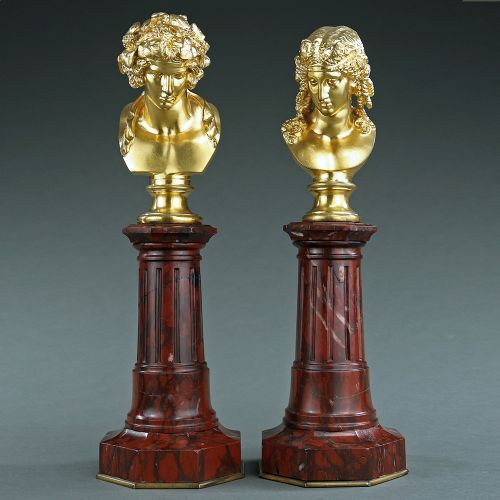
These red marble ornaments bring classic sculptural weight and rich mineral colour to a desk or mantelpiece, drawn largely from nineteenth-century Grand Tour travels and later revivals.
Red Marble Ornaments
Red marble ornaments encompass desk objects, desk accessories, and sculptural pieces shaped from distinctive reddish stones. Collectors seek these items for their rich geological tones and historical connections to classical antiquity.
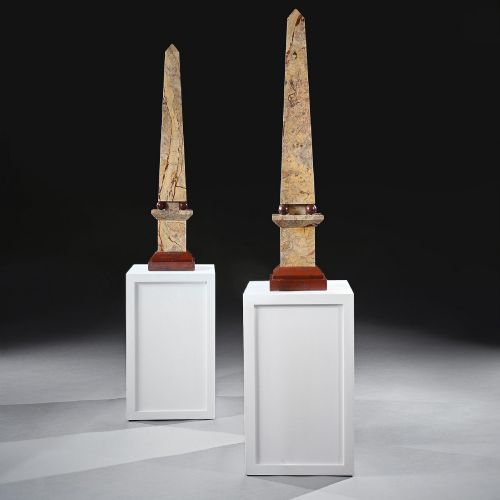
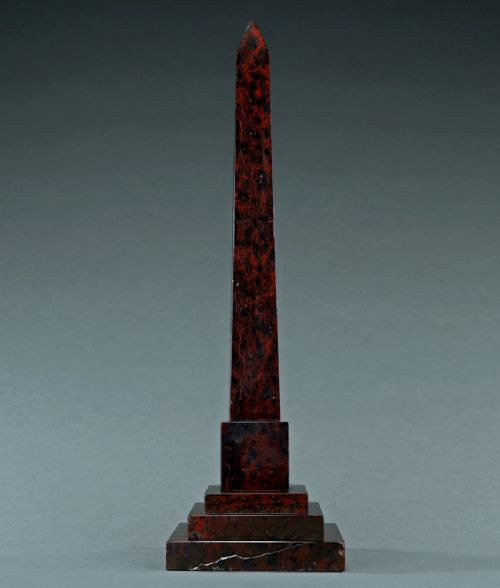
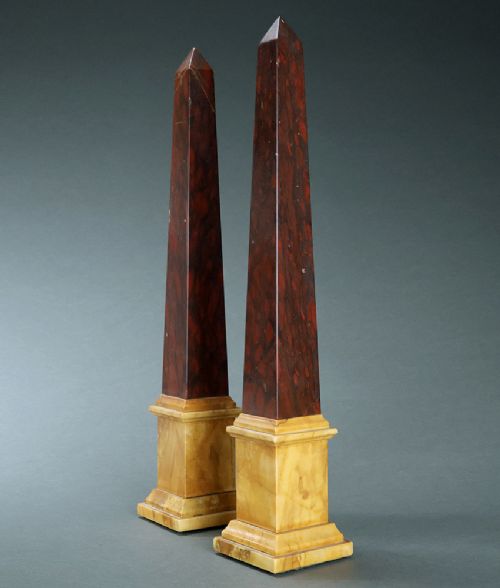
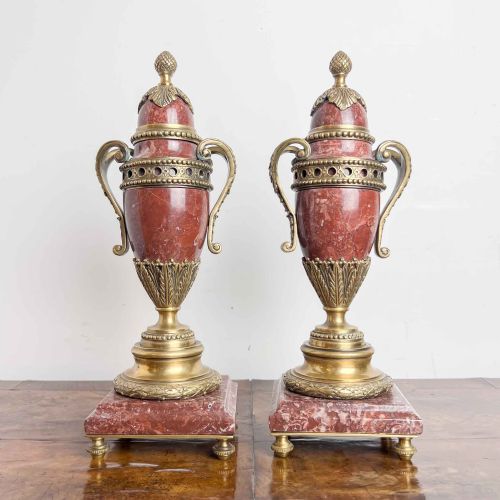
The selections available here range from nineteenth-century Grand Tour obelisks to twentieth-century decorative pieces. Obelisks and cassolettes dominate the forms, frequently paired with contrasting bronze or gilt bronze mounts.
Origins stretch across European workshops, with Italian and French pieces appearing most often in the current material. Neoclassical motifs and Grand Tour souvenirs provide the primary aesthetic framework for these stone works.
How they were made
Lapidary artisans shaped the stone using saws, turning lathes, and hand-polishing abrasives to achieve smooth, gleaming surfaces on hard minerals. Specific varieties such as Portasanta, Rosso Antico, and serpentine required patient cutting to expose natural veining and fossil inclusions.
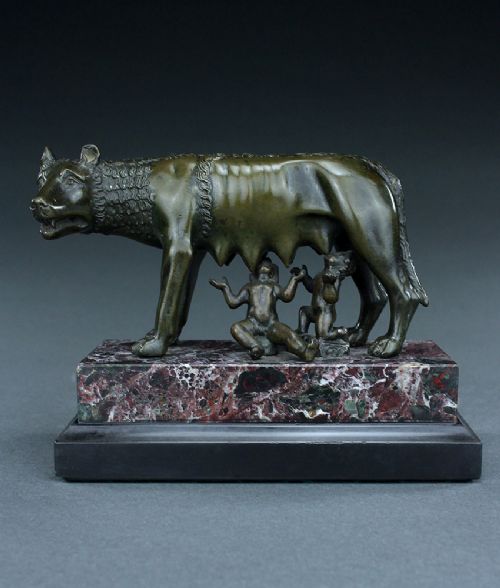
Metal elements like gilt bronze and standard bronze were cast via the lost-wax method and subsequently chased by hand. These metal mounts were then pinned, screwed, or fitted directly onto the marble bases and bodies.
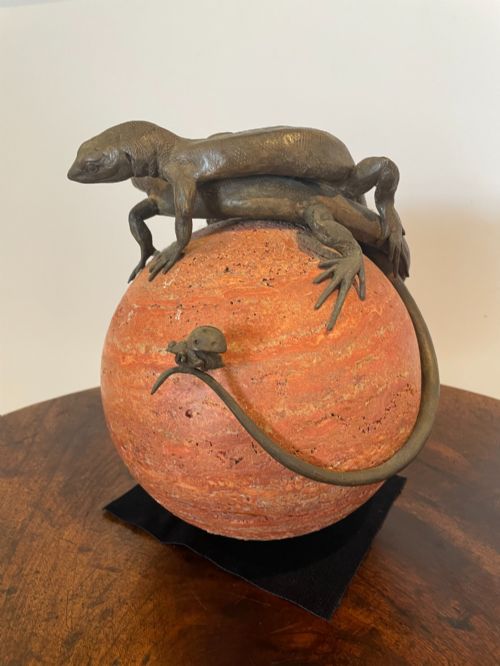
Even a quiet nineteenth-century desk appreciates the sudden watchful presence of a small bronze lizard clinging to its marble base.
What varies in quality
Quality rests upon the precision of the stonework, the sharpness of turning on architectural forms like obelisks, and the crispness of any accompanying bronze casting. Superior examples display tight joints between stone sections and metal mounts without visible gaps or excessive adhesive.
The mineral selection itself dictates visual impact, where distinct brecciation, vibrant natural colouration, and unblemished surfaces elevate a piece above standard decorative items.
The Red Marble Ornaments Glossary
- Obelisk
- A tall, four-sided tapering shaft ending in a pyramid-shaped top. These architectural monuments were frequently reproduced as decorative souvenirs on the Grand Tour.
- Cassolette
- A decorative vase or vessel featuring a reversible lid that functions either as a solid urn or a perfume burner. They often incorporate stone bodies raised on classical metal bases.
- Rosso Antico
- A deep red classical marble prized by Italian stonemasons for its fine grain and rich colour. It mimics the ancient quarries utilised by Roman sculptors.
- Portasanta
- A mottled marble characterised by reddish-pink and purple hues with white and grey veins. The stone takes its name from its historical use in Roman basilica doorways.
- Grand Tour
- A traditional journey through Europe undertaken by upper-class young men during the eighteenth and nineteenth centuries. Travellers collected small bronzes and stone carvings as mementos of their travels.
Red Marble Ornaments: Frequently Asked Questions
What periods do these red marble ornaments come from?
The pieces span the nineteenth and twentieth centuries, capturing periods of classical revival and Grand Tour collecting.
Craftsmen produced many of these items around eighteen-eighty to nineteen-thirty, drawing on earlier architectural styles.
How were these stone ornaments used historically?
Travellers displayed them in studies and libraries as tangible proof of their European journeys and classical education.
Larger specimens functioned purely as mantel decoration while smaller examples served as desk weights or bookends.
How do I care for red marble and bronze?
Dust the stone and metal surfaces gently with a dry, soft cloth to prevent particulate buildup in recessed carvings.
Avoid liquid cleaners and harsh abrasives, as chemical solutions can etch polished stone and strip historical patinas from bronze mounts.
How can I tell different marble types apart?
Examine the base colour and the character of the internal veining under good natural lighting.
Stones like Portasanta show distinct cloudy brecciation, while Rosso Antico presents a more uniform deep red density.