




Marble Mantelpiece Ornaments
Marble mantelpiece ornaments bring classical dignity and striking twentieth-century geometry to a hearth, offering a tangible connection to historic European interiors.
Marble Mantelpiece Ornaments
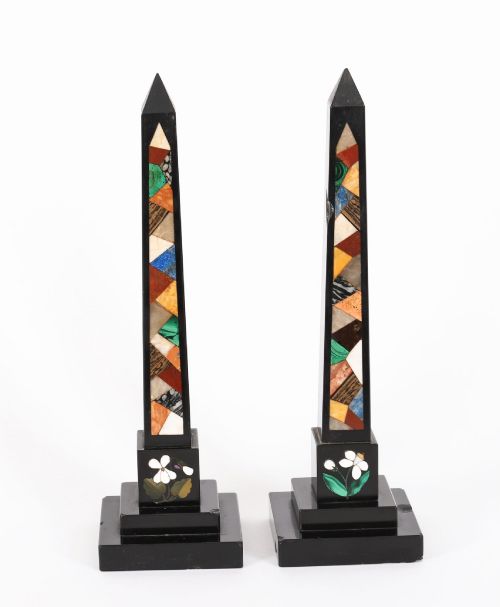
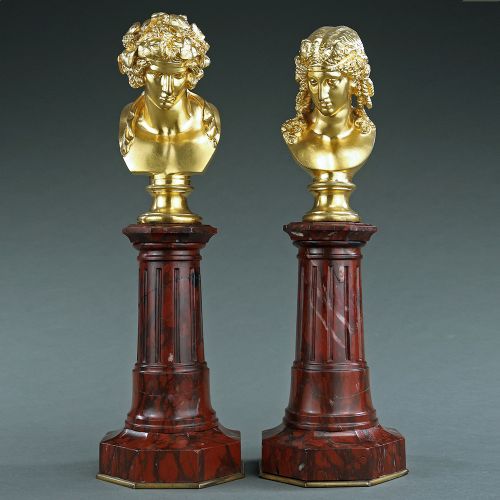
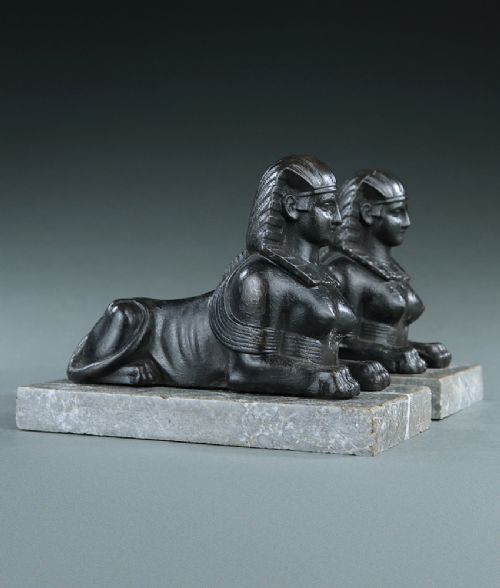
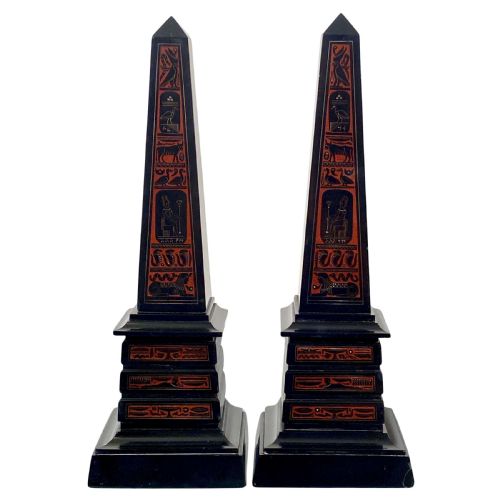
When you search for marble mantelpiece ornaments, you are looking at decorative objects designed to sit atop a fireplace, ranging from heavy architectural forms to sculptural figures. The pieces on this page span the nineteenth and twentieth centuries, taking the shape of obelisks, figurative groups, and classical vases.
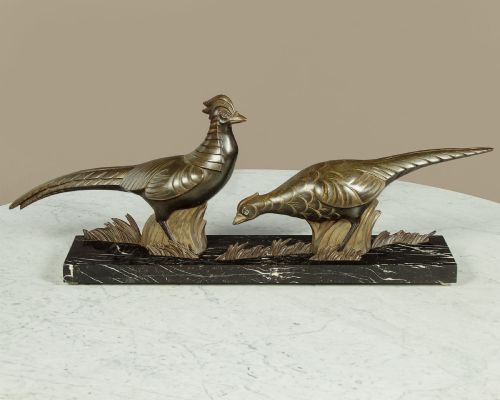
You are most likely to meet two distinct aesthetics here: the architectural souvenirs of the Grand Tour alongside the sharp geometric lines of Art Deco design. Materials shift from specimen marbles and onyx to patinated metals and bronze, reflecting the changing tastes of Victorian and later drawing rooms.
How they were made
The construction of these ornaments relies on the careful shaping of stone and the casting of metal. Sculptors and artisans worked with natural materials like red marble, black rouge griotte, and onyx, often pairing polished stone bases with cast spelter, bronze, or gilt bronze figures.
Specialised techniques governed the creation of architectural pieces, particularly the meticulous cutting and polishing of specimen marbles seen in nineteenth-century obelisks. Metal components utilised traditional foundry casting, yielding crisp details on figures, sphinxes, and cassolettes.
Marble Mantelpiece Ornaments Retail Price Guide 2026
Typical asking prices for marble mantelpiece ornaments among the pieces listed under this phrase on Sellingantiques today, from the lower quarter to the upper quarter. They describe what is for sale here now, not the wider market.
Listings feature periods from the early nineteenth century through to the Art Deco era of the 1930s.
What varies in quality
Quality rests upon the precision of the stonecutter and the definition of the metal casting. Fine specimen marble work displays seamless joints and deeply polished surfaces, whereas lesser pieces show uneven grain matching or dull finishes.
Figurative works reveal differences in the sharpness of the chasing and the harmony between the metal sculpture and its stone base. The finest examples maintain proportional balance and crisp detailing across both the metallic elements and the mineral plinths.
Thomas Hope·H. Bal
The Marble Mantelpiece Ornaments Glossary
- Grand Tour
- A nineteenth-century tradition where wealthy travellers collected souvenirs such as specimen marble obelisks and bronze busts. These items served as tangible proof of an education shaped by continental travel.
- Obelisk
- A tall, four-sided, narrow tapering monument which ends in a pyramid-like shape at the top. In mantelpiece decoration, these were frequently rendered in Italian marble or Ashford black marble.
- Cassolette
- A vessel shaped like a vase or urn that functions as a perfume burner or decorative urn. They frequently appear in pairs on French mantelpieces.
- Spelter
- A zinc alloy commonly used as a cost-effective substitute for bronze in decorative figures. It is often painted or patinated to mimic heavier bronze casting.
- Specimen marble
- Stonework composed of multiple coloured marble varieties assembled to display geological diversity. It is characteristic of nineteenth-century decorative objects.
Marble Mantelpiece Ornaments: Frequently Asked Questions
What is a Grand Tour ornament?
A Grand Tour ornament is a decorative piece, such as a marble obelisk or bronze bust, brought back by travellers touring the cultural sites of Europe during the nineteenth century. These items were designed to display classical learning and refined taste.
They capture specific architectural or sculptural motifs from antiquity, translated into mantelpiece-sized objects using local stones and metals. Their presence in a room connects domestic interiors to historic European journeys.
How do I style marble ornaments?
Marble mantelpiece ornaments work best as balanced focal points on a fireplace, often utilised as pairs flanking a central clock or mirror. Their solid weight anchors the mantel shelf and establishes a formal symmetry.
Consider matching the stone colour to existing architectural elements in the room, such as a fireplace surround or table tops. Pairing geometric forms like obelisks with softer figurative sculptures creates visual contrast.
How do I date a marble ornament?
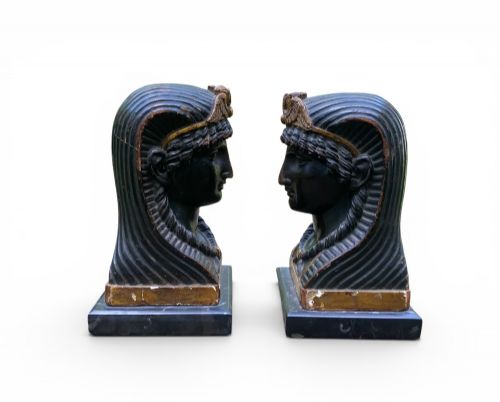
Dating relies on identifying the prevailing artistic style and material combinations of the period. Nineteenth-century pieces often lean towards Neoclassical, Egyptian Revival, or Grand Tour themes with heavy use of specimen marbles.
Twentieth-century examples frequently display the characteristic geometry and stylized figures of Art Deco design, often combining spelter with onyx bases. Examining the manufacturing technique of the base helps confirm the era.
What materials were used?
These ornaments utilise a combination of natural stones and cast metals. Popular stones include standard marble, red marble, onyx, and Ashford black marble.
Metal elements are typically rendered in bronze, gilt bronze, brass, spelter, or patinated metal. These materials were chosen for their contrasting textures and ability to hold fine detail.