
Red Mahogany Drawers
Red mahogany drawers unite centuries of cabinet-making craftsmanship, offering deep timber tones and practical storage for any traditional interior.
Red Mahogany Drawers
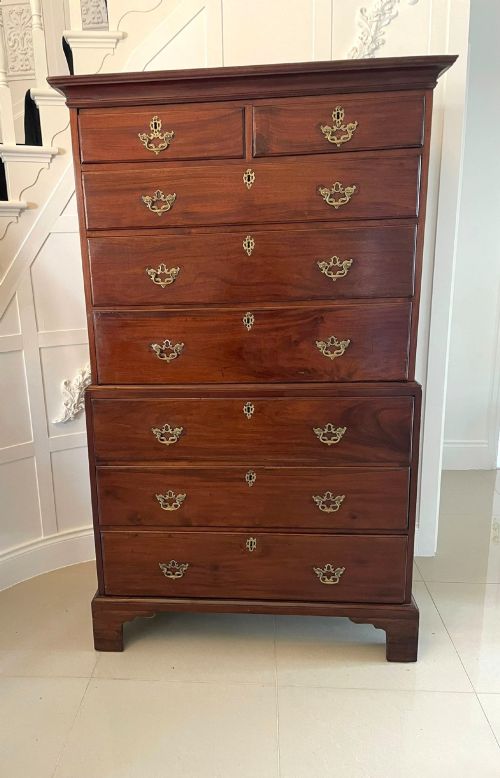
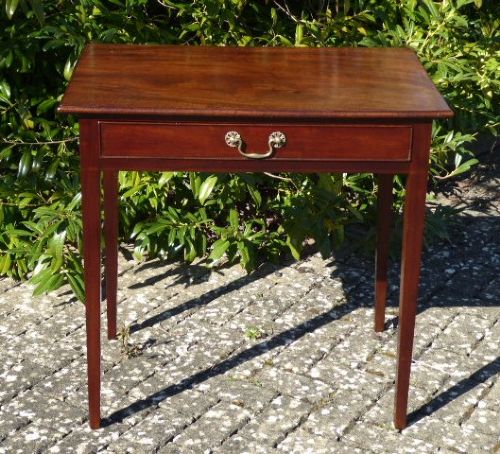
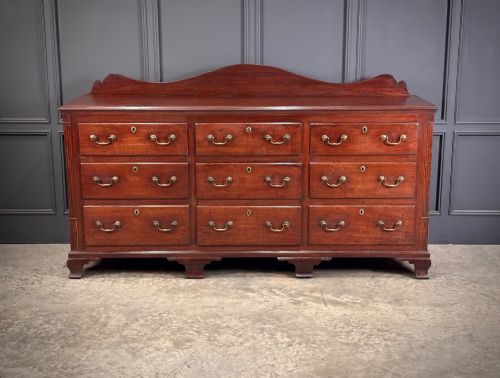
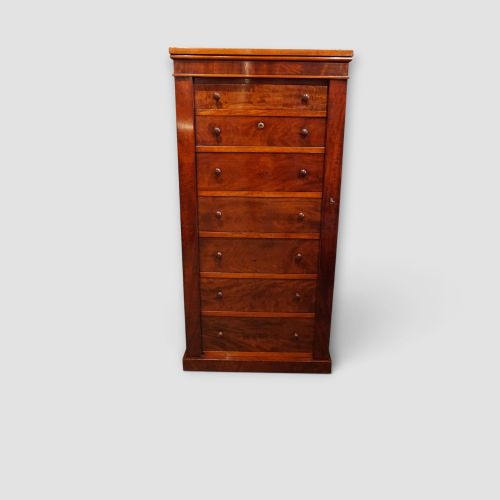
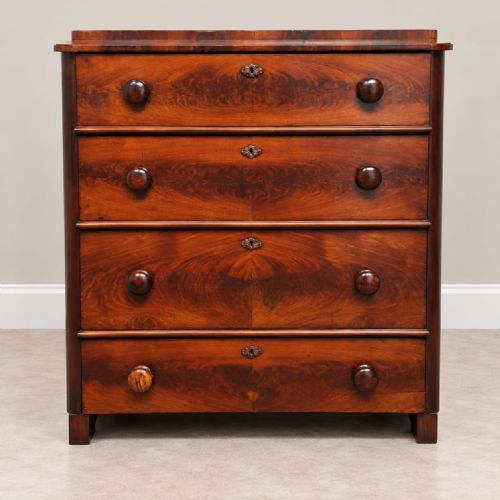
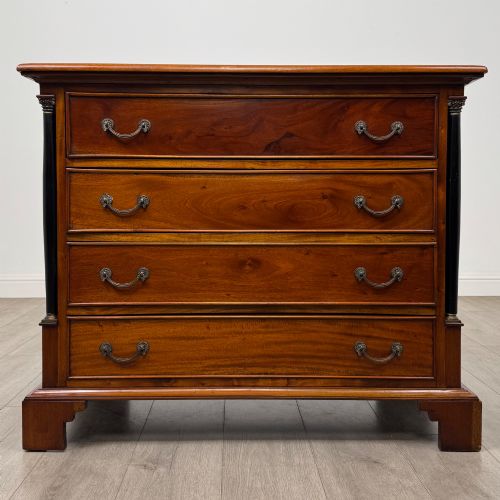
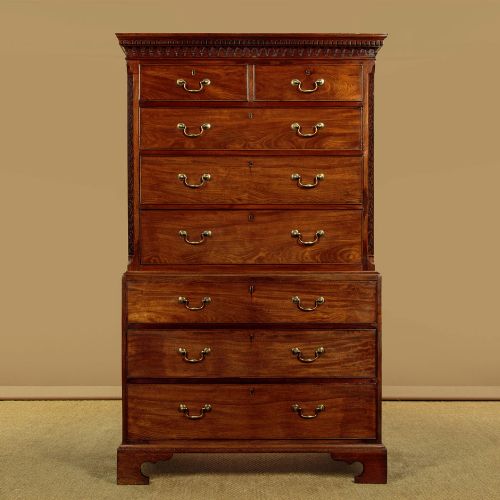
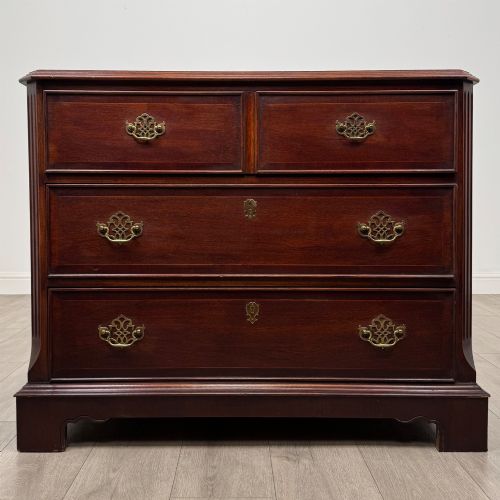
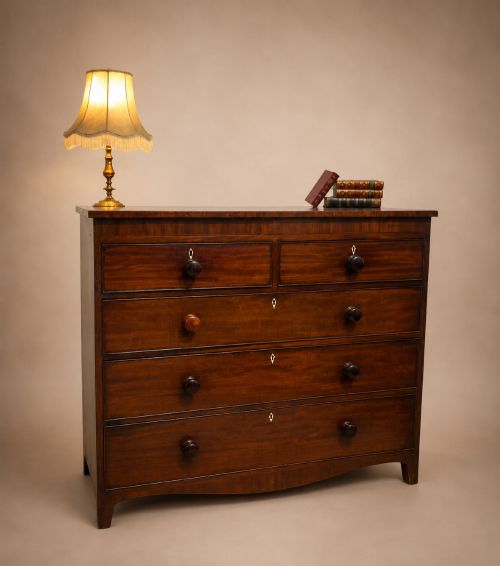
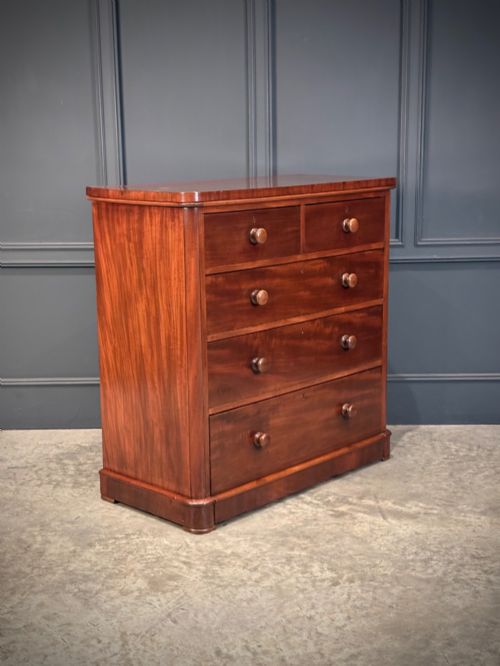
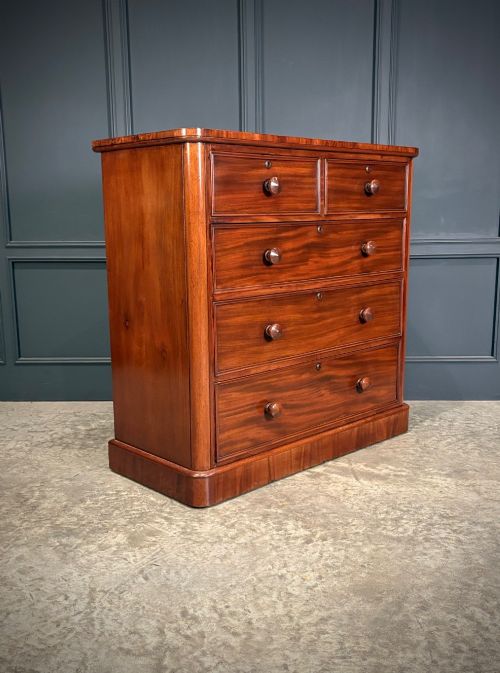
When hunting for red mahogany drawers, buyers encounter case furniture spanning the Georgian, Victorian, and Edwardian eras. The selection ranges from compact bow-front chests and tallboys to secretaire cabinets and side tables incorporating multiple storage tiers.
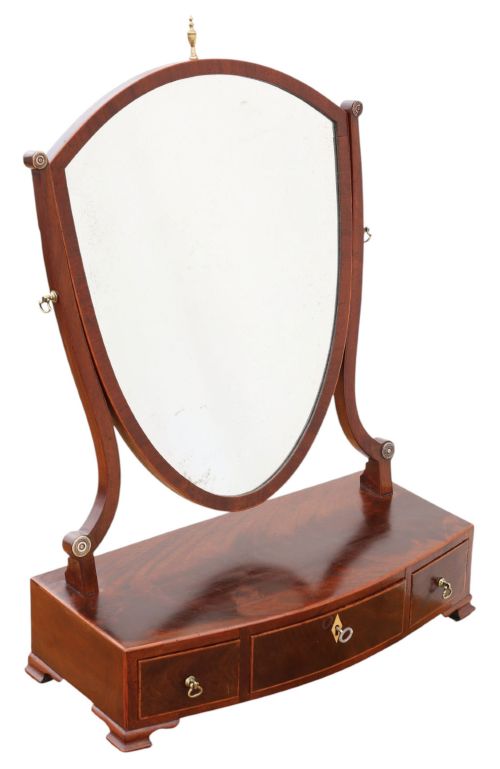
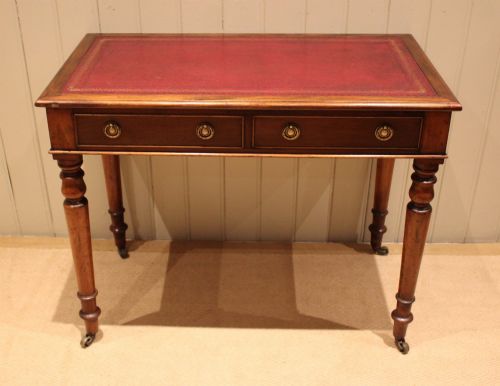
Most pieces seen here belong to the Victorian and Georgian periods, showcasing traditional chest of drawers formats alongside desks and dressing mirrors. These items served functional storage roles in bedrooms and libraries, utilising rich timber grains that deepen in colour over time.
How they were made
Cabinet makers utilised solid mahogany and flame mahogany veneer applied to secondary woods such as pine and oak. Structural integrity relied on dovetail joints for drawer construction, complemented by secondary linings.
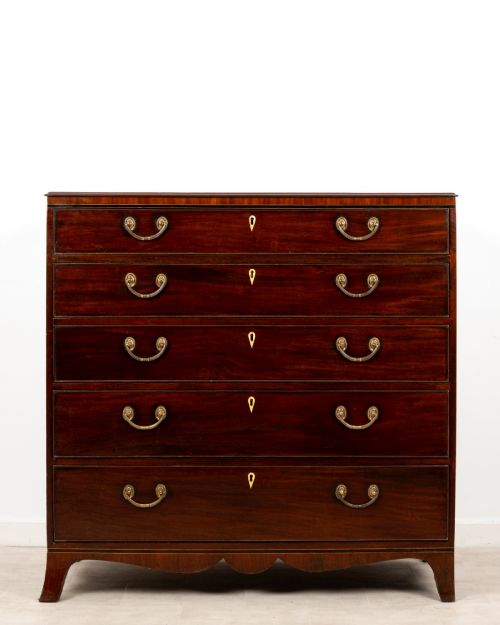
Metalwork played a key role in functionality, with brass handles, working locks, and escutcheons fitted to secure personal items. Secondary materials like bone, leather inserts, and ebonised wood accents appeared on desks and specialised writing pieces.
Some Regency drawers arrived equipped with secret Nelson memorial handles to honour naval victories.
What varies in quality
The choice of timber grain defines the visual tier of a piece, with highly figured flame mahogany veneers marking out superior examples. Plain surfaces contrast with carefully matched book-ended veneers that require advanced carpentry skill.
Original hardware and untouched structural components distinguish better survivals from heavily altered items. The refinement of drawer linings, such as solid oak instead of softer pine, indicates high-grade workshop production.
Jas Shoolbred London
The Red Mahogany Drawers Glossary
- Bow front
- A convex curved cabinet front popular during the Georgian and Regency periods. This shape showcases figured mahogany veneers across a sweeping radius.
- Flame mahogany
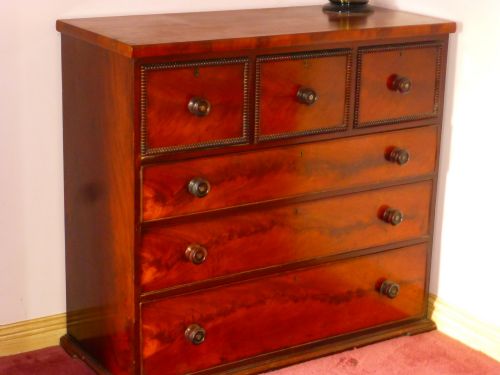
- A veneer cut from the branch junction of the tree, producing a distinctive flickering flame pattern. Cabinet makers reserved this timber for primary display surfaces.
- Tallboy
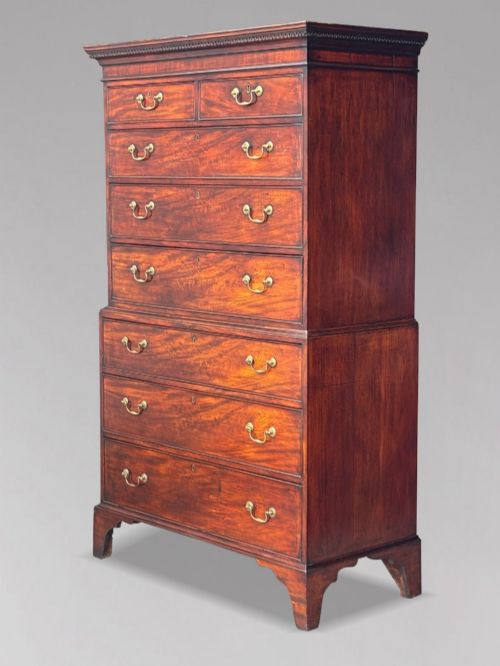
- A tall chest of drawers made in two stacked sections, often combining a chest on chest configuration. These pieces maximise vertical storage space.
- Secretaire
- A desk disguised as a chest of drawers featuring a pull-out writing flap. Interiors typically contain small drawers and pigeonholes.
- Dovetail
- A traditional interlocking joint used to connect drawer sides to drawer fronts. Hand-cut variations indicate older, pre-machine construction.
Red Mahogany Drawers: Frequently Asked Questions
How do I date a mahogany chest?
Dating relies on examining construction methods, timber choice, and hardware style. Earlier Georgian examples often feature hand-cut dovetails and oak linings, while Victorian pieces incorporate machine elements and different lock types.
Secondary woods and backboards also provide clues. Oak and pine secondary timbers point towards specific regional workshops and decades of manufacture.
What is a tallboy?
A tallboy is a stacked chest of drawers, generally comprising a double-height cabinet resting on a lower base. They arrived in British homes to provide maximum vertical storage without taking up excessive floor space.
Georgian cabinet makers refined these proportions into grand architectural statements. They remain practical storage items for high-ceilinged rooms.
How do I care for mahogany furniture?
Maintain mahogany surfaces by keeping them away from direct sunlight and strong heat sources. Consistent indoor humidity prevents timber shrinkage and veneer lifting.
Apply traditional bees-wax periodically to nourish the grain and preserve the deep red polish. Avoid modern silicone sprays that damage antique finishes.
What is flame mahogany?
Flame mahogany is a highly decorative wood veneer harvested where branches join the main trunk. The resulting grain creates a dramatic three-dimensional fire-like pattern.
Craftsmen used these veneers centrally on drawer fronts to draw the eye. It remains a hallmark of superior furniture design across the eighteenth and nineteenth centuries.