


Red Mahogany Centre Table
A red mahogany centre table anchors a room with rich timber grain and sculptural presence, offering a versatile surface for daily life.
Red Mahogany Centre Table
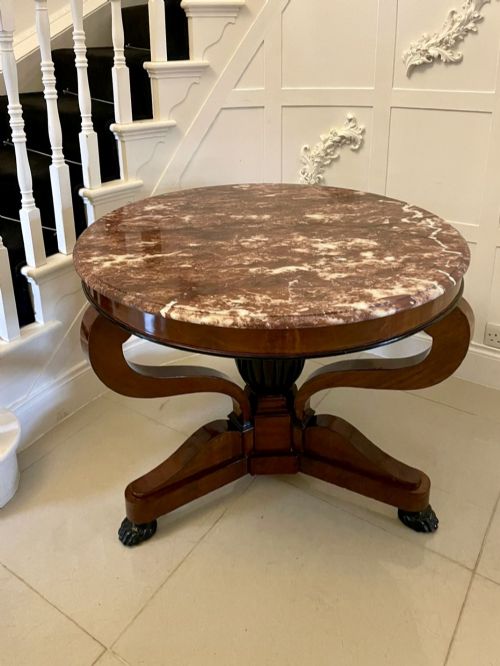
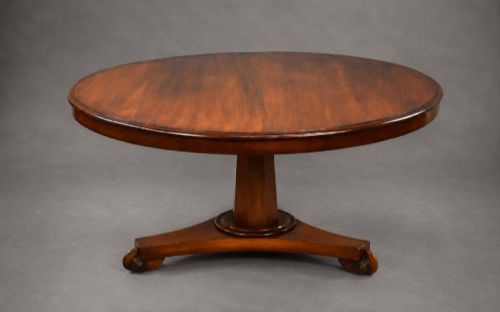
A red mahogany centre table serves as a freestanding focal point within a room, designed to be viewed from every angle rather than pushed against a wall. The pieces found here span the nineteenth century, including Regency, Victorian, and Edwardian eras, alongside George III style examples.
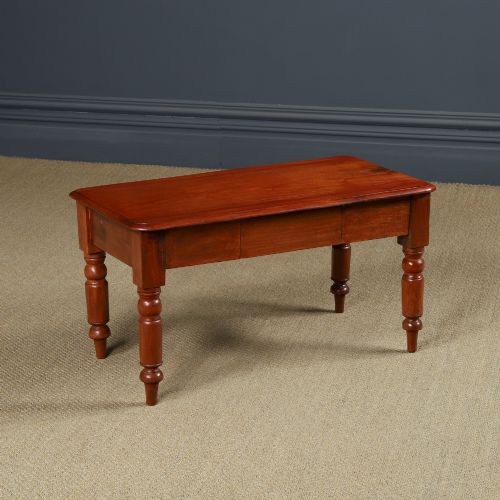
Buyers meet various forms, from circular tilt-top dining pieces and pedestal tables to low coffee tables, occasional tables, and serpentine shapes. Materials frequently pair rich timber with brass, marble, or leather elements to create practical surfaces.
Makers and designers from the archive include James Shoolbred, whose workshops produced notable circular and octagonal variations. These objects functioned historically as dining pieces, breakfast tables, or freestanding display surfaces.
Assessing quality and craftsmanship
The choice of timber grain defines the visual impact, with highly figured mahogany, plum pudding mahogany, and radial veneers marking out superior examples. Plain timber surfaces offer a simpler aesthetic compared to heavily figured or banded tops.
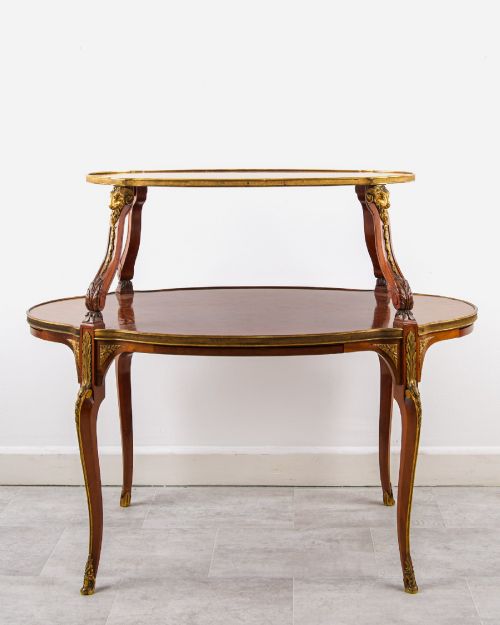
Construction methods determine durability, visible in the stability of pedestal bases, tilt-top mechanisms, and two-tier étagère framing. Secondary details such as brass ormolu mounts, marble inserts, and fine mahogany-lined drawers elevate individual pieces.
Listings incorporate mahogany, brass, flame mahogany, marble, ormolu, and leather across various nineteenth-century periods.
James Shoolbred
The Red Mahogany Centre Table Glossary
- Figured mahogany
- Timber showing distinctive, decorative patterns in the grain such as flame or fiddleback. This decorative figuring resulted from natural variations in tree growth.
- Tilt-top
- A hinged tabletop mechanism allowing the surface to fold vertical when not in use. This clever design saved floor space in period drawing rooms.
- Ormolu
- Gilt bronze mounts applied to furniture for decorative effect. The technique involves coating bronze with a finely ground mercury and gold amalgam.
- Pedestal table
- A table supported by a single central pillar rising from a stable base. This construction allowed greater legroom around circular dining formats.
- Serpentine
- A curved shape characterised by a convex centre flanked by concave ends. The silhouette adds fluid movement to cabinet and table edges.
Red Mahogany Centre Table: Frequently Asked Questions
How were these tables used historically?
These tables functioned as freestanding centrepieces for dining, breakfast, or general drawing room use. Circular formats allowed multiple guests to gather comfortably.
Smaller variants served as occasional or coffee tables, holding books, lamps, or decorative objects in period interiors.
What periods do these pieces represent?
The inventory spans the nineteenth and early twentieth centuries, encompassing Regency, George III style, Victorian, and Edwardian eras.
Each period introduced subtle shifts in silhouette, from neoclassical pedestal designs to elaborate Victorian revival forms.
Are these tables suitable for modern living?
Freestanding tables adapt well to contemporary spaces as dining hubs, library desks, or central display surfaces. Their varied heights accommodate seating or standing use.
Robust timber construction ensures daily utility while retaining historic character.