
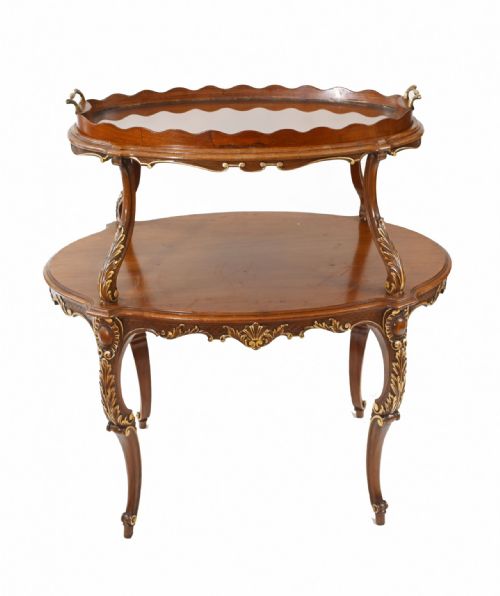
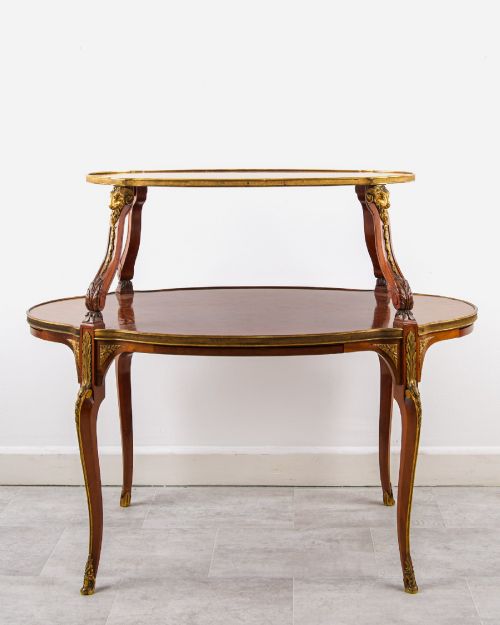
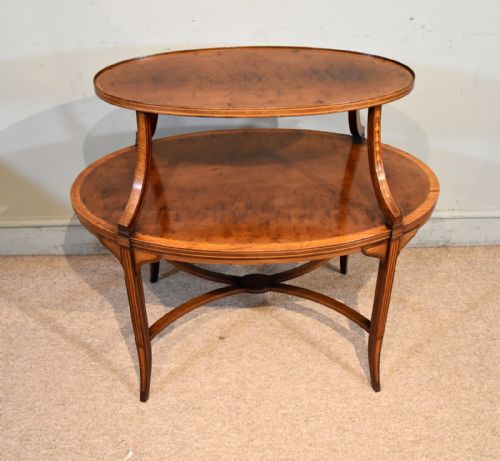


Brown Wood Etagere Table
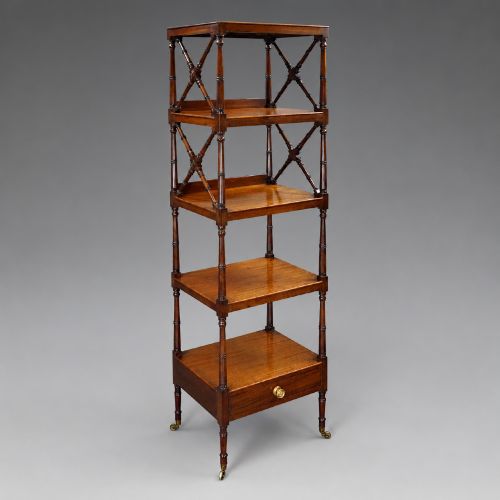
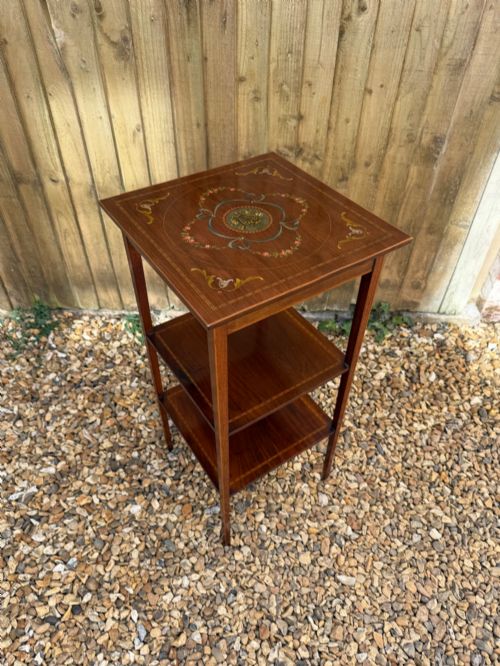
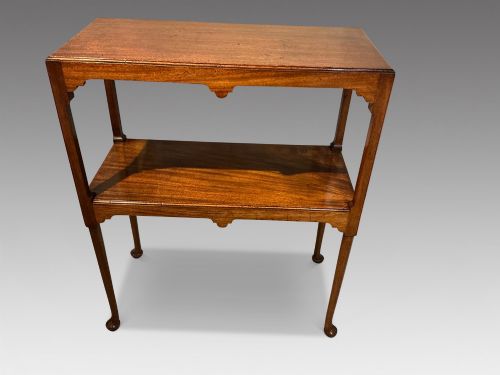
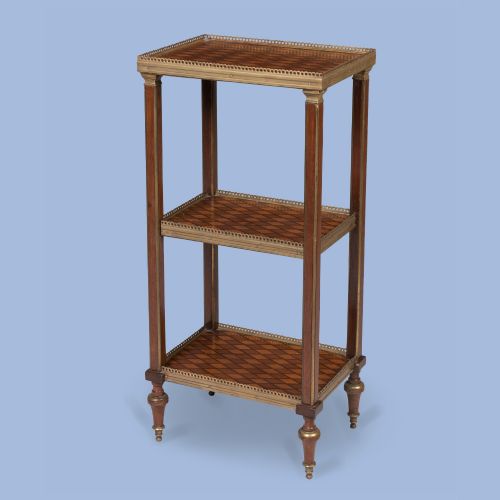
These brown wood etagere table pieces are tiered open stands designed for display and service, combining practical shelving with decorative cabinetwork.
Brown Wood Etagere Table
A brown wood etagere table provides multiple tiers for displaying objects or serving, functioning as a lightweight multi-shelf stand rather than a heavy cabinet. These pieces appear in forms ranging from compact occasional tables to substantial three-tier whatnots and dumb waiters.
The selection centres heavily on nineteenth-century examples, spanning the Georgian, Victorian, and Edwardian eras. Buyers frequently encounter mahogany and walnut constructions, often finished with detailed marquetry or inlay work reflecting Sheraton Revival and Louis XVI influences.
How they were made
Cabinetmakers utilised dense timbers such as mahogany, walnut, and burr walnut for the primary structure, selecting figured veneers to create visual depth on the tiers. Surface decoration often involved boxwood and satinwood inlay, alongside marquetry patterns set into the top surfaces.
Metal elements such as brass or ormolu mounts appear on specific French and English iterations to accent the joints and edges. Construction relies on sturdy vertical supports framing two or three horizontal shelves secured with traditional joinery.
Plum pudding mahogany veneer lends tabletops a speckled texture that resembles a traditional British dessert.
What varies in quality
The distinction between standard and superior pieces rests on the choice of timber and the precision of the cabinetwork. Heavily figured burr veneers and fine marquetry inlay require advanced skill, elevating the visual weight of smaller tables.
Proportion and structural harmony also separate ordinary items from exceptional ones. Well-designed examples maintain balance across multiple tiers without feeling cumbersome, integrating decorative mounts or carved details with restraint.
The Brown Wood Etagere Table Glossary
- Etagere
- A piece of furniture consisting of a set of open shelves for displaying small objects or ornaments. These tiered stands developed in France during the eighteenth century.
- Whatnot
- An open set of shelves used for books or ornaments, closely related in form to the etagere. Victorian and Georgian examples appear frequently in walnut and mahogany.
- Dumb waiter
- A tiered stand or serving table used to hold food and tableware. These pieces often feature pivoting or fixed circular tiers supported by a central pillar.
- Marquetry
- Decorative woodwork where pieces of wood veneer are fitted into a ground material to form designs. This technique decorates the shelves of many Edwardian and nineteenth-century pieces.
- Ormolu
- Gilded bronze mounts applied to furniture for decorative effect. These metal accents are found on French-influenced tables from the nineteenth century.
Brown Wood Etagere Table: Frequently Asked Questions
What is an etagere table?
An etagere table is a tiered piece of furniture with open shelves designed for display or serving. They provide vertical surface area without the visual bulk of a traditional closed cabinet.
These pieces emerged in various forms during the Georgian and Victorian periods, utilising rich timbers like mahogany and walnut to combine utility with decorative refinement.
How do I date a brown wood etagere?
Dating relies on identifying timber choices, construction techniques, and stylistic influences. Georgian and Regency pieces tend to show restrained classical lines, while Victorian examples often feature burr walnut and heavier ornamentation.
Later Edwardian pieces frequently incorporate satinwood inlay and marquetry work. Examining the secondary woods and joinery helps confirm the period of manufacture.
Where should I place an etagere?
These tables suit corners, hallways, or living spaces where display surface is needed without blocking light or passage. Their open tiered design allows them to sit comfortably against walls or function as centre tables.
Because the shelves are visible from all sides, placing them away from direct sunlight protects vulnerable wood veneers and inlaid details.
What is the difference between an etagere and a whatnot?
The terms overlap significantly in antique furniture, though etagere often implies a lighter, more decorative French-influenced piece, while whatnot frequently refers to English multi-tiered shelving stands.
Both serve the same primary function of holding decorative objects across several horizontal levels. Regional terminology often dictates which label a dealer applies to a specific tiered table.