



Red Mahogany Bureau
A red mahogany bureau combines practical writing storage with cabinetmaking skill from the Georgian, Regency, and Victorian periods.
Red Mahogany Bureau
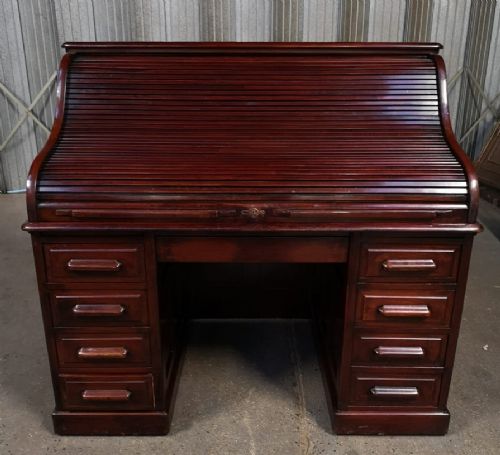
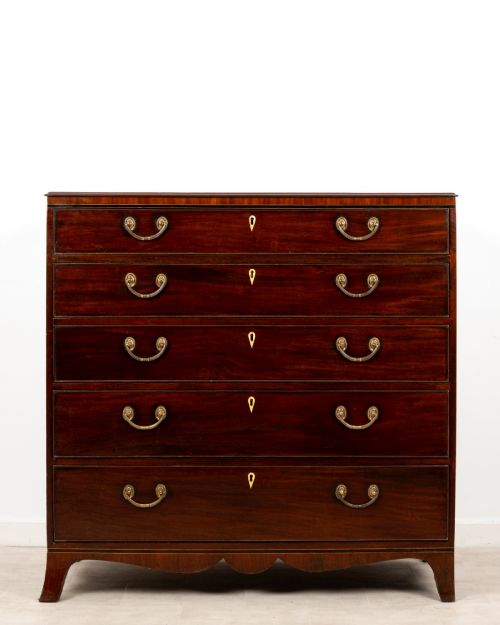
A red mahogany bureau primarily takes the form of a slant-front writing desk, often paired with fitted interior drawers or incorporated into larger bookcase formats. Buyers looking for these items encounter examples originating from the eighteenth century onward, alongside revival styles from the Edwardian period.
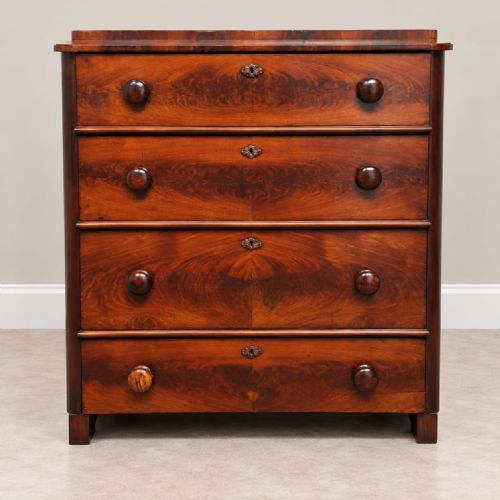
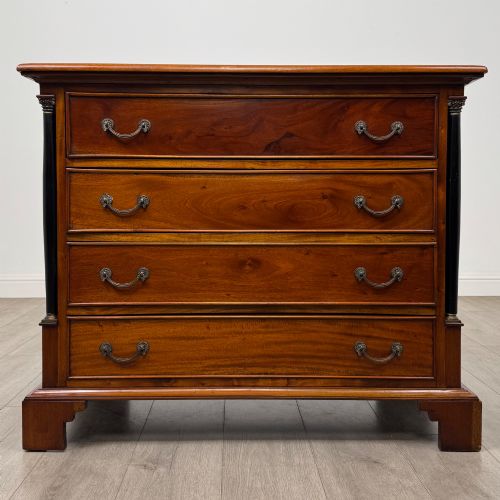
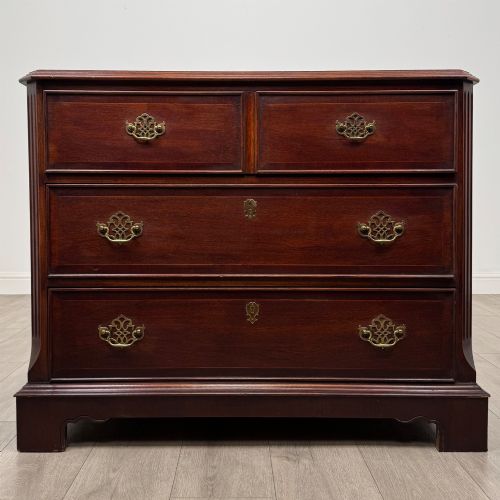
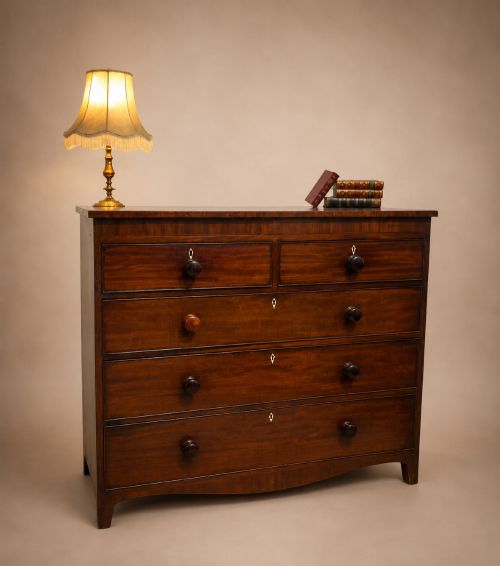
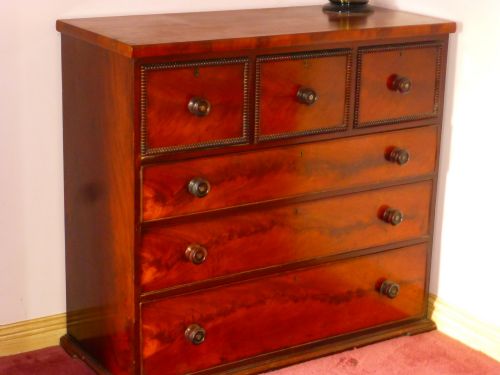
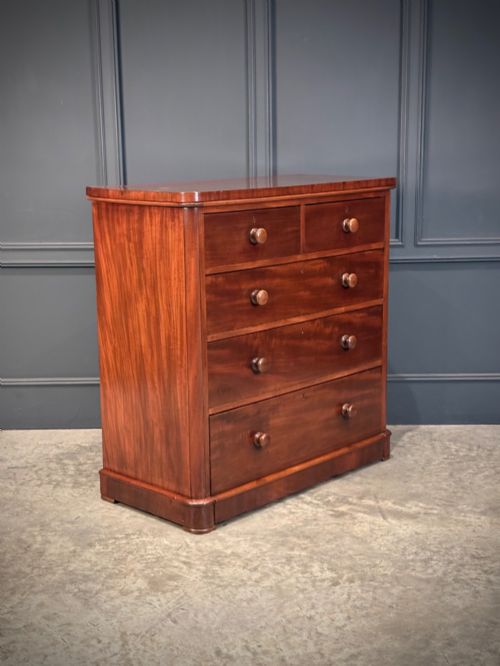
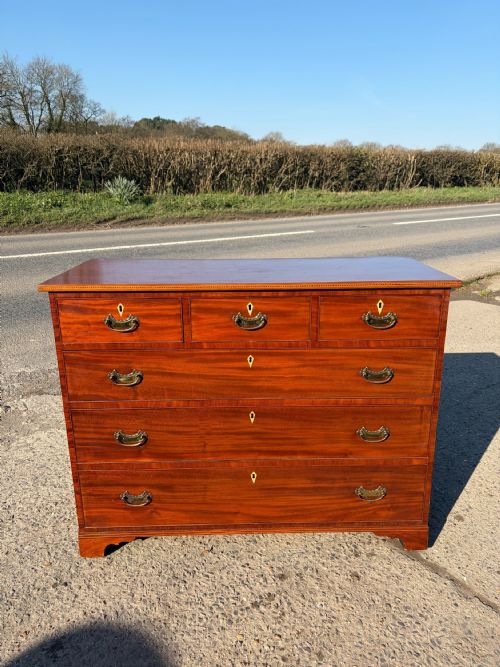
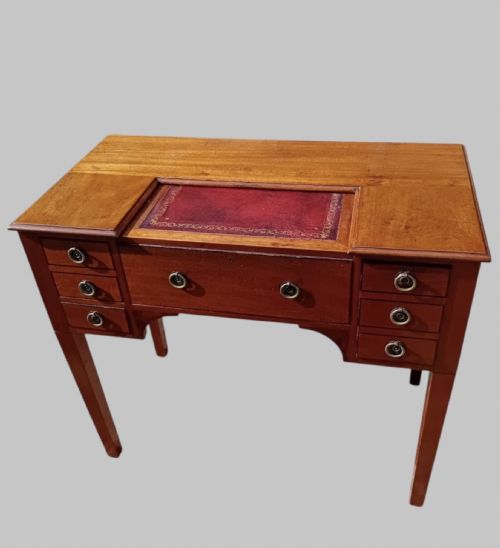
The selection ranges from compact writing tables and Davenport desks to substantial secretaire bookcases and tallboys. The most frequent encounters on this page include Georgian and Victorian chests of drawers and writing desks constructed with rich mahogany timbers.
How they were made
Cabinetmakers utilised solid mahogany and applied flame mahogany veneers over secondary woods such as oak and pine to create striking figured surfaces on bureau fronts. Drawer interiors frequently incorporate secondary timbers like oak, while structural details involve dovetail joinery.
Decorative elements often include brass hardware, inlaid stringing in satinwood or bone, and occasionally leather writing inserts. Protective finishes and French polish were applied to highlight the natural grain patterns of the timber.
Listings feature items spanning from the Georgian period through the Edwardian era, incorporating mahogany, flame mahogany veneer, satinwood, and brass hardware.
What varies in quality
The visual impact of a red mahogany bureau depends largely on the selection of figured mahogany veneer, where rich grain patterns elevate the overall appearance of the piece. Superior examples display careful book-matching and consistent colour across the entire facade.
Construction methods and internal organisation also differentiate pieces, with finer desks offering intricate pigeonholes, concealed compartments, and secondary wood linings that remain tidy and robust. Maker attribution or branded stamps further distinguish high-tier cabinetwork from standard production.
Gillows of Lancaster·Howard And Sons·James Winter And Sons·Jas Shoolbred And Co·Edwards And Roberts
The Red Mahogany Bureau Glossary
- Flame mahogany
- A veneer figure resembling flickering flames, produced by cutting through the fork of the mahogany tree. This decorative grain was highly prized by period cabinetmakers.
- Secretaire
- A piece of furniture containing a concealed writing drawer or drop-front desk compartment. These units often disguise their writing function behind drawer fronts or bookcase doors.
- Davenport
- A compact pedestal desk featuring a sloping writing surface and drawers opening to the side. Victorian examples frequently incorporate storage compartments beneath the writing lid.
- Tallboy
- A tall chest of drawers consisting of one chest stacked on top of another. Eighteenth-century versions occasionally integrate a writing drawer within the upper section.
- Inlay
- The technique of embedding contrasting materials such as satinwood or bone into the primary mahogany surface to form geometric or decorative patterns.
Red Mahogany Bureau: Frequently Asked Questions
How do I date a mahogany bureau?
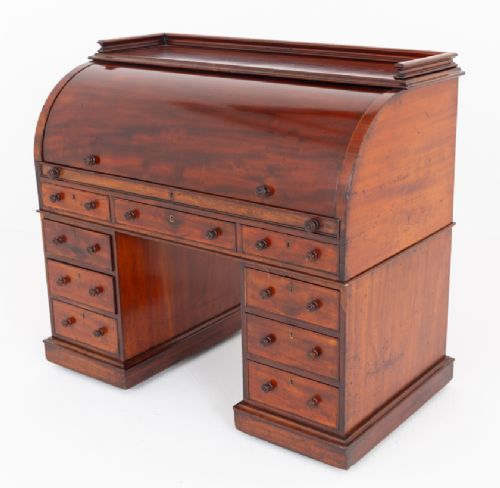
Dating a mahogany bureau involves examining the construction techniques, hardware style, and secondary woods used in the drawers. Eighteenth-century pieces typically show hand-cut dovetails and simpler internal layouts, while Victorian versions often feature heavier proportions and cylinder or roll-top mechanisms.
Stylistic influences such as Sheraton inlay or Empire curves also provide clues to the era of manufacture. Surviving maker stamps or labels offer the most precise chronological indicator when present.
Where should I place my bureau?
A bureau suits studies, living rooms, or bedrooms where its drop-front lid can be opened for writing without obstructing room traffic. Placing the piece away from direct sunlight and heat sources protects the mahogany veneer and polish from fading or drying out.
Because many examples include built-in storage or upper bookcases, they function effectively as dual-purpose furniture for both display and enclosed organisation.
How do I maintain mahogany furniture?
Maintaining mahogany furniture requires dusting regularly with a soft, dry cloth and avoiding silicone-based polishes that can build up over time. Keeping the room at a stable humidity level prevents the solid timber and delicate veneers from warping or cracking.
Occasional application of traditional wax helps nourish the wood and preserves the depth of the polished surface.