
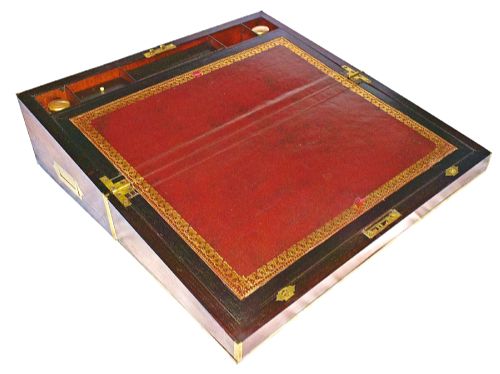


Red Leather Writing Slope
A red leather writing slope offers a portable desk surface lined with rich hide, built for correspondence in the nineteenth century.
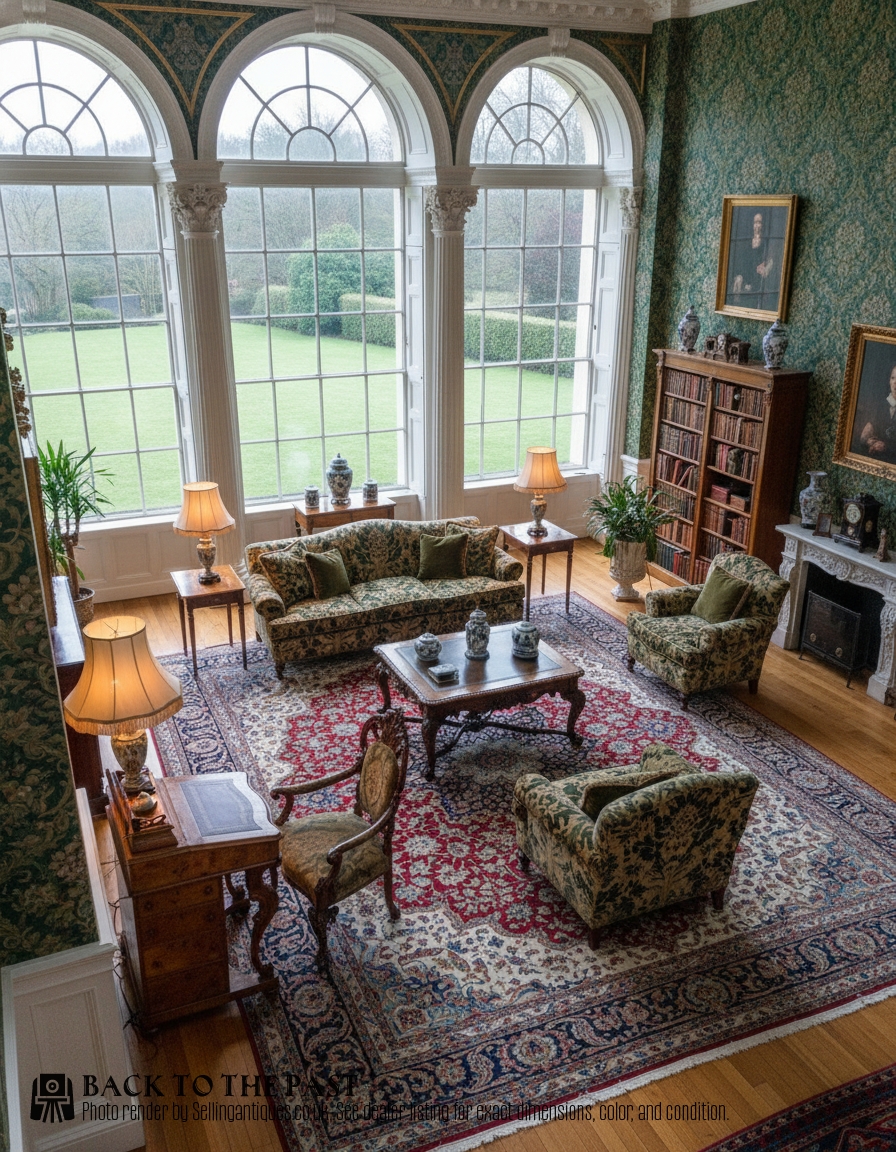
Red Leather Writing Slope
A red leather writing slope brings a traditional portable desk into a modern room, providing a dedicated writing surface that folds shut when not in use. These pieces appear mostly from the Victorian era alongside Regency and Edwardian examples, taking the form of compact boxes, Davenport desks, and larger writing tables.
The materials recorded across these items combine timber frameworks with characteristic red leather writing inserts. Mahogany, burr walnut, and oak form the primary structures, often complemented by brass fittings and inlaid details.
How they were made
Cabinetmakers constructed these writing slopes using dense hardwoods such as mahogany and walnut, frequently selecting burr walnut veneers for rich grain patterns. Timber frames housed fitted compartments for stationery, inkwells, and correspondence.
Writing surfaces were inset with panels of red leather, often finished with decorative tooling or gilding around the edges. Brass hardware, including hinges, corners, and escutcheons, reinforced the portable boxes and added structural durability.
Some Victorian writing slopes managed to incorporate letter racks, secret compartments, mother of pearl inlay, and reclining armchair attachments all at once.
What varies in quality
The refinement of the internal fittings and the selection of timber veneers set finer examples apart from standard workshop production. Superior pieces display carefully matched burr walnut or satin mahogany grains alongside meticulous brass inlay and well-executed wood carving.
The condition and texture of the red leather writing surface heavily influence the character of each piece. Finer slopes retain crisp gold tooling and supple hide, whilst simpler utility versions rely on plain panels without decorative borders.
Gillows of Lancaster·Houghton & Gunn
The Red Leather Writing Slope Glossary
- Writing slope
- A portable box with a slanted lid designed to hold writing materials and provide an angled surface for letters. When closed, it forms a compact rectangular case easily carried from room to room.
- Davenport desk
- A compact pedestal desk featuring a sloping writing surface above a set of drawers. Originating in the nineteenth century, it combines the storage of a small cabinet with the utility of a writing slope.
- Escutcheon
- A protective plate surrounding a keyhole, usually made of brass on these writing slopes. It prevents the surrounding wood from splintering when the key is turned.
- Inlay
- A decorative technique where contrasting materials such as lighter woods or metal are embedded into the primary surface of the furniture. This method highlights the craftsmanship of Victorian and Edwardian cabinetmakers.
Red Leather Writing Slope: Frequently Asked Questions
How were writing slopes used?
These boxes provided a portable writing surface before the widespread availability of fitted studies and modern desks. Owners opened the slanted lid to reveal compartments for paper, pens, and ink while writing letters.
When correspondence finished, the slope locked shut to secure private documents and stationery inside a compact wooden case.
Where did people keep them?
Writing slopes sat on larger tables or desks in reception rooms, libraries, and bedrooms throughout the nineteenth century. Their portable nature allowed owners to move them easily between rooms depending on where daylight was best.
Larger Davenport forms and pedestal desks remained stationary in studies, functioning as permanent pieces of room furniture.
How do I date a slope?
Dating relies on timber choices, construction techniques, and stylistic markers recorded across Victorian, Edwardian, and Regency examples. Earlier pieces often utilise solid mahogany or distinctive brass corner reinforcements.
Later Victorian and Edwardian items frequently incorporate burr walnut veneers, decorative marquetry, and integrated letter racks reflecting changing domestic habits.
Are they practical to use today?
These slopes function effectively as laptop stands or decorative letter storage in modern interiors. The internal compartments remain well-suited for holding modern stationery, stamps, and small notebooks.
Care should be taken with historical leather surfaces when placing modern writing implements or electronic devices directly onto the old hide.