



Red Lattice Pattern Rug
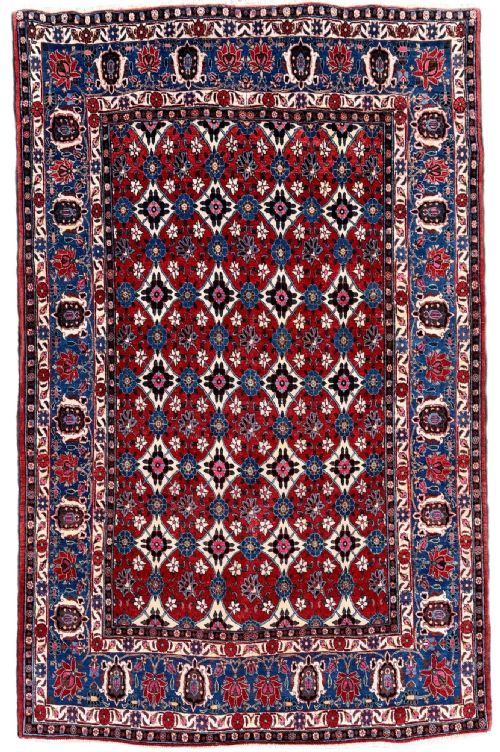
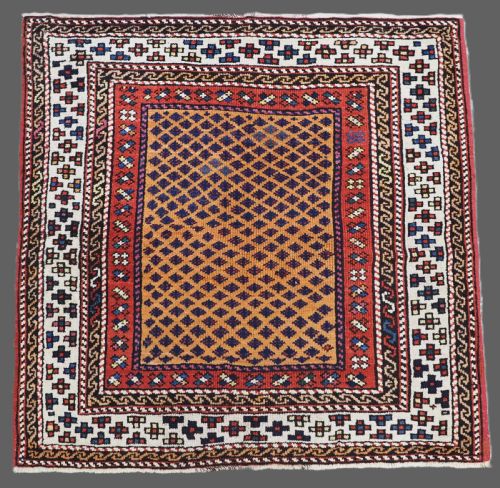
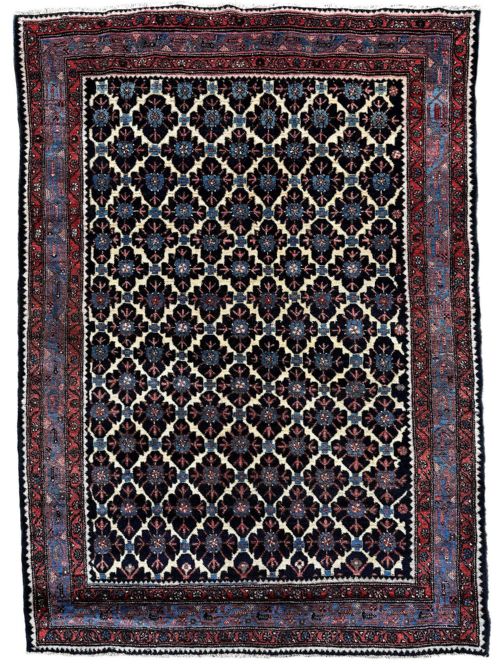
These red lattice pattern rug examples combine geometric framing with rich wool ground, offering warmth and structure to a room.
Red Lattice Pattern Rug
A red lattice pattern rug brings structured geometric design and deep warmth to an interior floor. When searching for this style, buyers encounter hand-knotted tribal and village carpets originating from Persian, Caucasian, Anatolian, and Central Asian workshops.
The pieces available span from the late nineteenth century through to the mid-twentieth century, featuring traditional formats such as area rugs, hallway runners, and small square sizes. Common regional attributions include Veramin, Hamadan, Shirvan, and Baluch, each displaying distinct approaches to the grid layout.
The lattice framework often encloses floral motifs, star designs, or stylized Mina Khani patterns across a red field. These floor coverings function effectively in both traditional studies and contemporary living spaces, providing durable foundation and distinct cultural heritage.
Materials and construction methods
The construction of these floor coverings relies primarily on wool and cotton, with hand-spun wool frequently utilised for the pile. Natural dyes provide the deep red ground colours and contrasting border tones seen across the examples.
Weavers knotted the pile by hand onto sturdy cotton or wool foundations, employing traditional regional techniques that ensure structural longevity. The integration of natural dye recipes yields subtle tonal variations across the field over decades of light exposure and use.
Red Lattice Pattern Rug Retail Price Guide 2026
Typical asking prices for red lattice pattern rug among the pieces listed under this phrase on Sellingantiques today, from the lower quarter to the upper quarter. They describe what is for sale here now, not the wider market.
Some weavers snuck tiny asymmetric flowers into rigid grids just to check if anyone was paying attention.
Factors determining quality and execution
Quality in these textiles depends on knot density, precision of the geometric lattice layout, and the stability of the natural dyes. Finer examples display crisp botanical or geometric fills within the grid, whilst simpler village pieces show charming irregularities in line and proportion.
The handling of the wool stock and the depth of the palette also distinguish superior specimens. Well-preserved pile condition and balanced proportions across runners and carpets elevate the standing of an individual piece.
The Red Lattice Pattern Rug Glossary
- Mina Khani
- A repeating pattern of daisy-like flowers linked by curved vines, frequently set within a lattice grid. This floral motif appears across various Persian and Baluch weaving traditions.
- Kilim
- A flat-woven carpet or rug produced without a pile, created by tightly interweaving warp and weft strands. These textiles often feature sharp geometric designs and lighter weights than knotted carpets.
- Runner
- A long, narrow carpet format designed specifically for corridors, hallways, and staircases. These pieces balance repeated border motifs with central field patterns.
- Pile
- The upright yarn surface of a rug, formed by individual knots tied to the warp and trimmed to a uniform height. The quality and density of this layer dictate the handle and durability of the textile.
- Natural Dyes
- Colourants derived from plant, insect, and mineral sources rather than synthetic chemicals. These dyes yield rich, complex hues that mellow gracefully with age.
Red Lattice Pattern Rug: Frequently Asked Questions
Where should I place a runner?
Runners suit narrow spaces such as hallways, corridors, and galley kitchens, where their linear format provides floor protection and visual direction. They fit well in transitional areas connecting larger living rooms.
Ensure you measure the corridor width and allow for door clearance before positioning the rug. A quality underlay helps keep the piece stable on hard timber or stone flooring.
How do I clean an antique rug?
Regular gentle vacuuming without a beater bar removes surface dust and grit from the wool pile. Professional specialist cleaning is recommended for deep washing.
Avoid excessive water saturation and harsh chemical detergents, which can damage natural dyes and brittle wool foundations. Blot spills immediately with a clean, dry cloth rather than rubbing.
How do I identify regional styles?
Regional styles reveal themselves through specific colour palettes, border arrangements, and structural motifs. Caucasian pieces often show crisp, geometric drawing, whilst Persian workshops tend towards curved vines and intricate floral fills.
Examining the selvedges, fringe construction, and knotting structure on the reverse provides further clues to origin. Comparing piece proportions helps distinguish village weaves from city workshops.
Are these rugs durable for daily use?
Hand-knotted wool rugs with sturdy cotton foundations are exceptionally durable and withstand normal household foot traffic for generations. The natural lanolin in hand-spun wool helps repel everyday dirt and staining.
Placing the rug in moderate traffic zones and using a breathable underlay extends its functional life. Rotate the piece periodically to ensure even wear across the surface.