

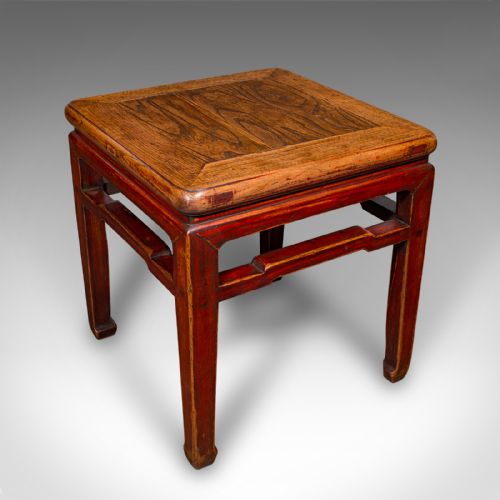
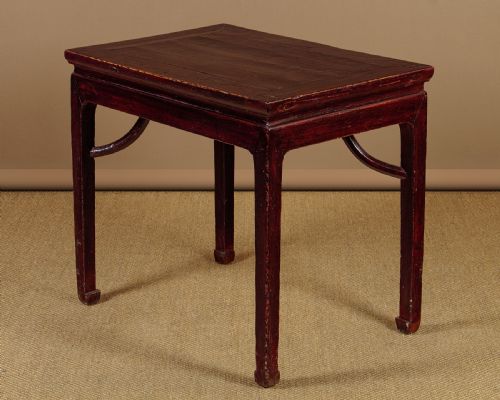


Red Lacquer Accent Tables
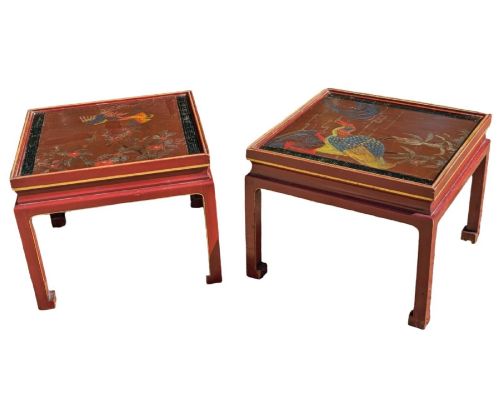
Red lacquer accent tables bring striking colour and worldly pattern to a room, ranging from Chinoiserie side tables to Burmese occasional pieces.
Red Lacquer Accent Tables
Red lacquer accent tables encompass a variety of low tables, side pieces, and occasional furniture finished in vibrant red coatings. When searching for red lacquer accent tables, buyers encounter pieces spanning from the eighteenth century to the twentieth century, reflecting diverse regional traditions.
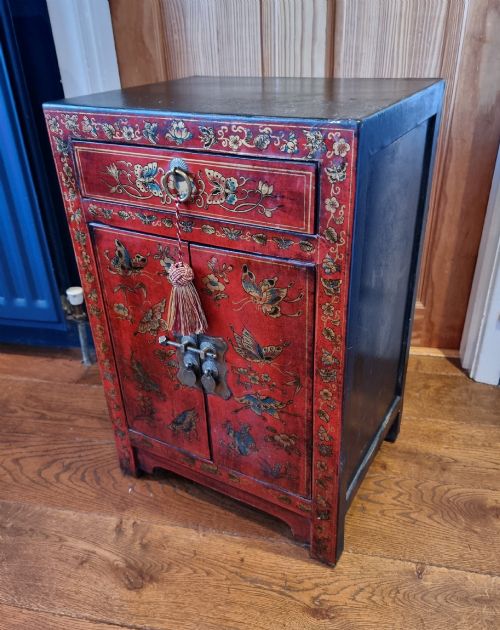
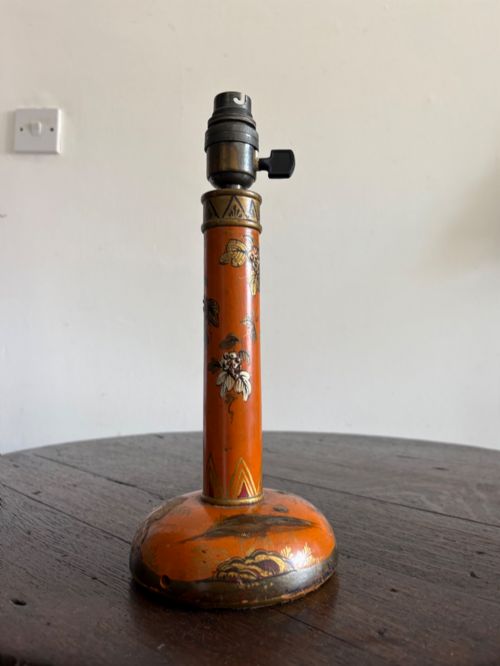
Materials extend beyond standard lacquer to incorporate wood, elm, bamboo, and papier-mâché. Many pieces incorporate hand-painted details or gold leaf ornamentation to enhance the visual depth of the red surface.
How they were made
Maker construction relies on traditional timber substrates such as elm, bamboo, and papier-mâché, shaped into side tables, stands, and low coffee surfaces. Artisans applied layers of lacquer pigment to these wooden bases, creating durable and glossy finishes.
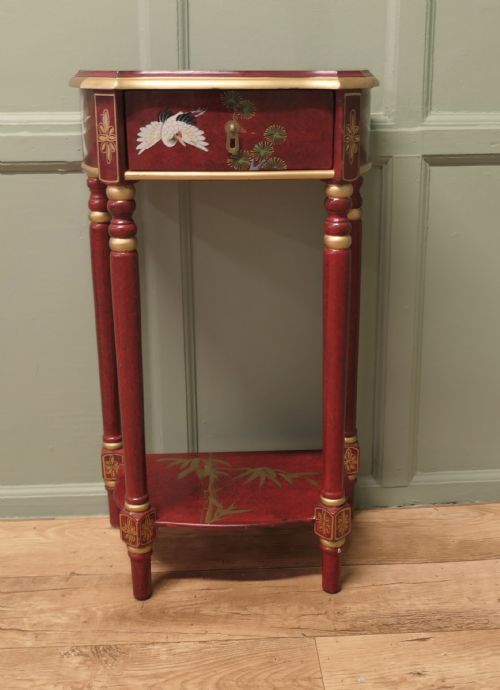
Surface decoration frequently involves hand-painted motifs, cinnabar carving, and the application of gold leaf. These techniques define the Chinoiserie and Burmese colonial aesthetics seen across the inventory.
What varies in quality
Quality differences lie in the depth of the lacquer layers and the precision of the hand-painted or carved ornamentation. Pieces displaying intricate Chinoiserie scenes or refined gold leaf work show superior artisan skill compared to simpler painted surfaces.
The choice of underlying material also dictates the character of the piece, with dense timbers like elm providing robust structural integrity. The preservation of the original red pigment and lacquer coat remains a central indicator of historical integrity.
The Red Lacquer Accent Tables Glossary
- Chinoiserie
- European artistic interpretation of Chinese and East Asian decorative styles, commonly featuring painted figures, landscapes, and pavilions. This style heavily influences the ornamentation found on many red lacquer tables.
- Lacquer
- A durable resin finish applied to wooden objects, traditionally built up in multiple layers and polished to a smooth sheen. It provides both protection and a rich colour base.
- Demi-lune
- A half-moon shaped table designed to sit flat against a wall, frequently produced in pairs. These pieces serve well as console or side tables.
- Papier-mâché
- A composite material made from paper pulp or layers of paper bound with adhesive, moulded and dried for use in trays and table tops. It offers a lightweight yet sturdy substrate for lacquer.
- Meiji
- A period in Japanese history spanning from eighteen sixty-eight to nineteen twelve, known for distinctive craftsmanship in furniture and decorative arts. Tables from this era often utilise native timbers like elm.
Red Lacquer Accent Tables: Frequently Asked Questions
What styles are available in red lacquer accent tables?
The available styles span Chinoiserie, Chinese Provincial, Japanese Meiji, and Anglo-Burmese traditions. These reflect distinct regional design histories from the eighteenth century onwards.
Such pieces often incorporate hand-painted motifs, gold leaf, or carved cinnabar surfaces to achieve their decorative appearance.
How do I care for a lacquered table surface?
Lacquered surfaces require gentle dusting with a soft, dry cloth to prevent scratching the finish. Avoid placing them in direct sunlight or near extreme heat sources, which can damage the lacquer.
Liquid spills should be wiped away immediately using a slightly damp cloth followed by thorough drying.
What periods do these tables date from?
The pieces span multiple eras, including the eighteenth century, Regency period, Victorian era, and early twentieth century up to nineteen thirty. Each era contributes specific structural forms and decorative techniques.
Earlier examples often feature traditional Chinese Provincial or European Chinoiserie interpretations.
Where were these occasional tables placed historically?
Historically, small tables and occasional stands were used in reception rooms for serving tea, displaying lamps, or holding decorative items. Low tables like the Japanese Chabudai served specific seating customs.
Demi-lune and side tables functioned as wall-mounted or freestanding furniture to maximise both utility and aesthetic display.