

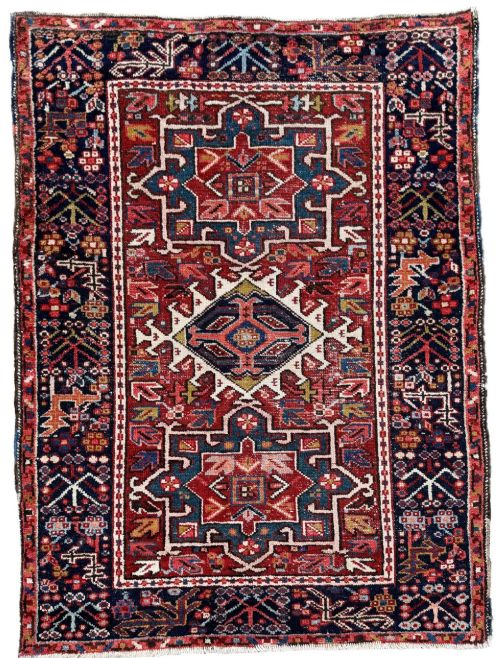
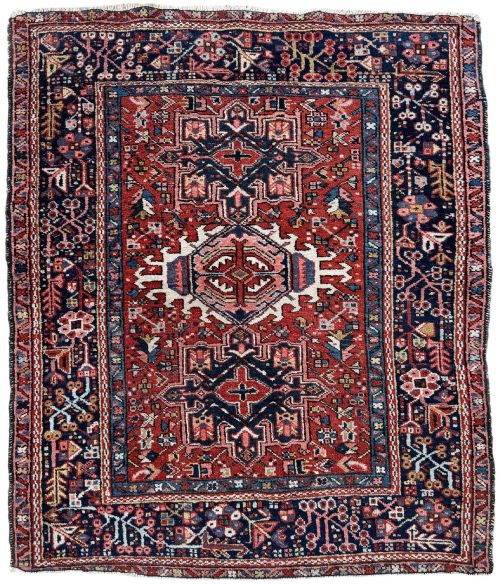
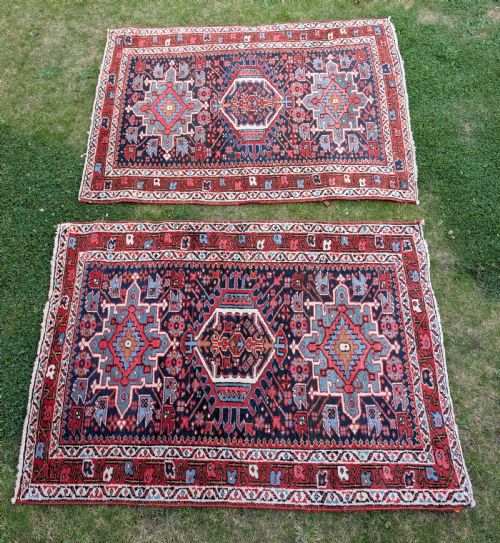
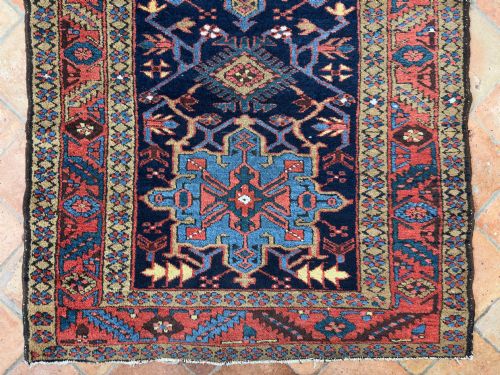


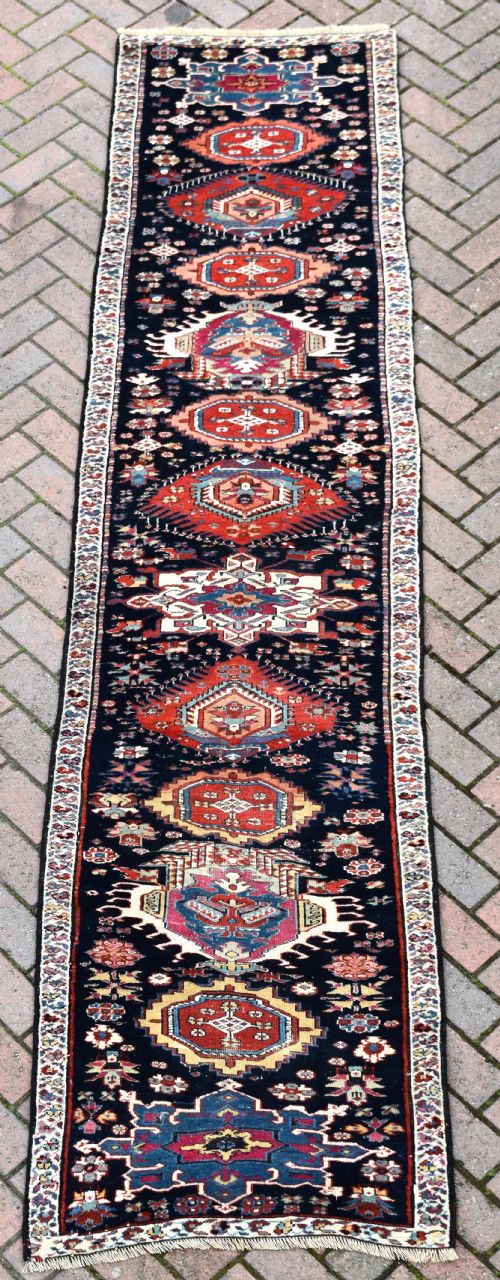
Red Karaja Rug
A red karaja rug brings the bold geometric warmth of North-West Persia straight to your floor.
Red Karaja Rug
A red karaja rug is a tribal or village weaving originating from the North-West Persia region, spanning periods from the late nineteenth century into the early twentieth century. These pieces appear in various formats, ranging from small area rugs and paired sets to long hallway runners and large carpets.
The version you are most likely to meet on this page is an antique room-sized or small rug dated around the nineteen hundreds, often displaying traditional Persian tribal motifs. Alongside these, narrow runner formats designed for hallways surface frequently in the listings.
The origin of these floor coverings sits firmly in the villages of the Heriz region, where weavers produced sturdy floor coverings tailored for domestic use. Their distinct regional character sets them apart from city-made Persian carpets.
Materials and technique
These floor coverings are constructed using hand-knotted wool on cotton foundations, utilising durable techniques suited for heavy foot traffic. The reliance on natural wool yarn gives the pile its characteristic dense handle.
Weavers in North-West Persia employed traditional upright looms to tie tight knots, securing the structure of each runner or carpet. The combination of wool pile and cotton warps and wefts ensures structural stability across large formats.
Red Karaja Rug Retail Price Guide 2026
Typical asking prices for red karaja rug among the pieces listed under this phrase on Sellingantiques today, from the lower quarter to the upper quarter. They describe what is for sale here now, not the wider market.
Formats vary widely from square area rugs and paired sets to narrow hallway runners exceeding three metres in length.
Distinctions in quality
The top of the range is distinguished by intense, saturated dye colours and finely executed geometric designs that retain crisp definition. Greater fineness in the knotting allows intricate village motifs to emerge with high clarity.
Weaving precision and wool quality govern the overall durability and handle of each piece. Examples with superior material selection maintain a firm, resilient pile across decades of use.
The Red Karaja Rug Glossary
- Karaja
- A village weaving style originating from North-West Persia, known for robust geometric formats. These pieces share stylistic ties with nearby Heriz production.
- Runner
- A long, narrow carpet format traditionally used in hallways or corridors. Dimensions typically feature an elongated rectangular shape.
- Hand-knotted
- A construction method where individual lengths of wool yarn are tied by hand onto a warp foundation. This technique creates a durable pile.
- Heriz region
- A major carpet-producing district in North-West Persia encompassing various weaving villages. Pieces from this area are recognised for structural durability.
- Pile
- The upright cut or looped wool surface of a rug that forms the usable layer. Dense pile construction protects the foundation threads underneath.
Red Karaja Rug: Frequently Asked Questions
What is a red karaja rug?
A red karaja rug is a hand-knotted wool floor covering originating from the villages of North-West Persia. These pieces date primarily from the late nineteenth and early twentieth centuries.
They are known for their sturdy construction and bold geometric design vocabulary. Village weavers produced them in formats ranging from small mats to long hallway runners.
Where were these rugs made?
These pieces were made in the North-West Persian region, specifically in and around the village of Karaja near Heriz. This area has a long history of traditional tribal and village rug production.
Local weavers utilised locally sourced wool to create durable floor coverings for everyday domestic use. Their geographic origin imparts a distinct visual style.
How do I use a runner?
A runner is designed primarily for narrow spaces such as hallways, corridors, or alongside a bed. Their elongated rectangular dimensions fit areas where standard square rugs are impractical.
Placing a suitable underlay beneath the runner helps keep it secure on hard flooring. This positioning protects high-traffic zones while displaying the geometric designs.
How do I date these rugs?
Dating these pieces involves examining the wool quality, natural dye palettes, and structural characteristics seen in the foundation. Most examples span the period from eighteen seventy to nineteen thirty.
Comparing the specific knot density and design motifs with documented regional pieces helps narrow down the age. Earlier nineteenth-century examples often display distinct palette shifts.