


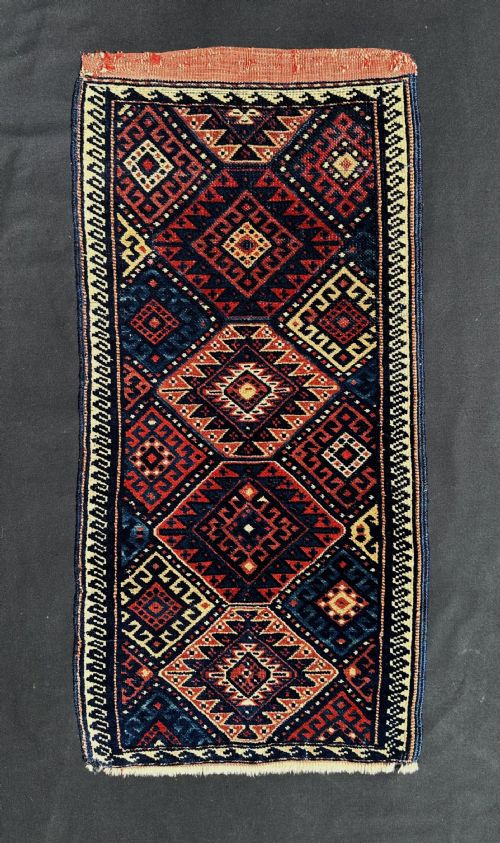
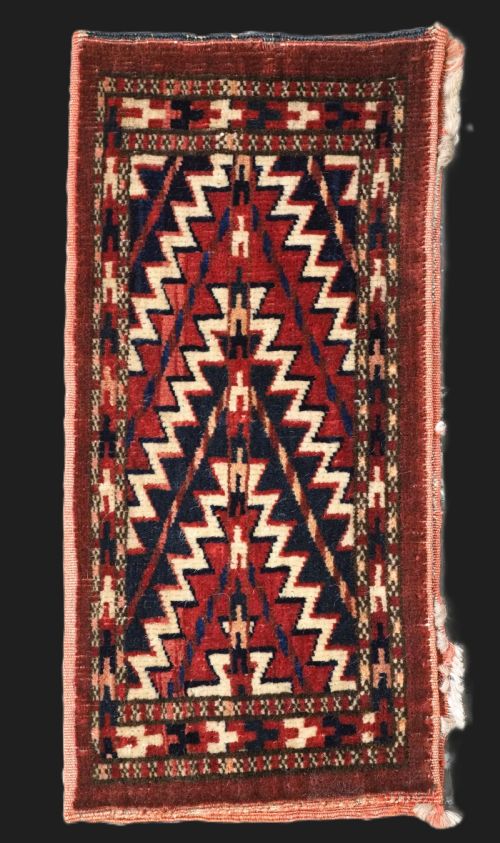


Red Geometric Bag
A red geometric bag brings the structured, symbolic artistry of nineteenth-century nomadic weavers directly into domestic interiors.
Red Geometric Bag
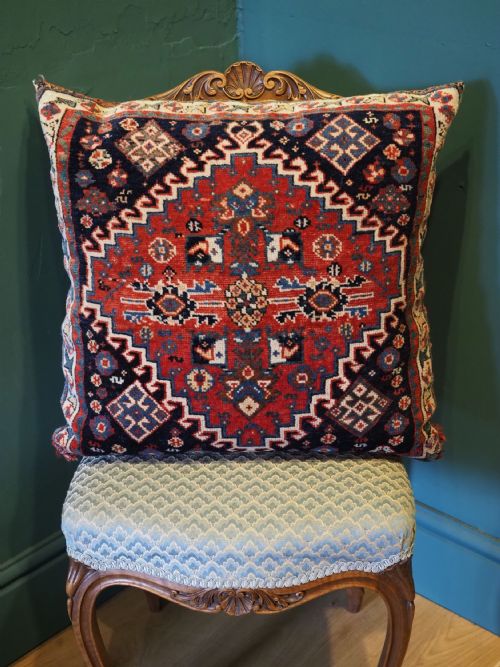
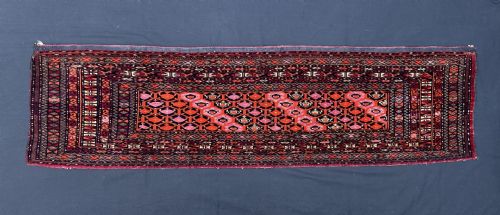
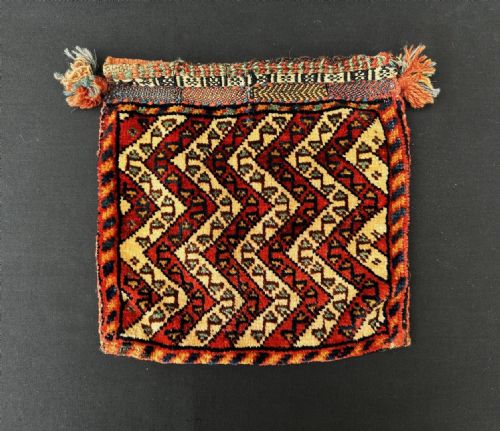
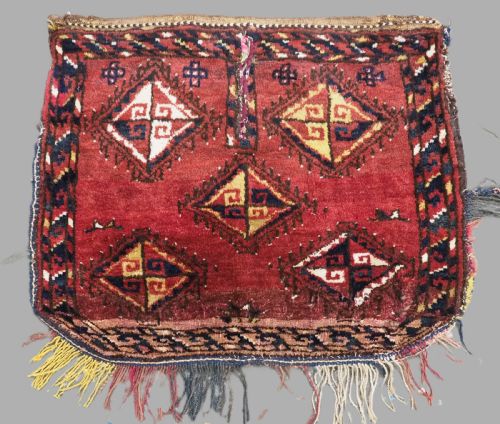
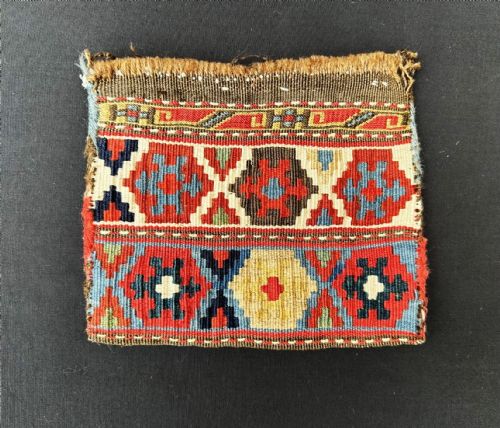
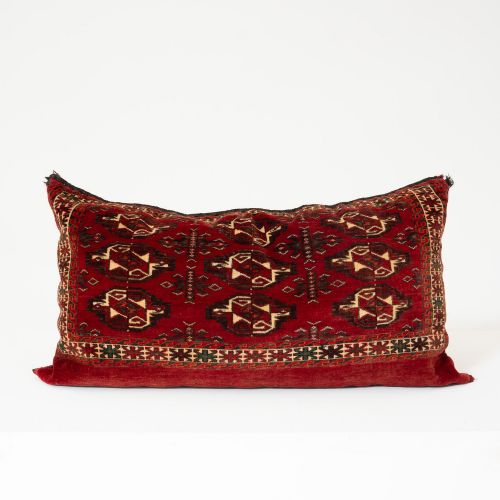
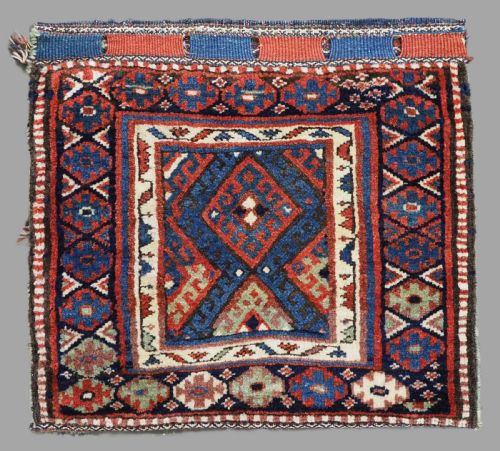
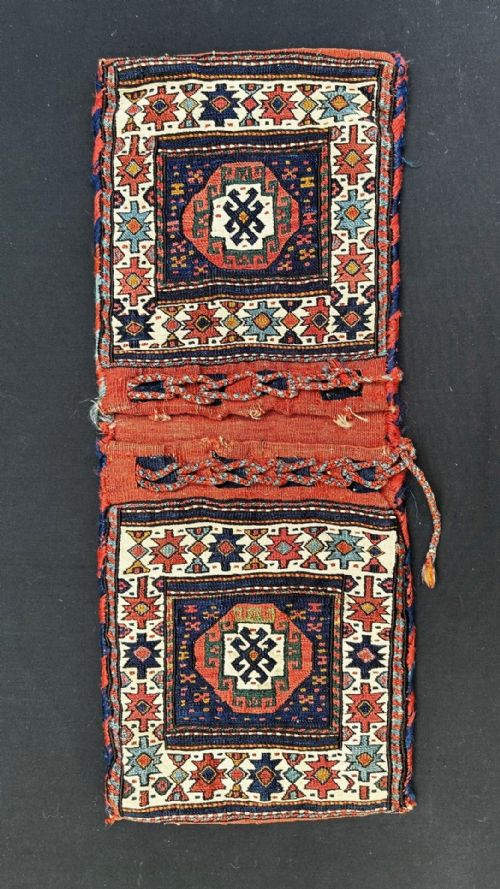
When searching for a red geometric bag, buyers encounter nineteenth-century and early twentieth-century tribal textiles originating from Persia, the Caucasus, and Central Asia. These items include saddle bags, vanity bags, salt bags, and tent-pole bags produced by nomadic confederations such as the Qashqai, Shahsevan, Turkmen, and Kurdish groups.
The most common formats on this page are bag faces and complete storage sacks that utilise bold, angular patterns dominated by crimson and madder red tones. These pieces served practical nomadic functions for transport and storage before being repurposed as decorative cushion covers or wall hangings.
The selection spans various regional traditions, capturing the distinct weaving dialects of weavers from Fars, Azerbaijan, and Turkmenistan. Each piece reflects the specific utilitarian needs of pastoral communities, combining structural durability with complex geometric ornamentation.
Wool and natural dye techniques
The construction relies heavily on hand-spun wool combined with supplementary weft-wrapping techniques like Soumak, alongside flatweave plain-weave structures. Weavers employed natural dyes to achieve deep red grounds, utilising madder and other plant extracts that mellow gradually over time.
Nomadic artisans integrated structural resilience with intricate patterning, often joining pile-woven faces with flatweave backs to reduce weight while maintaining strength. The spinning process yielded irregular yarn thicknesses, giving the surface texture a tactile depth that machine-made textiles lack.
Red Geometric Bag Retail Price Guide 2026
Typical asking prices for red geometric bag among the pieces listed under this phrase on Sellingantiques today, from the lower quarter to the upper quarter. They describe what is for sale here now, not the wider market.
Listings span periods from the mid-nineteenth century to the nineteen-twenties, using wool and natural dyes.
Material integrity and design clarity
Quality depends on the crispness of the geometric drawing and the saturation of the natural dyes, which determine the visual impact of the red ground. Tighter knotting or more precise Soumak wrapping distinguishes finer workshop pieces from standard utilitarian examples.
The survival of original plain-weave backs and complete side cords preserves the historical integrity of the piece. Greater uniformity in hand-spun wool and balanced proportions elevate certain bag faces within their regional groups.
Qashqai Tribes·Shahsevan Nomads·Tekke Turkmen·Ersari Turkmen·Luri Tribes
The Red Geometric Bag Glossary
- Soumak
- A flat-weave technique involving wrapping weft threads over and under warp threads to produce a dense, textured surface. This method creates durable structures without pile, often seen on Caucasian and Persian bags.
- Chuval
- A large tent storage bag traditionally used by Turkmen tribes for bedding and household goods. These pieces frequently display large primary motifs known as guls.
- Torba
- A smaller storage bag hung inside a nomad tent to hold personal items or household utensils. They typically feature wide horizontal formats with elaborate border designs.
- Jollar
- A long, narrow bag used for camel transport or tent decoration by Turkmen weavers. These items often showcase repeating geometric gullations along their primary axis.
- Khorjin
- The Persian term for a double saddlebag designed to be slung across pack animals. Surviving examples are often divided into separate bag faces or preserved as complete pairs.
Red Geometric Bag: Frequently Asked Questions
What were these bags used for?
Nomadic communities utilised these textiles for packing household goods, storing salt, or carrying belongings across rugged terrain on camels and horses.
Practical utility dictated their sturdy construction, employing robust wool and flatweave techniques to withstand constant travel.
How do I live with them?
Many collectors mount these flatweave and pile textiles on walls or utilise them as decorative cushion covers on seating furniture.
Keeping them out of direct sunlight preserves the natural red dyes, while gentle vacuuming maintains the wool fibres.
How are different tribal styles identified?
Distinctions rely on specific geometric motifs, border arrangements, and structural palettes characteristic of distinct geographical regions.
For instance, Turkmen pieces often feature octagonal guls, while Shahsevan examples display precise Soumak wrapping and sharp hooked polygons.
What period do most pieces date from?
The majority of these textile fragments and complete bags originate from the latter half of the nineteenth century up to the early twentieth century.
This era preceded the widespread adoption of synthetic aniline dyes, ensuring authentic pieces retain traditional vegetable colour palettes.