


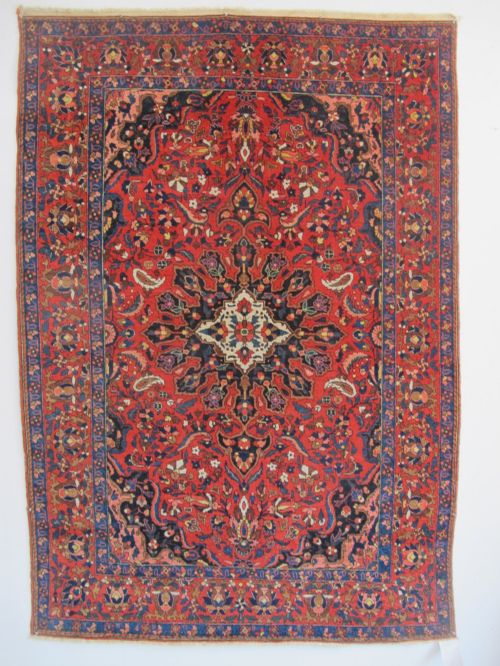
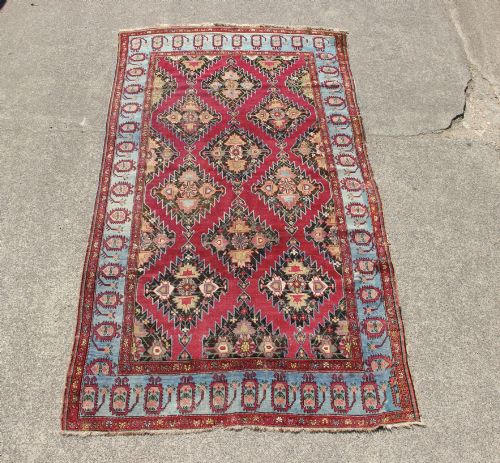
Red Floral Wool Rug
A red floral wool rug brings rich depth and traditional pattern into a room through centuries-old weaving traditions.
Red Floral Wool Rug
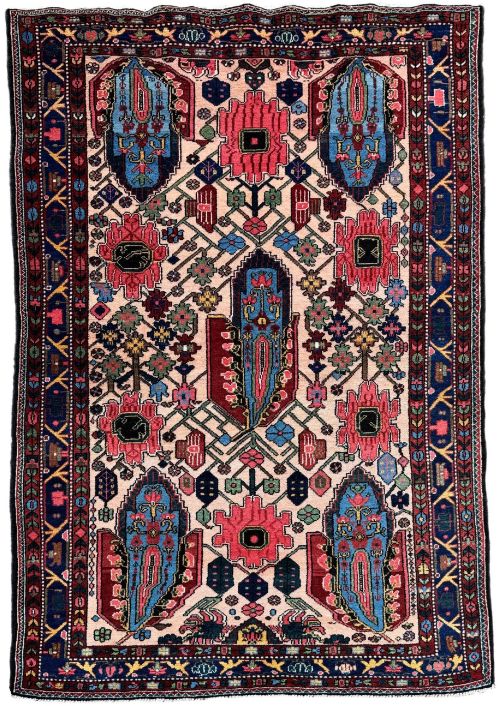
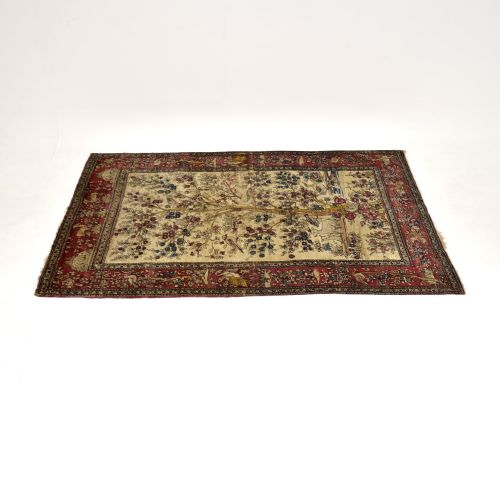
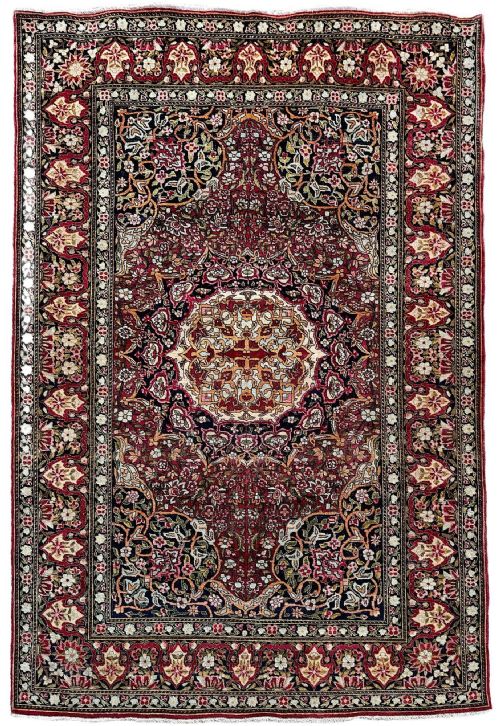
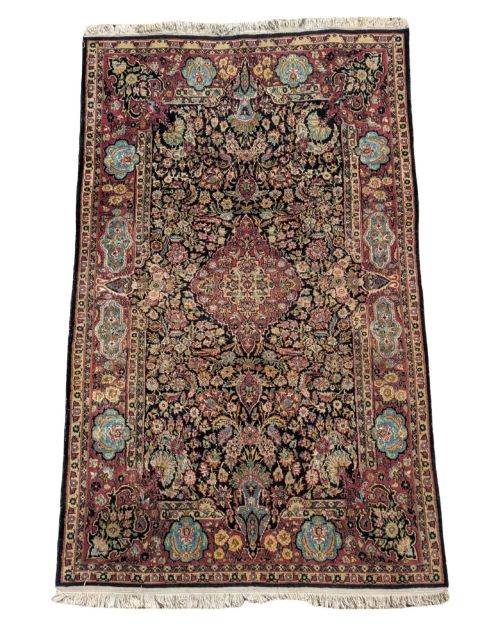
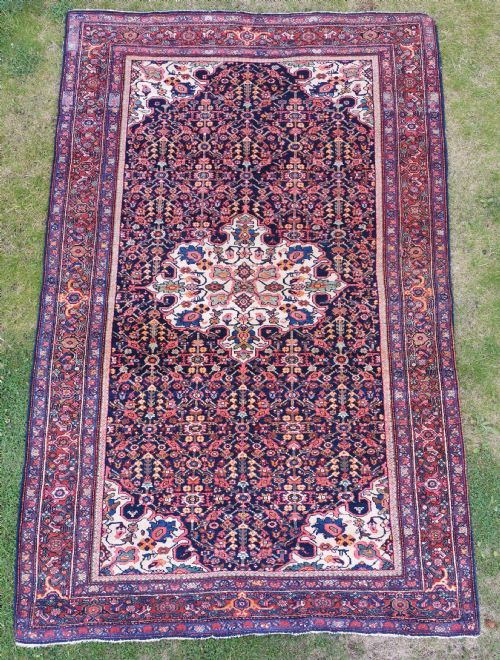
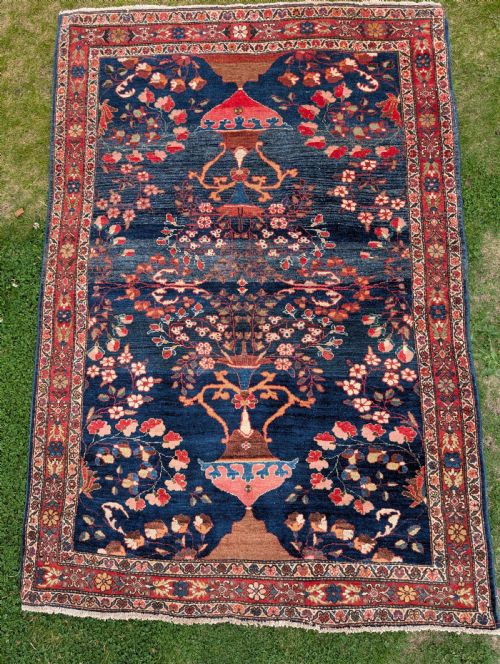
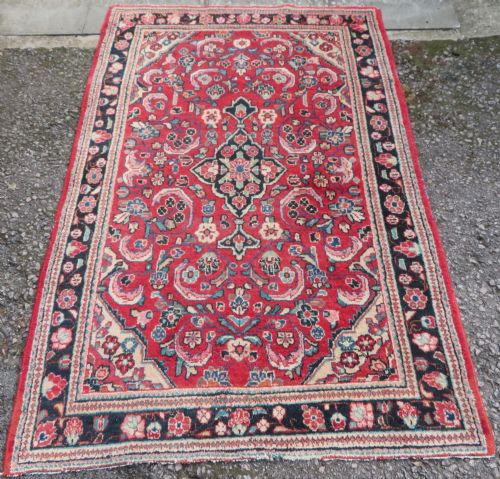
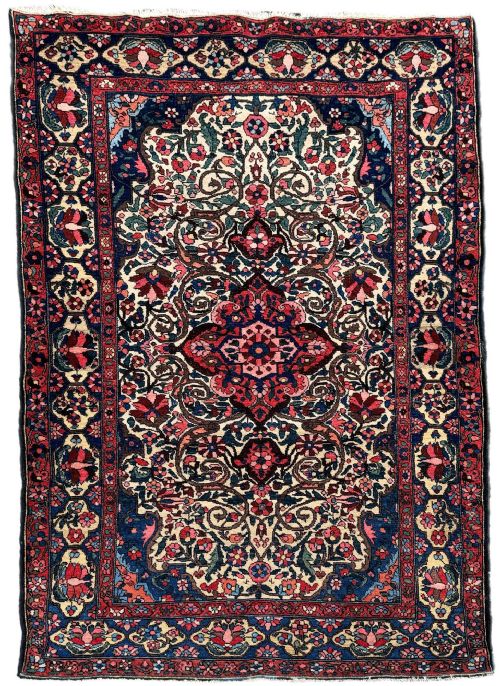
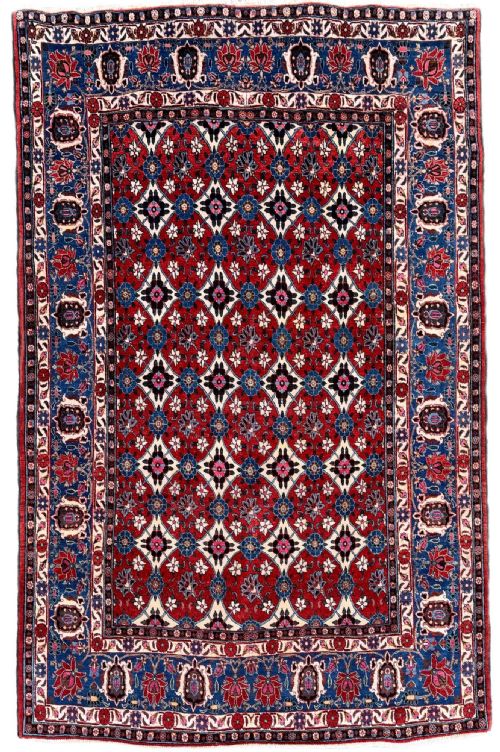
A red floral wool rug encompasses hand-knotted and woven textiles originating from Persian and Caucasian weaving centres. These floor coverings display botanical motifs, medallions, and lattice designs structured around deep crimson or scarlet fields.
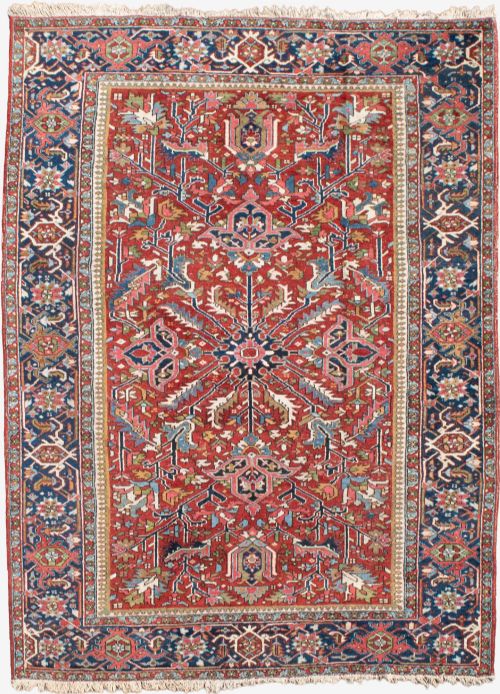
Buyers browsing this selection will most frequently encounter Persian room-size carpets and smaller village rugs dating from the late nineteenth century to the early twentieth century. Examples span named regional styles such as Heriz, Kashan, Bakhtiar, and Sarouk.
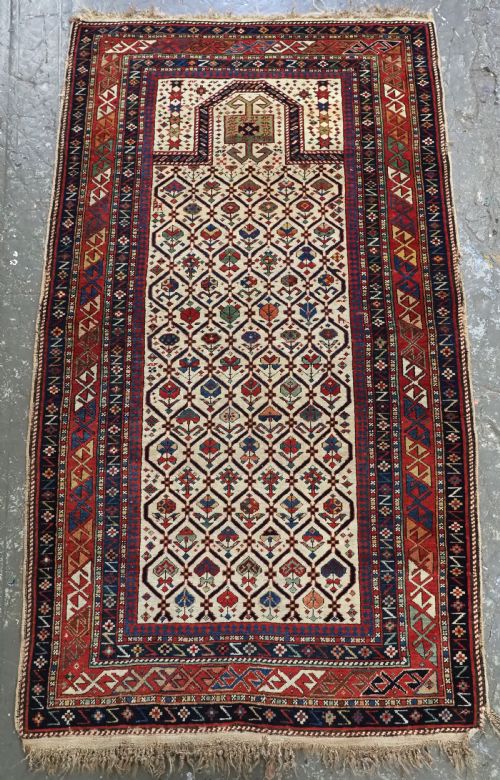
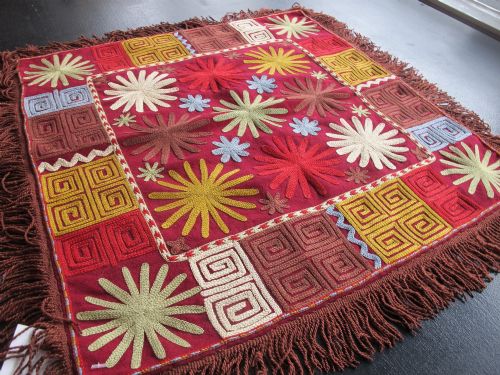
Formats range from compact prayer rugs and runners to large country house carpets exceeding four metres in length. Alongside pile carpets, the selection includes embroidered textile panels from Central Asia.
Materials and construction
These textiles rely predominantly on wool for the pile, providing resilience and warmth underfoot. Cotton foundation threads form the warp and weft of most Persian town and village rugs, ensuring structural stability.
Selected finer pieces incorporate silk highlights to accentuate particular floral details and contours within the design. Artisans utilised hand-spun yarns and natural dye sources to achieve the characteristic saturated red tones seen across the period.
Listings feature wool as the primary material, alongside cotton foundations and occasional silk highlights across periods from eighteen fifty to nineteen forty.
Assessing quality in antique carpets
Knot density and precision of execution distinguish finer town carpets from coarser village pieces. Tighter knotting allows for crisper delineation of intricate floral lattices and curvilinear motifs.
The choice of wool and the depth of the dye saturation contribute significantly to the visual weight and longevity of the textile. Superior examples maintain balanced proportions and harmonious colour palettes across the field and borders.
The Red Floral Wool Rug Glossary
- Pile
- The vertical yarn loops that form the soft surface of a rug. This layer absorbs wear and displays the woven pattern.
- Warp
- The foundational vertical threads stretched taut on the loom before weaving begins. Weft threads pass horizontally between them to secure the knots.
- Medallion
- A symmetrical central ornament placed in the middle of the rug field. It serves as the primary focal point for traditional Persian carpet designs.
- Prayer rug
- A small rug featuring a mihrab or arch design at one end, traditionally used for individual prayer. These pieces often display specific floral vase or lattice arrangements.
- Runner
- A long, narrow carpet format designed for hallways or corridors. They maintain proportional width while extending significantly in length.
Red Floral Wool Rug: Frequently Asked Questions
How do I choose the right size rug?
Measure your floor space carefully, allowing clear margins of exposed flooring around the perimeter of the room. Larger room-size carpets anchor central seating areas, while runners suit narrow corridors.
Consider how furniture placement interacts with the dimensions of the piece. Ensure that the central medallion or main field pattern remains visible rather than obscured beneath heavy tables.
Where were these rugs made?
The pieces originate primarily from traditional weaving regions in Persia, including centres such as Kashan, Heriz, Bakhtiar, and Isfahan. Additional examples come from Caucasian workshops and Central Asian communities.
Each region developed distinct botanical motifs, colour combinations, and weaving structures. These geographical traits allow scholars and collectors to attribute origin accurately.
How do I care for an antique wool rug?
Vacuum the rug gently and regularly using suction only, avoiding revolving brush bars that can pull at wool fibres. Rotate the piece periodically to ensure even wear from foot traffic and sunlight exposure.
Professional cleaning should be undertaken by specialists experienced in antique textiles. Avoid harsh chemical spot treatments which can damage natural dyes.
What period do these rugs date from?
The listings span the nineteenth and early twentieth centuries, with a concentration of pieces originating between eighteen fifty and nineteen thirty. This era covers late Qajar Persia and adjacent textile traditions.
Dates reflect the estimated period of manufacture based on style, structure, and historical material evidence. Earlier nineteenth-century examples often display distinct regional dyeing and spinning characteristics.