


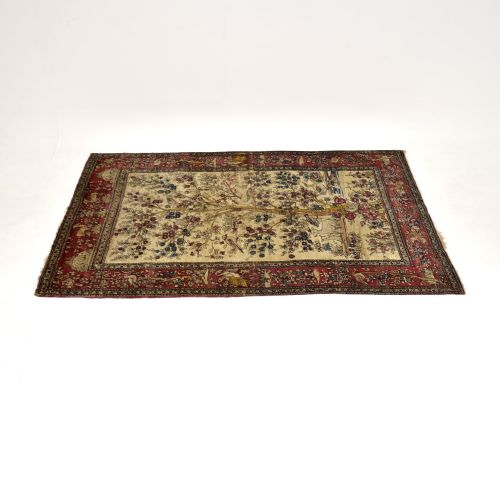
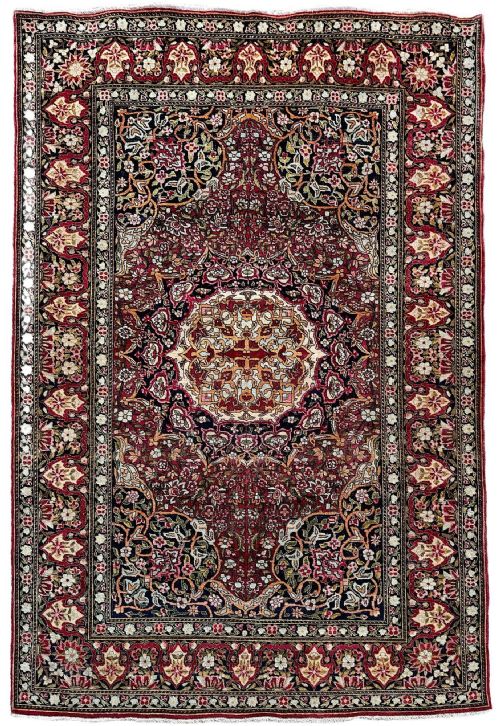
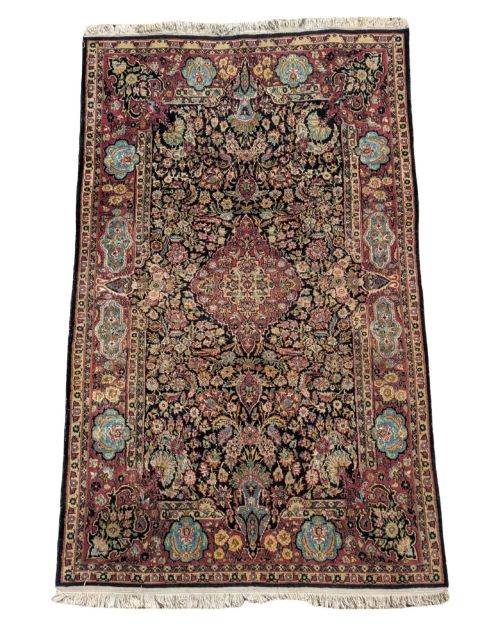
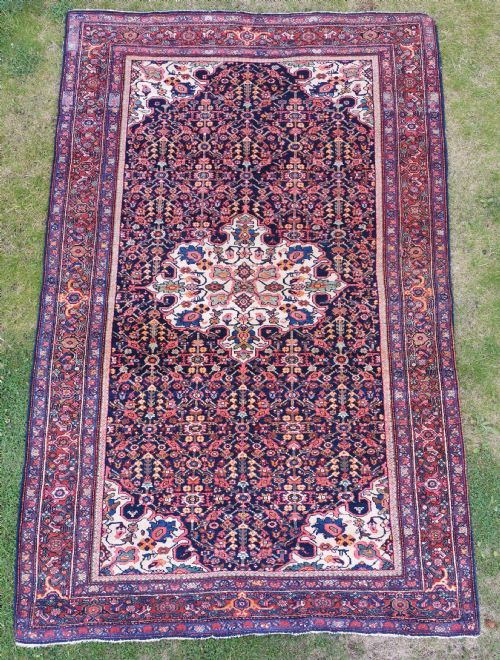

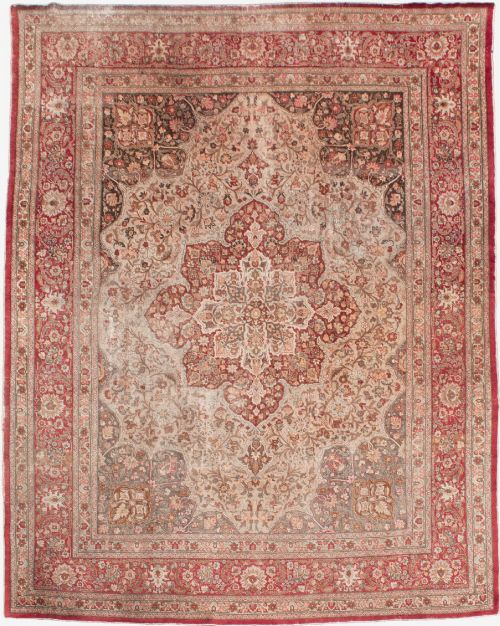
Red Floral Carpet
A red floral carpet brings warmth and traditional pattern to a room, offering enduring craftsmanship from Persian and Caucasian weaving traditions.
Red Floral Carpet
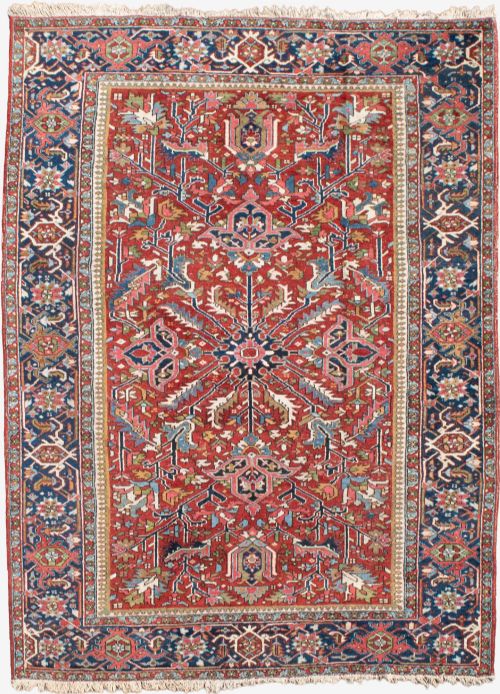
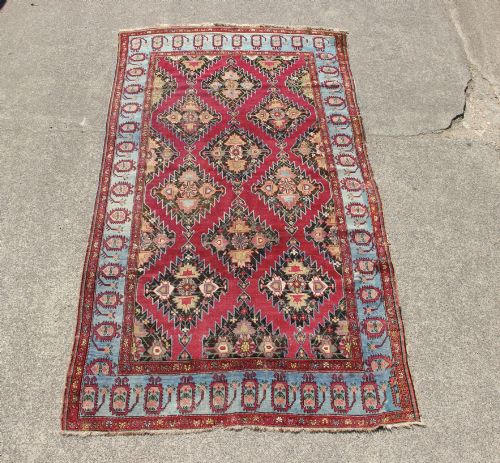
A red floral carpet typically originates from Persian weaving centres such as Kashan, Heriz, Bakhtiar, and Saroukh, alongside Caucasian regions. These pieces date primarily from the late nineteenth century through to the early decades of the twentieth century, encompassing room-size carpets, area rugs, and runners.
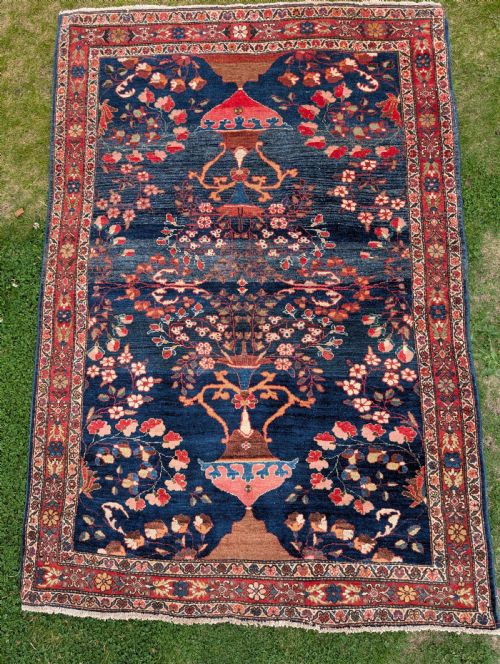
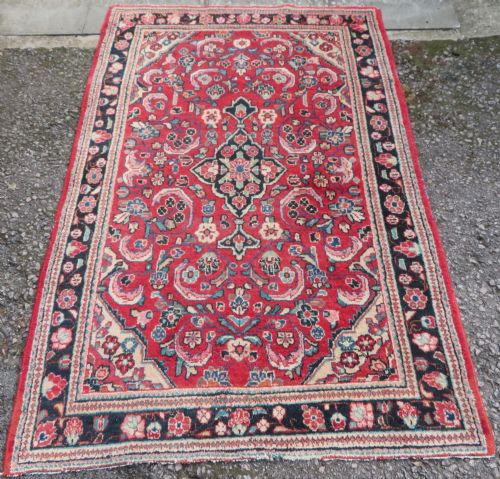
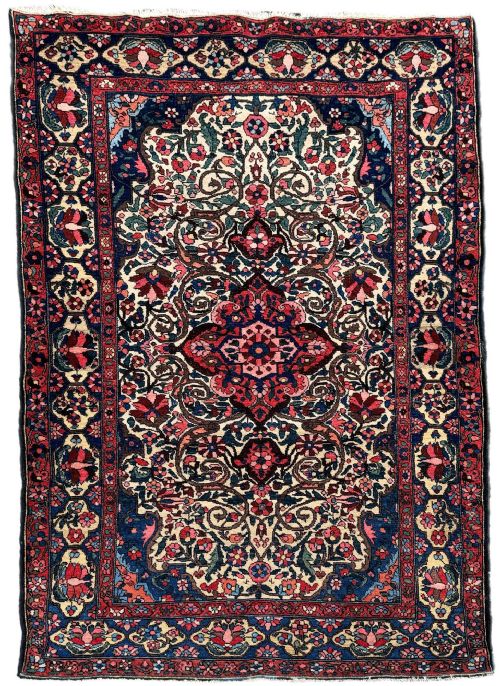
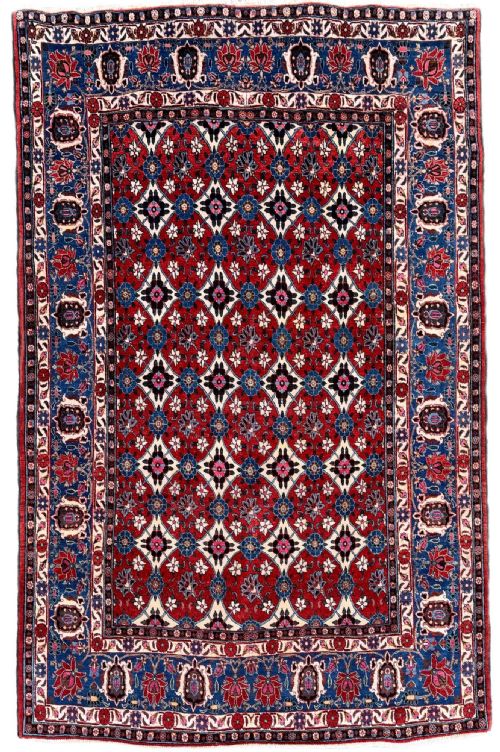
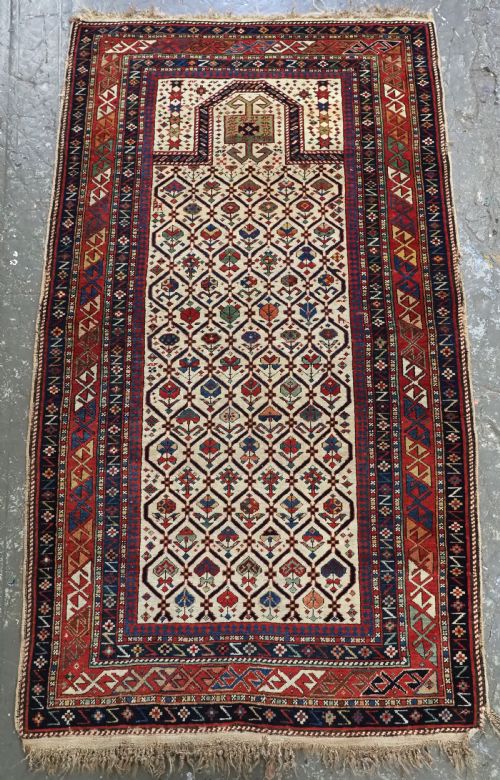
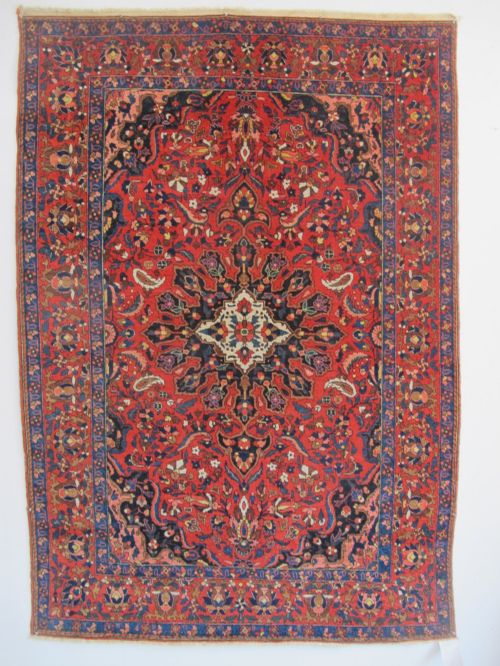
Buyers encounter various formats on this page, ranging from large country house carpets down to smaller village rugs and prayer rugs. The visual composition frequently centres on floral lattices, all-over botanical motifs, or central medallion designs set against madder-red or crimson grounds.
The style spans traditional Persian aesthetics, including Isfahan, Mahal, and Sultanabad interpretations, as well as distinct regional Caucasian patterns. Each piece reflects the specific weaving grammar of its origin, whether finely detailed city workshops or sturdier rural production.
How they were made
Weavers constructed these carpets using wool, cotton, and occasionally silk highlights, knotting pile yarns onto sturdy cotton or wool foundations. Natural dye sources provided deep reds and contrasting tones that mellow gracefully over decades of light and use.
The density of the weave and the precision of the knotting varied according to whether the piece was produced in an urban workshop or a village household. City pieces like Kashan and Isfahan employed finer foundational structures, whilst village carpets from Heriz and Bakhtiar utilised robust, heavier yarns designed for domestic durability.
Listings span periods from the eighteen-fifties through the nineteen-forties, utilising wool, cotton, and silk materials.
What varies in quality
The distinction between tiers rests upon knot density, the precision of the botanical drawing, and the subtlety of the dye palette. Finer examples display meticulous curve-linear control in their floral motifs and exceptional harmony across secondary borders.
Materials also dictate the grade, with high-grade wool yielding a lustrous handle and resilient pile. The handling of silk highlights in select pieces adds textural depth that elevates the overall visual impact of the design.
The Red Floral Carpet Glossary
- Medallion
- A central ornamental motif dominating the field of the carpet. It acts as the focal point around which the floral designs and border geometries are arranged.
- Prayer rug
- A small rug featuring a mihrab or niche design at one end, traditionally used for individual prayer. These pieces often display specific floral vase or lattice arrangements.
- Warp
- The vertical threads stretched lengthwise on the loom before weaving begins. The pile knots are tied around these foundational elements.
- Weft
- The horizontal threads passed alternately over and under the warp threads to secure the knot rows in place. They contribute significantly to the structural firmness of the carpet.
- Pile
- The cut ends of the knot yarn that form the soft upper surface of the carpet. Its height and density determine the tactile feel and visual depth of the pattern.
Red Floral Carpet: Frequently Asked Questions
How do I choose the right size?
Measure your floor space carefully, allowing a suitable margin of exposed flooring around the perimeter of the room. Large carpets anchor main living areas, while smaller rugs suit hallways, studies, or hearths.
Consider the traffic level of the intended room when selecting format. Runners fit narrow corridors, whereas room-size carpets require central placement away from heavy architectural obstructions.
Where were these carpets made?
These pieces originate primarily from Persia, encompassing renowned weaving cities and village regions such as Heriz, Kashan, Bakhtiar, and Saroukh. A smaller number hail from Caucasian and Turkish workshops.
Each region developed distinct weaving signatures, colour palettes, and structural traits that distinguish village production from urban workshop output.
What materials are used?
The pile is predominantly wool, prized for its natural resilience and capacity to hold rich dye colours. Cotton serves as the standard foundation material for warps and wefts.
Selected fine examples incorporate silk highlights to accentuate specific floral details within the design field, adding subtle contrast to the wool foundation.
How should I care for an antique rug?
Vacuum gently with the suction attachment, avoiding rotating brush bars that can pull at the wool pile. Rotate the carpet periodically to ensure even exposure to light and foot traffic.
Professional cleaning by specialists in antique textiles is recommended every few years to preserve the integrity of the natural wool and dye fibres.