
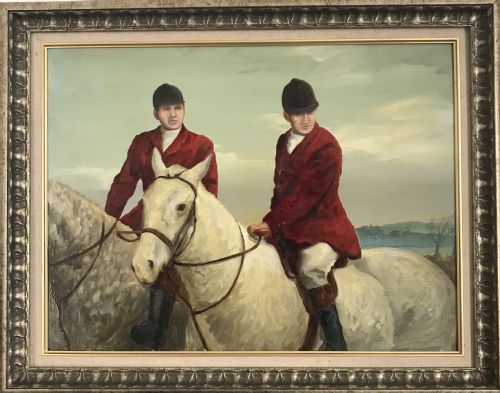


Red Coat Hunting Painting
These red coat hunting painting works capture the drama of the chase in oil and watercolour across British sporting art traditions.
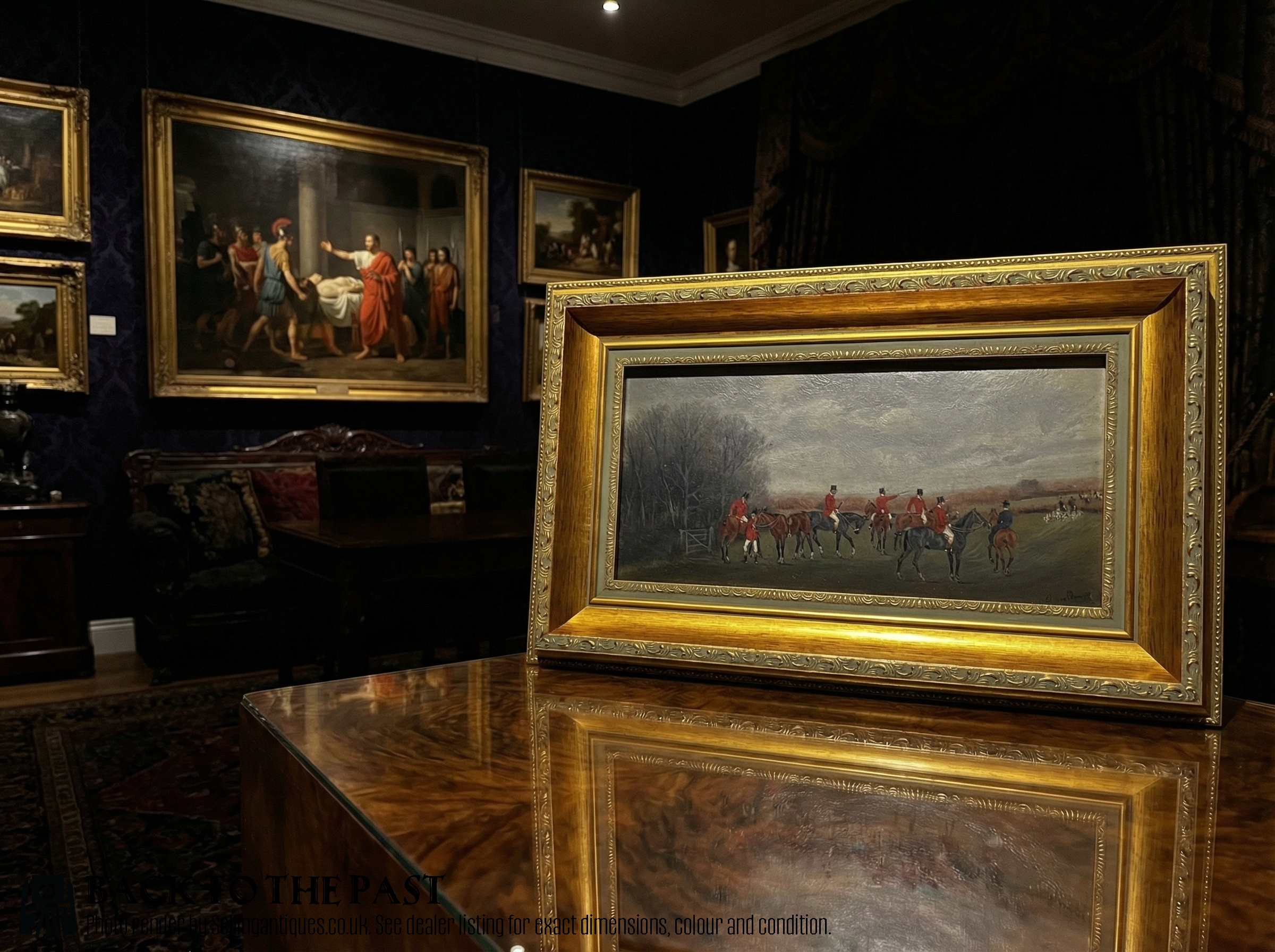
Red Coat Hunting Painting
A red coat hunting painting depicts iconic equestrian pursuits, featuring riders in traditional scarlet coats alongside hounds and horses across open countryside. These works emerge primarily from Victorian, Edwardian, and mid-century periods, capturing specific gatherings like the Quorn and Berkeley hunts.
Buyers encounter oil on canvas compositions alongside detailed watercolours on paper, often housed in period giltwood frames. The subject matter ranges from quiet meet scenes and full cry gallops to the dramatic moment of the kill and post-hunt suppers.
Most examples align with traditional British sporting art, reflecting a golden age of equestrian depiction. Artists documented these rural traditions with careful attention to horse conformation, hound breeds, and local landscape topography.
How they were made
Painters utilised oil paint on canvas to build rich textures in the horses' coats and the vivid red jackets of the riders. This medium allowed artists to layer pigments and achieve deep, resonant landscape backgrounds under varying daylight.
Watercolour on paper served as the preferred medium for lively preparatory sketches and finished works alike. Artists applied translucent washes alongside opaque bodycolour to render swift movement across fields and muddy lanes.
Framing played an integral part in presentation, utilising giltwood mouldings that enhanced the visual warmth of the painted scenes. These frames were often heavy and ornate, reflecting the domestic interiors where such sporting art traditionally hung.
Several hounds appear eager enough to leap straight out of their frames and chase the postman.
What varies in quality
The anatomical accuracy of both horses and hounds dictates the upper tier of these works. Master painters captured muscle tension and gait with precision, whereas lesser hands produced stiff, generic animal forms.
Compositional dynamism separates ordinary topographical records from truly memorable sporting art. Superior pieces manage complex crowds of horses, hounds, and riders without losing the narrative focus of the chase.
Provenance and signature clarity elevate certain works above anonymous studio output. Documented pieces by established sporting painters carry stronger narrative weight and superior brushwork control.
John Arthur Lomax·Basil Nightingale·Charles Faulkner·Charles Clifford Turner·John Sanderson Wells·Thomas Ivester Lloyd·Charles Johnson Payne Snaffles·Heywood Hardy·George Goodwin Kilburne·Geoffrey Mortimer·Philip H Rideout
The Red Coat Hunting Painting Glossary
- Full cry
- The moment when the entire pack of hounds catches the scent and gives tongue in unison. It represents the height of action in a sporting painting.
- Giltwood
- Timber carved and coated with a thin layer of gold leaf or metallic paint. It provides a traditional reflective border for Victorian and Edwardian canvases.
- Sporting art
- A genre dedicated to the depiction of field sports, equestrian subjects, and rural wildlife. It flourished in Britain throughout the nineteenth and early twentieth centuries.
- Watercolour
- A paint consisting of pigment suspended in a water-based solution, applied to paper. It allows for rapid execution and delicate washes of light.
- Equestrian
- Relating to horse riding and the care of horses. This term describes the central focus of nearly all hunting imagery.
Red Coat Hunting Painting: Frequently Asked Questions
What is a red coat hunting painting?
These artworks depict traditional British fox hunting scenes, featuring horse riders wearing distinctive scarlet coats alongside packs of hounds. They serve as historical records of rural equestrian culture primarily from the nineteenth and twentieth centuries.
Such pieces document specific hunts, famous packs, and celebrated local landscapes. They range from intimate watercolours to large oil canvases designed for country house libraries.
How should I hang these paintings?
Sporting art traditionally commands principal wall space in rooms with traditional wooden panelling or dark wall colours. Ensure the heavy giltwood frames are supported by secure picture hooks suited to the wall type.
Keep these artworks away from direct sunlight and excessive moisture to protect both the paper or canvas and the delicate gold leaf on the frames.
How do I date an equestrian painting?
Examine the clothing styles of the riders, the framing materials, and any signatures or inscriptions on the canvas or reverse. Victorian works often feature heavier, ornate frames and darker varnish layers.
Twentieth-century pieces by artists like Snaffles frequently utilise distinct watercolours with pencil annotations or specific signature monograms that help narrow the production decade.
What is the difference between oil and watercolour?
Oil paintings utilise slow-drying paint on stretched canvas, allowing for deep colour blending and textured brushwork. They offer greater durability and richer tonal depth for large interior spaces.
Watercolours employ pigment on paper under protective glass, capturing a lighter, more immediate atmosphere. They suit smaller domestic settings and require careful preservation away from direct light.