
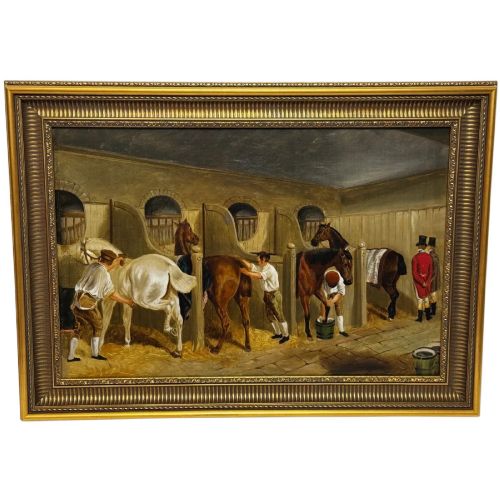


Victorian Hunting Scene Picture
A victorian hunting scene picture brings the energy of the nineteenth-century field directly onto the wall.
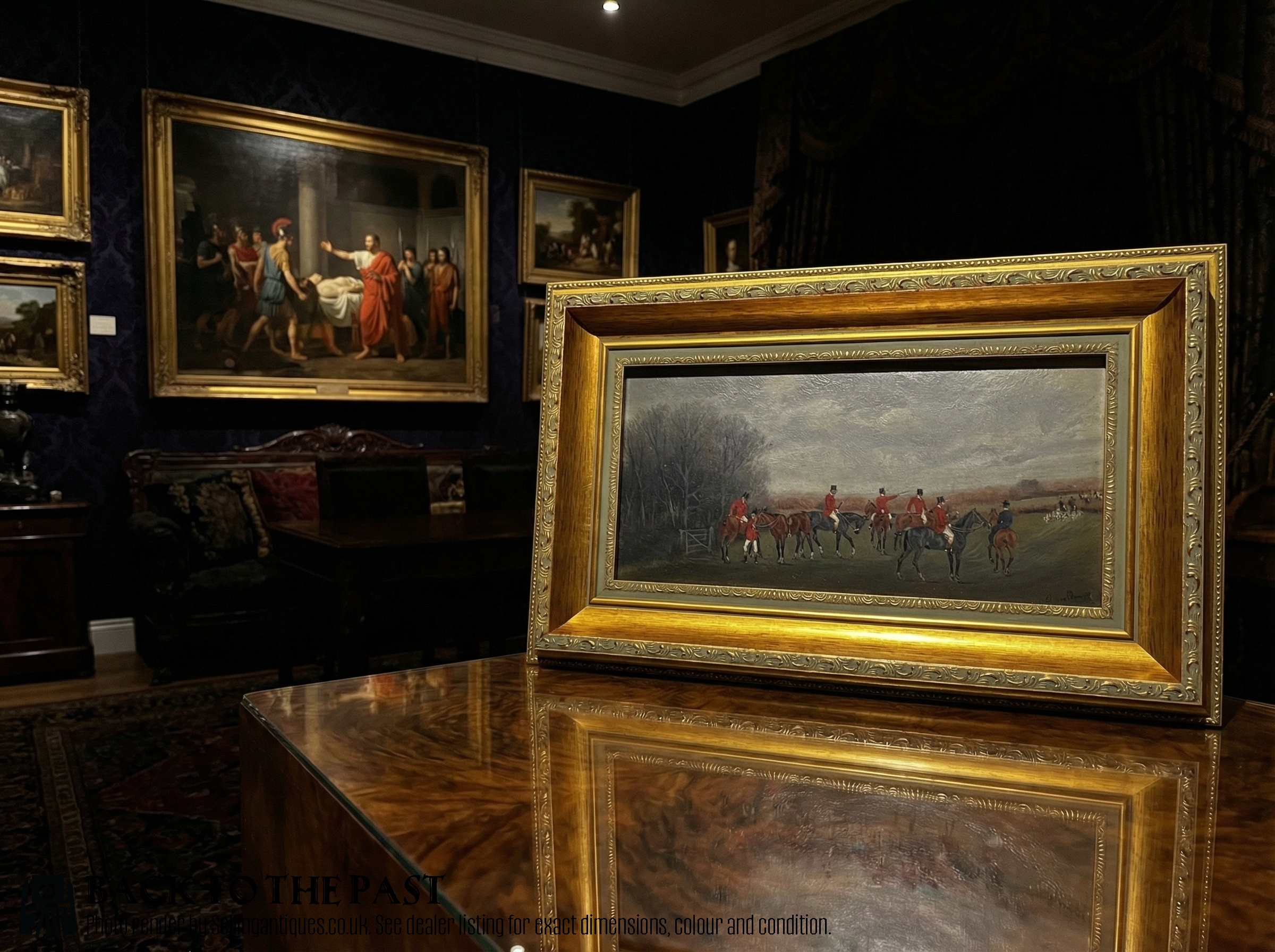
Victorian Hunting Scene Picture
A victorian hunting scene picture depicts mounted riders, packs of hounds, and sporting pursuits captured across the nineteenth century and into the early twentieth century. These works range from large oil paintings on canvas to intimate watercolours, reverse glass paintings, and coloured engravings.
The versions most frequently met on this page include nineteenth-century oil paintings in gilt wood frames, alongside detailed watercolours and framed prints. Many capture specific packs and meets, such as the Berkeley Hunt, or broader highland sporting art and animalier subjects.
Materials and construction
Artists painted primarily in oil paint on canvas or board, or applied watercolour and ink on paper, occasionally working in monochrome or colour. Engravings provided reproducible prints of popular sporting subjects for wider framing.
Pieces commonly feature wood frames, frequently enhanced with giltwood or gilt finishes, protecting underlying glass panels where reverse glass painting or paper prints are utilised.
Listings span the nineteenth and early twentieth centuries, featuring oil on canvas, watercolour, glass, and paper.
Distinctions in quality
Quality rests upon the artist's command of equine and canine anatomy, movement, and composition within the landscape. Finer works display precise brushwork in the rendering of horses, riders, and hounds, whereas simpler pieces rely on formulaic arrangements.
The preservation of the original surface, whether oil on canvas, watercolour on paper, or reverse glass painting, dictates the visual clarity of the scene. Period framing, particularly original gilt wood surrounds, also contributes significantly to the integrity of the piece.
John Arthur Lomax·Charles Faulkner·Edgar Hunt·John Charles Tunnard·Robert Cleminson·George Goodwin Kilburne·William J Hodgson·Charles Hunt·Francis Calcroft Turner·Frank Dadd·Samuel John Egbert Jones·Charles Hunt Jnr
The Victorian Hunting Scene Picture Glossary
- Oil on canvas
- Pigments bound in a drying oil applied to a stretched canvas support. This medium allowed artists to build rich textures and deep tones suitable for large sporting scenes.
- Reverse glass painting
- An artwork painted directly onto the back of a glass panel to be viewed from the front. This technique produces a glossy, reflective surface finish.
- Engraving
- A printmaking method where an image is incised into a metal plate to hold ink. Coloured versions were frequently hand-tinted after printing.
- Animalier
- Art focusing on the realistic portrayal of animals. In this context, it highlights the detailed study of horses, hounds, and game.
- Watercolour
- A paint consisting of colour pigments suspended in a water-soluble vehicle. It yields translucent washes of colour on paper.
Victorian Hunting Scene Picture: Frequently Asked Questions
What subjects appear in these pictures?
The works depict mounted fox hunts, meet gatherings, sporting dogs, and rural landscapes with horses and handlers. Scenes range from expansive moorland chases to intimate farmyard and cottage settings with animals.
Specific regional hunts and fictional sporting narratives also populate the selections, reflecting nineteenth-century rural pastimes.
How do I date a picture?
Dating relies on recorded artist lifespans, stylistic markers of Victorian sporting art, and framing materials. Inscribed dates, signatures, and paper watermarks offer further chronological indicators.
Many pieces carry explicit nineteenth-century or early twentieth-century attributions documented in the listings.
Are these works painted on canvas?
Many examples utilise oil paint on stretched canvas or wooden board, while others consist of watercolours on paper or engravings. Reverse glass paintings present a completely different surface medium.
Checking the material details for each listing confirms whether the piece is a painting or a print.
Where should I hang a sporting picture?
These works suit studies, hallways, and living rooms where traditional equestrian or animalier art complements interior spaces. Gilt wood frames pair well with period architectural details.
Direct sunlight should be avoided to protect watercolours, paper prints, and oil paint from fading over time.