
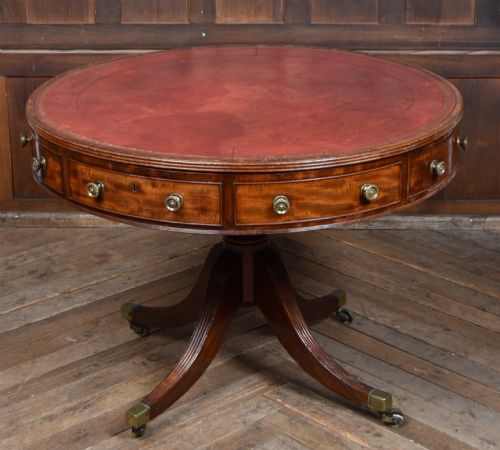


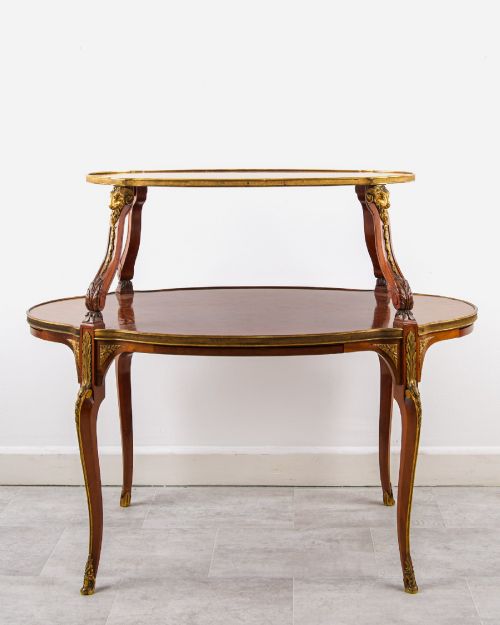


Red Brown Mahogany Table
These red brown mahogany tables bring warmth and utility to a room, spanning formal dining spaces and quiet studies.
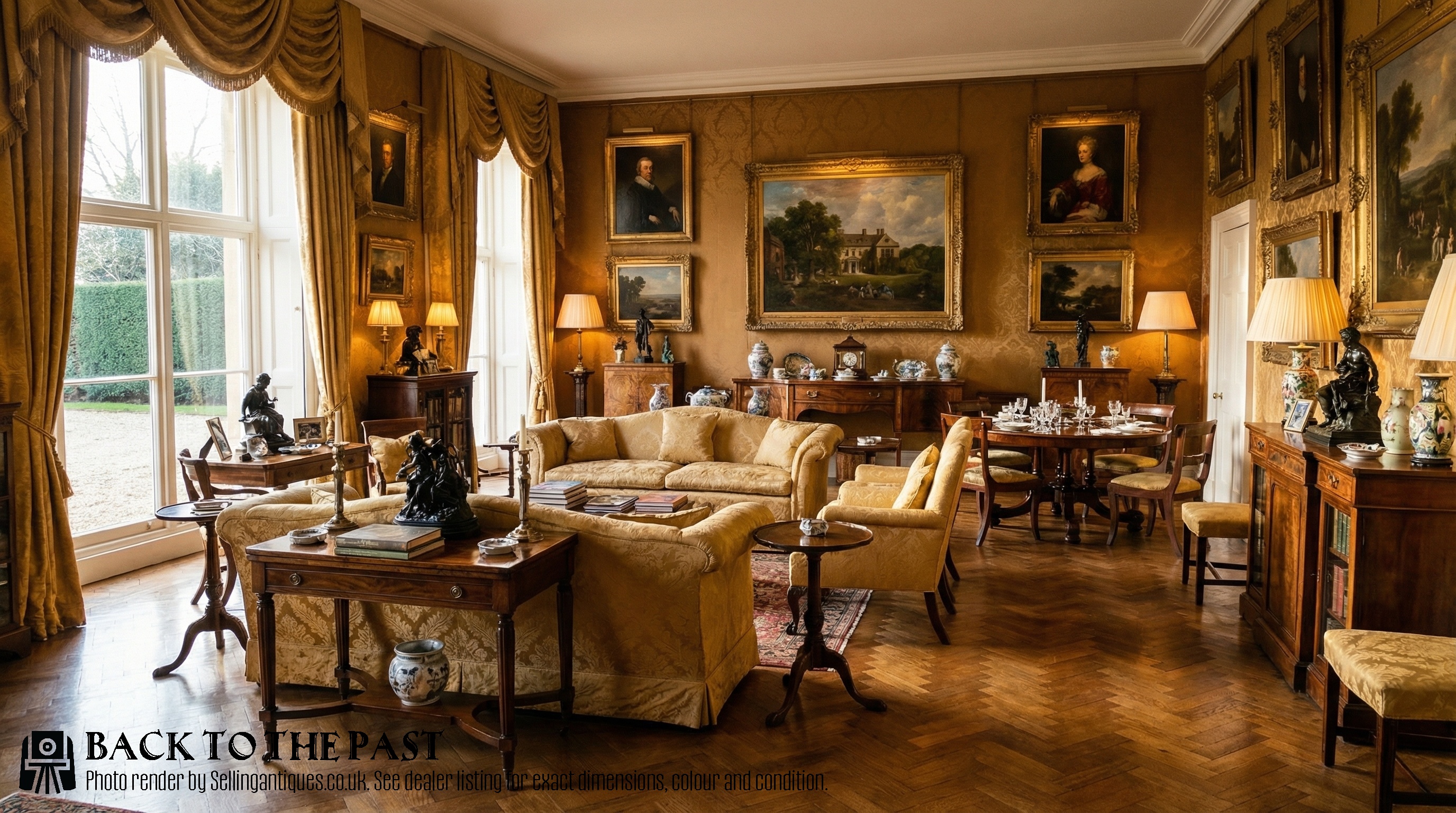
Red Brown Mahogany Table
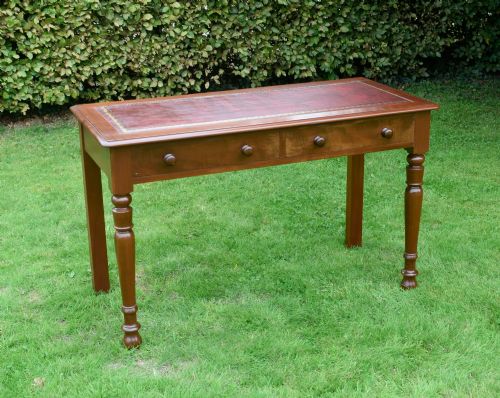
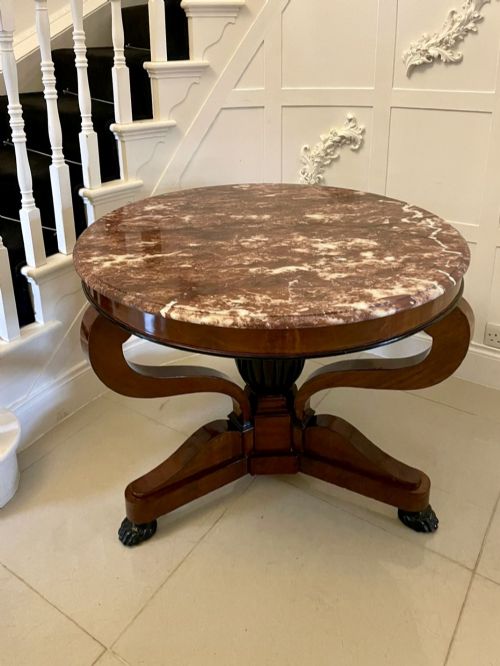
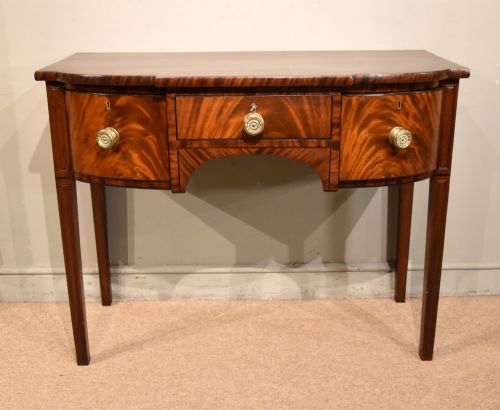
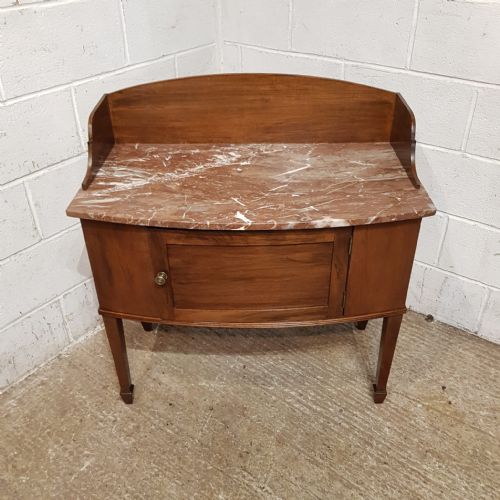
A red brown mahogany table encompasses a diverse group of domestic furniture built primarily during the Georgian, Regency and Victorian periods. You will encounter dining tables, side tables, writing desks, and centre tables constructed from this durable tropical timber. The selection ranges from simple single-drawer side tables to elaborate pedestal desks and console tables.
The version you are most likely to meet on this page is the Victorian mahogany writing table or desk, alongside Georgian side tables and larger dining pieces. Many pieces incorporate functional elements such as drawers, drop leaves, or marble tops. Origins span English workshops as well as French cabinet makers working in styles like Chippendale Revival and French Restoration.
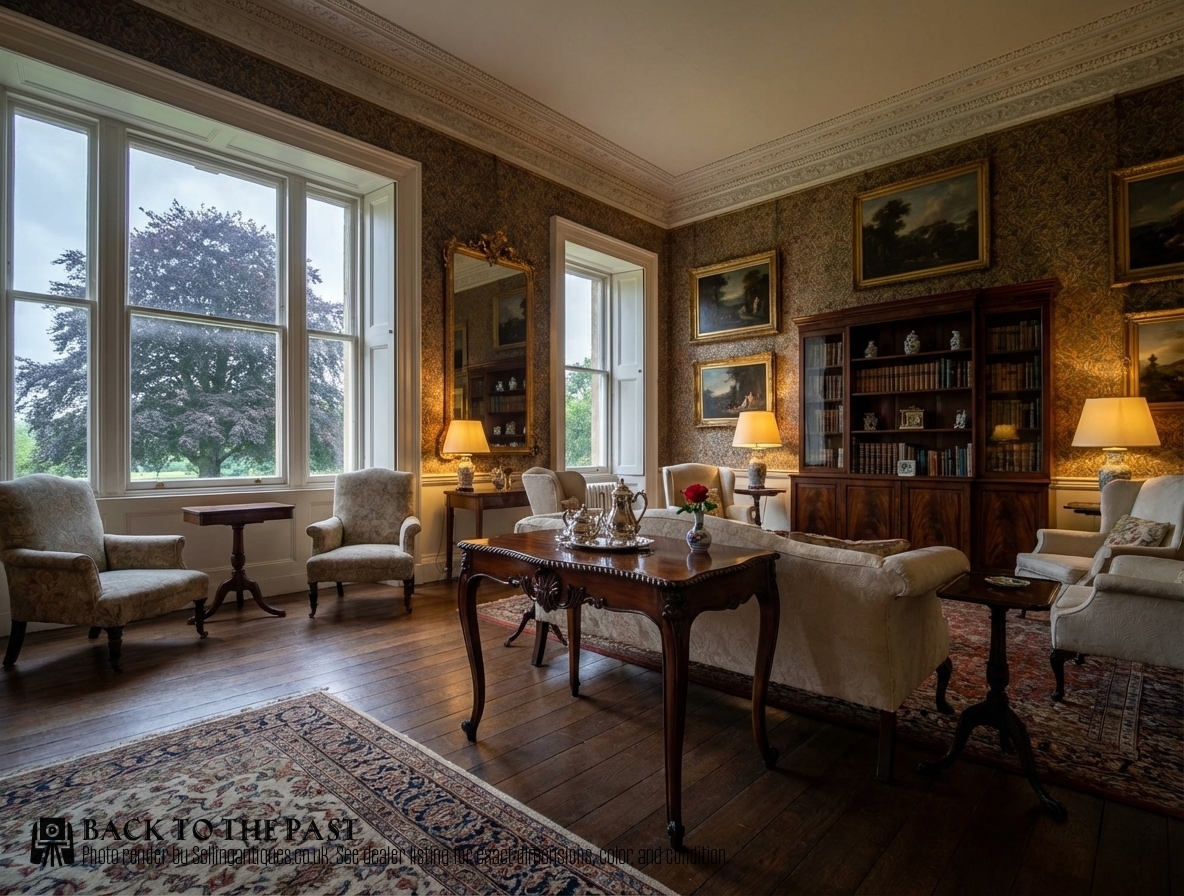
What varies in quality
Quality in a red brown mahogany table rests upon the choice of timber and the restraint of the design. Superior examples display carefully matched flame mahogany veneers and balanced proportions, whereas simpler pieces rely on plain solid boards for everyday utility.
The refinement of secondary details separates the top tier from standard workshop output. Finely executed boxwood inlay, well-cast brass mounts, and original leather writing surfaces indicate a higher standard of original craftsmanship.
Even Charles Dickens required a proper desk, as a Victorian writing table bearing his name proves.
The Red Brown Mahogany Table Glossary
- Flame mahogany
- A veneer cut from the fork of the mahogany tree to produce a distinctive, flamy grain pattern. This figure was prized for cabinet fronts and table tops.
- Ormolu
- Gilded bronze mounts applied to furniture, frequently seen on French tables. It provides a bright metallic contrast to the dark wood.
- Pedestal desk
- A heavy writing table supported by two banks of drawers rather than four legs. These large desks form a central feature in studies.
- Tripod table
- A small occasional table supported by a central pillar and three splayed legs. They date largely from the eighteenth century.
- D-end table
- A dining table whose ends are semicircular, allowing them to stand against a wall as console tables when separate. They join together with leaves to form a long dining surface.
Red Brown Mahogany Table: Frequently Asked Questions
How do I date a mahogany table?
Dating relies on observing construction methods, timber choice, and the prevailing style of the period. Georgian pieces often show simpler internal drawer linings, whilst Victorian examples frequently employ heavier turned pedestals and richer flame veneers.
Hardware and secondary woods also provide clues to age. Machine-sawn timber indicates a date firmly in the nineteenth century, whereas hand-planed internal surfaces point towards earlier Georgian craftsmanship.
Were these tables used for dining?
Many larger mahogany tables served specifically for dining, including extending versions and D-end configurations. Breakfast tables and console combinations offered flexible arrangements for large households.
Smaller examples functioned as side tables or serving surfaces in the dining room. Their sturdy timber construction easily withstood daily domestic use.
How should I maintain the wood surface?
Maintaining the polish requires regular dusting with a dry cloth and occasional application of appropriate beeswax. Avoid placing mahogany furniture in direct sunlight or near heat sources to prevent the timber from drying out.
Moisture can damage the polished finish, so coasters and placemats remain essential. Gentle care preserves the rich red brown tone over decades of use.
What is the difference between a console and a side table?
Console tables traditionally stood against a wall, sometimes supported by brackets or legs at the front only. Side tables stood independently on four legs and served general utility functions around the room.
In practice, makers and dealers often used these terms interchangeably depending on the proportions of the piece. Both forms utilised mahogany and decorative inlays to complement domestic interiors.