






Red Art Nouveau Glass
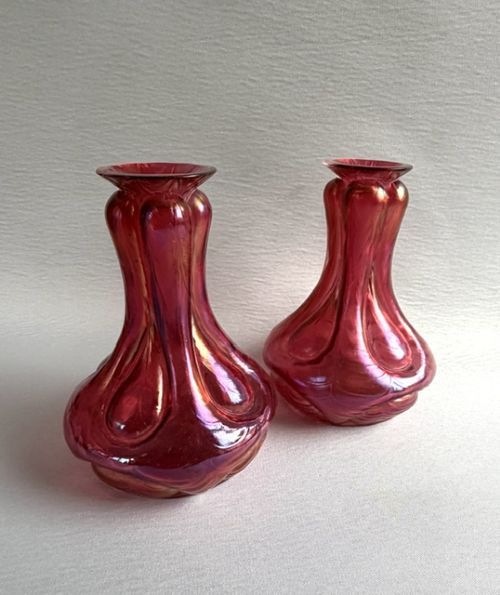
Red art nouveau glass brings glowing colour and organic forms to a room, catching the light through rich crimson tones and floral motifs.

Red Art Nouveau Glass
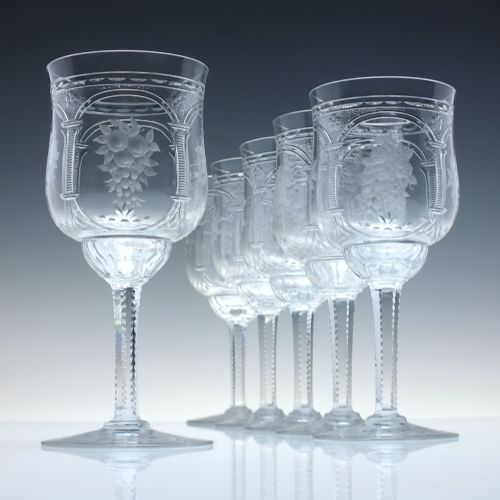
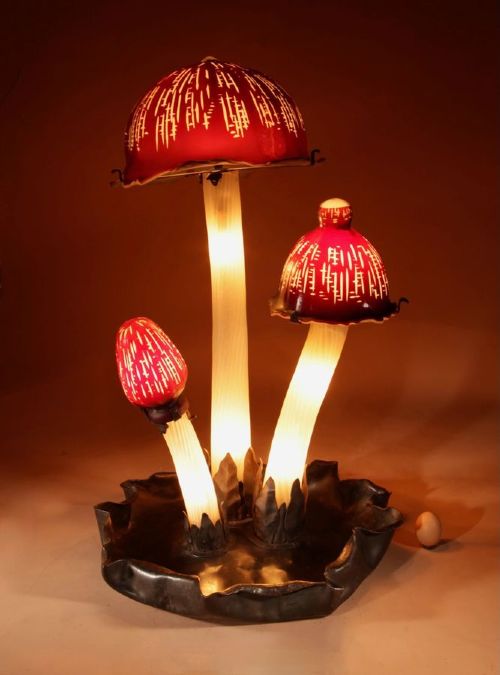
When you search for red art nouveau glass, you encounter pieces that range from ruby vessels to layered cameo glass vases and table lamps. These objects embody the undulating lines and natural subjects characteristic of the movement, spanning from the late nineteenth century into the 1930s.
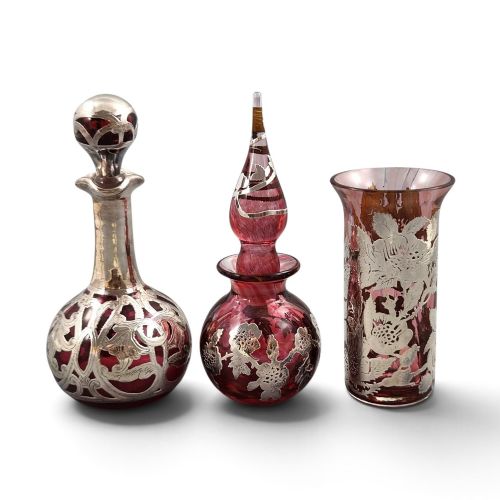
The most common vessels met on this page are vases, perfume bottles, and vanity sets, alongside occasional lamps and stained glass windows. They originate from French and European workshops, utilising striking crimson hues, cranberry tones, and red staining to create depth.
Beyond vessels, the material culture extends to decorative bowls and tazzas, where glass meets metal mounts of pewter, brass, or silver. These varied objects showcase the sustained appeal of the style across different decades of production.
How red art nouveau glass was made
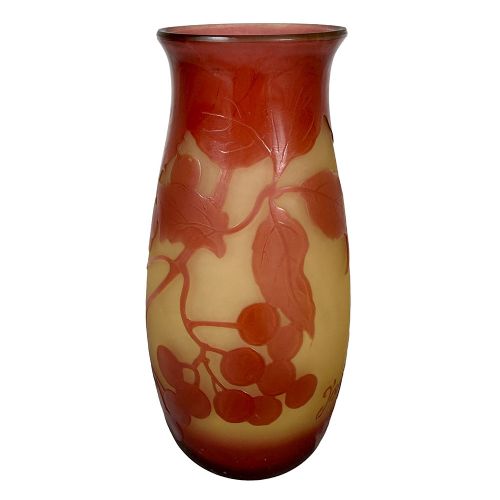
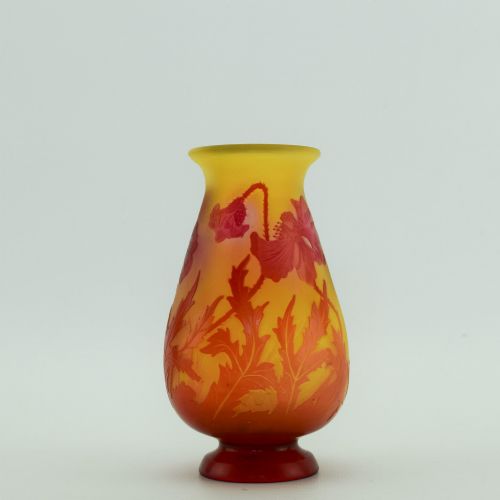
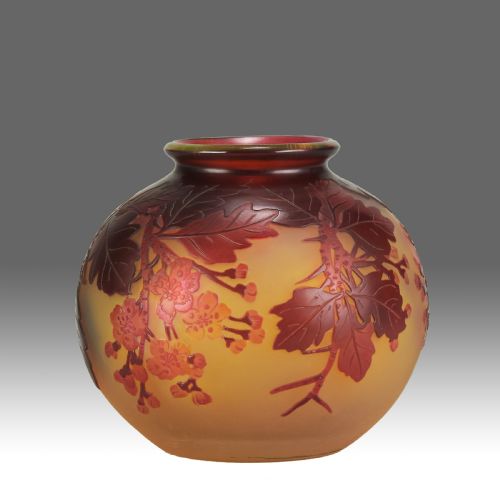
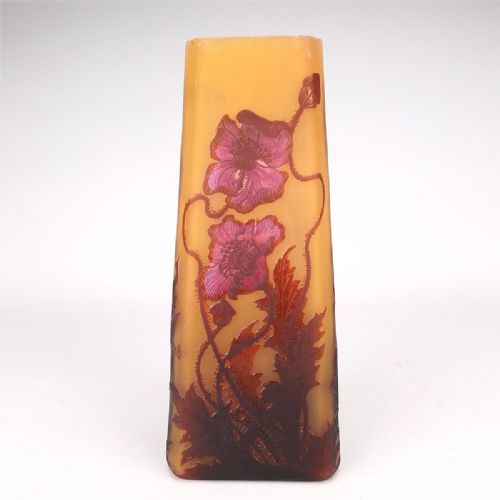
Makers utilised layered cameo glass techniques, acid-etching designs through outer strata to reveal contrasting red tones beneath. This demanded precise control over chemical baths and manual carving.
Enamel and gold leaf frequently decorated the surfaces, applied by hand to accentuate floral and botanical motifs like poppies, clematis, and lotus flowers. Some pieces incorporated blow-out or souffle methods to expand the glass into intricate moulds.
Metal components such as pewter, brass, and silver formed mounts, frames, and hardware, occasionally combined with mahogany or other woods in related display furniture.
Red Art Nouveau Glass Retail Price Guide 2026
Typical asking prices for red art nouveau glass among the pieces listed under this phrase on Sellingantiques today, from the lower quarter to the upper quarter. They describe what is for sale here now, not the wider market.
One converted oil lamp managed to shed its original fuel function entirely to spend its retirement glowing purely as art nouveau decor.
What varies in quality
The distinction between tiers rests on the depth of the carving and the clarity of the layered glass colours. Superior examples display crisp relief work where acid-etching has exposed delicate shading without biting too deep into the ground.
The finesse of hand-applied details, such as gold leaf accents and enamel line work, separates workshop production from standard output. Well-executed pieces integrate metal mounts seamlessly with the glass body, maintaining balance and proportion.
Emile Galle·Daum Freres·Paul Nicolas·Legras·Baccarat·Rene Lalique·Orivit·WMF
The Red Art Nouveau Glass Glossary
- Cameo glass
- Glass formed with multiple layers of different colours, which are then carved, etched, or ground away to create a raised design in relief. This technique requires exceptional skill to control the depth of each layer.
- Acid-etched glass
- Glass treated with hydrofluoric acid to eat away exposed surfaces and create frosted textures or pattern reliefs. It allowed makers to produce intricate botanical designs consistently.
- Blow-out glass
- Glass blown forcefully into a rigid mould so that it expands into high relief, capturing complex sculptural details. Pieces produced this way often feature prominent floral or organic motifs.
- Enamel
- Opaque or translucent glass paste applied to the surface of a vessel and fired to fuse it permanently. It added rich surface colour and decorative highlights to the primary glass body.
- Tazza
- A shallow ornamental bowl or cup raised on a stem and foot, often used for display. In this context, they combine cameo glass bowls with decorative metal bases.
Red Art Nouveau Glass: Frequently Asked Questions
What is cameo glass?
Cameo glass is a form created by fusing two or more distinct layers of coloured glass together before carving or acid-etching the outer layer away. This process leaves a raised design that contrasts sharply with the background colour.
Makers utilised this technique extensively to render naturalistic flower heads, stems, and aquatic scenes with genuine sculptural depth and shading.
How do I care for these glass pieces?
These items require gentle handling, particularly those featuring delicate gold leaf, enamel work, or mixed metal mounts. Dust them regularly with a soft, dry cloth rather than using chemical cleaning solutions.
Keep them away from direct, harsh sunlight to preserve the richness of the red tones and prevent any degradation of applied surface decoration.
Are these pieces signed?
Many of the glass vessels and perfume bottles bear signature marks, either cameo-etched into the body or painted on the surface by the maker or workshop. These signatures authenticate the origin and provide clues about the specific period of manufacture.
Unsigned pieces still display stylistic traits and techniques typical of particular workshops, though marked examples carry clearer attribution.
How do I distinguish art nouveau from art deco?
Art nouveau design relies on flowing, asymmetrical lines inspired by natural organic forms like plants, vines, and flowers. The aesthetic prioritizes curves and biological movement over rigid geometry.
Art deco, which emerged later, favours symmetrical arrangements, streamlined silhouettes, and sharp angular patterns. The glass from the earlier period feels more fluid and botanical.