
Red Textile
A red antique textile brings warmth and rich cultural history into a room through centuries-old dye work and hand-stitched motifs.
Red Textile
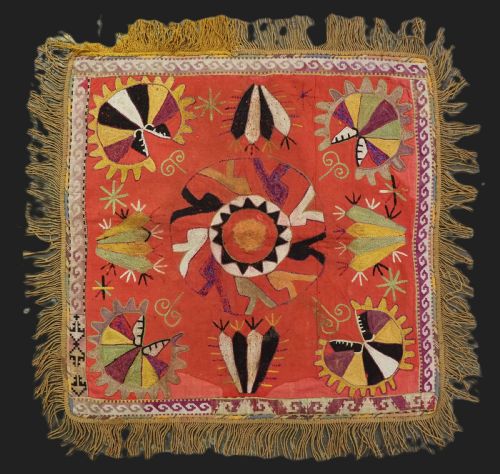
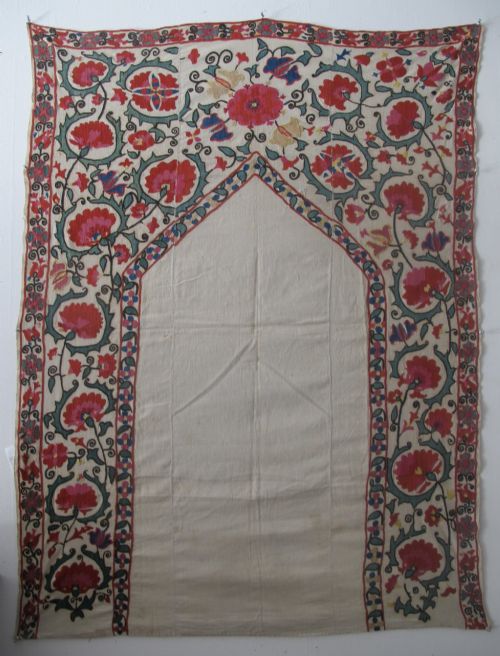
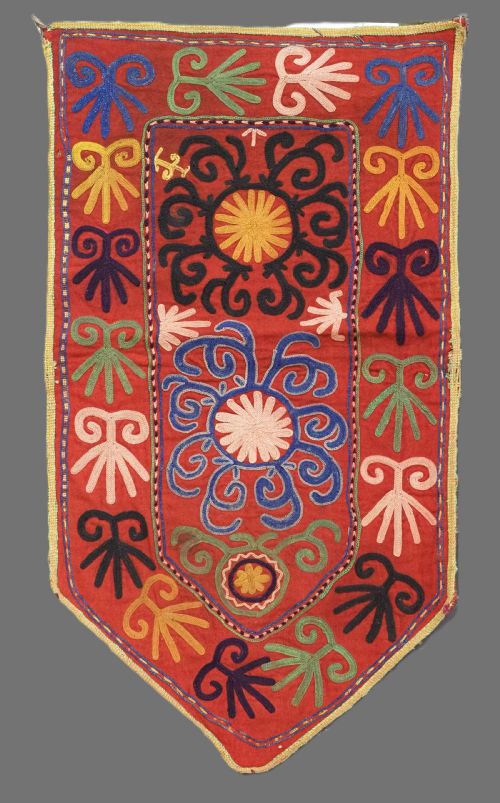
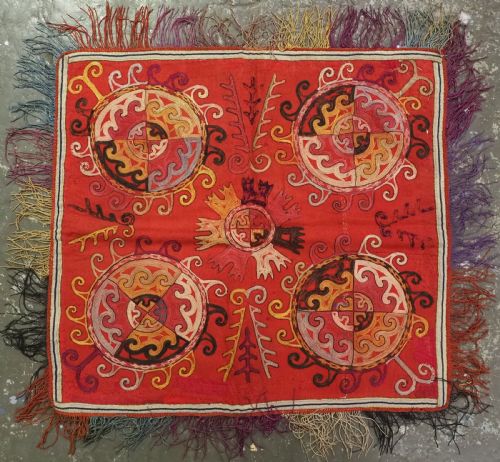
A red antique textile encompasses a diverse range of historic woven and embroidered items, spanning tribal weavings, wall hangings, and domestic furnishings. When exploring this phrase, buyers encounter examples originating from Central Asian tribes, Persian nomadic groups, and Victorian European workshops.
From detailed Uzbek Suzanis to Scottish wool shawls and Victorian needlework samplers, the category bridges nomadic craftsmanship and European domestic arts. Each piece retains the distinct visual language of its maker and region of origin.
How they were made
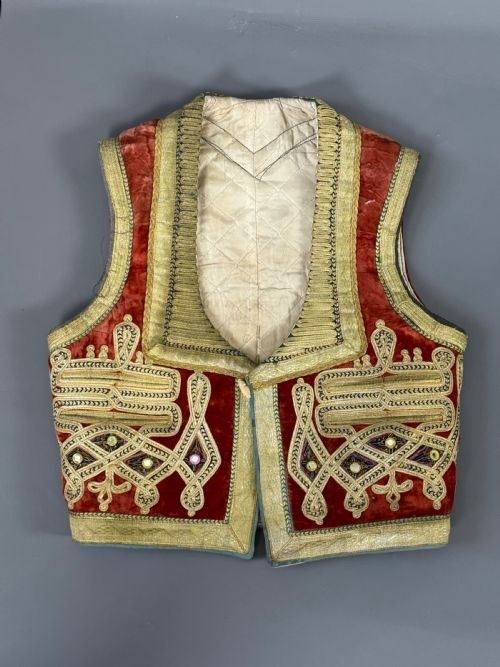
Materials such as wool, cotton, silk, and linen form the structural foundation of these historic textiles, often reinforced with metallic thread and silk thread for detailed embellishment. Artisans utilised natural dyes to achieve deep red tones, working on hand-operated looms or stitching intricate patterns by hand.
Nomadic and tribal groups employed durable weaving techniques suited for portable life, creating practical items like saddle bags, tent bags, and animal trappings that doubled as decorative household assets. In European contexts, textiles involved structured frames, fine needlework, and specialised looms for shawls and covers.
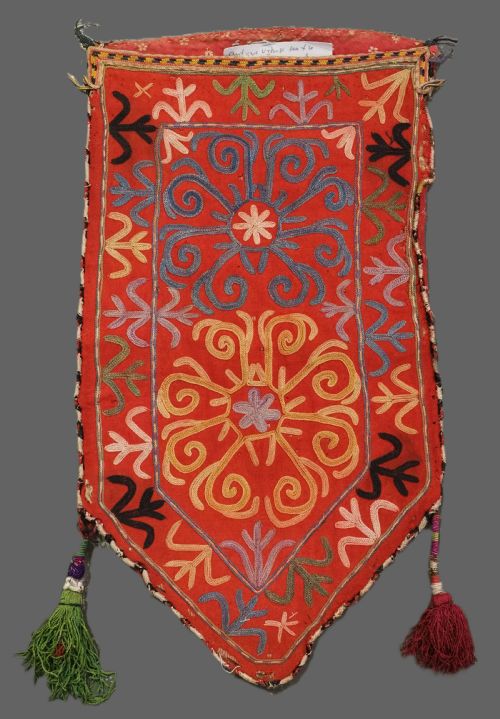
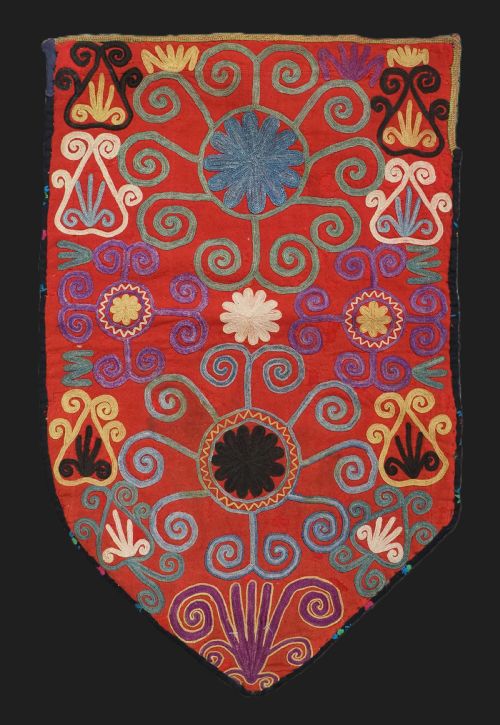
Specialised techniques varied by region, from the chain-stitch embroidery of Central Asian Suzanis and Lakai tribal pieces to the woven pile of Persian rugs and the delicate needlework of Victorian samplers.
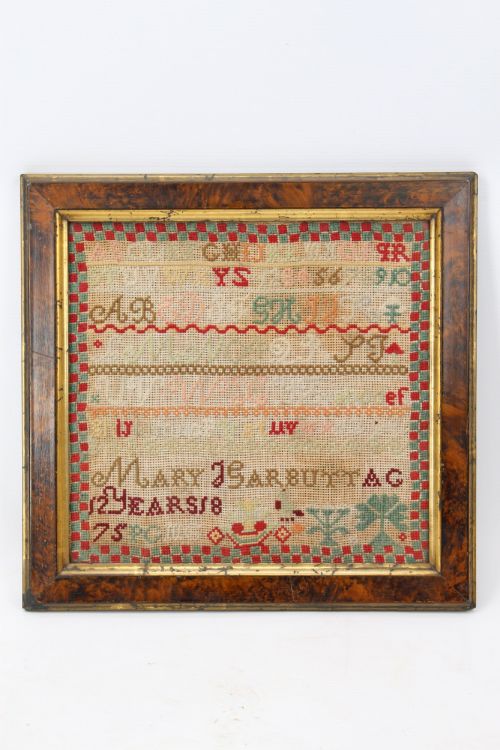
Some nineteenth-century makers immortalised their needlework skills while still children, leaving their exact age stitched neatly beside the alphabet.
What varies in quality
The distinction between standard and exceptional pieces often rests upon the precision of the handwork, the complexity of the design, and the survival of the original materials. Tightly packed stitches, balanced symmetry in tribal motifs, and intricate drawing elevate certain embroideries and weavings above simpler utilitarian items.
Material composition significantly influences the standing of a textile, with fine silk thread work, well-preserved metallic threads, and high-grade wool yielding richer textures and greater visual depth. The integrity of the ground cloth and the vibrancy of the red dyes further separate masterwork examples from ordinary survivals.
Context and cultural provenance also play a role, as documented tribal pieces with uncommon structural types or complete ceremonial elements demonstrate superior ethnographic interest.
The Red Textile Glossary
- Suzani
- An embroidered wall hanging or decorative textile originating from Tajikistan, Uzbekistan, and other Central Asian nations. These large panels typically feature bold floral and botanical designs worked in silk on a cotton or linen ground.
- Asmalyk
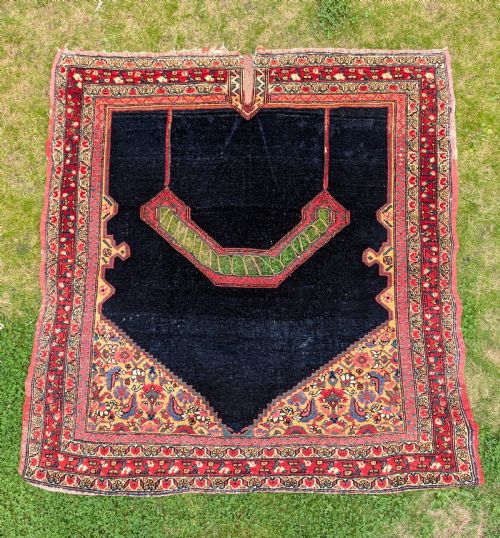
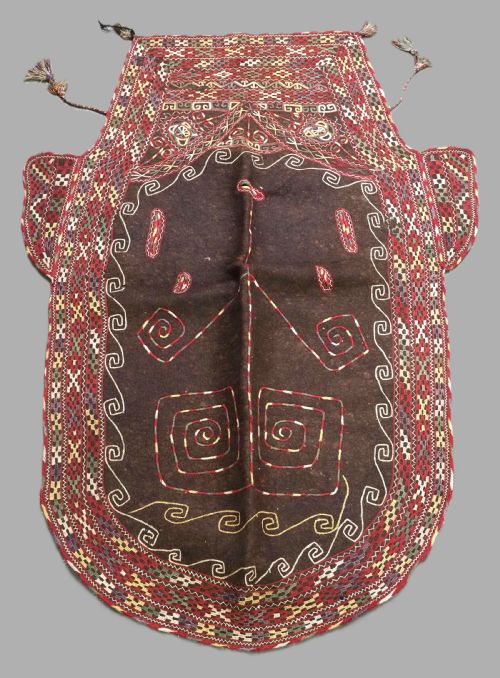
- A large, pentagonal ceremonial trapping produced by Yomut Turkmen tribes, traditionally hung on the flanks of a bride's camel during wedding processions. They display geometric motifs executed in rich wool pile or embroidery.
- Sampler
- A piece of needlework produced by individuals to demonstrate skill in various stitches and alphabets. Victorian examples often include dates, ages of the makers, and moral verses.
- Uut Kap
- A small storage bag produced by Central Asian tribes, designed to hang inside a yurt for holding household belongings. They frequently feature dense, talismanic embroidery.
- Paisley
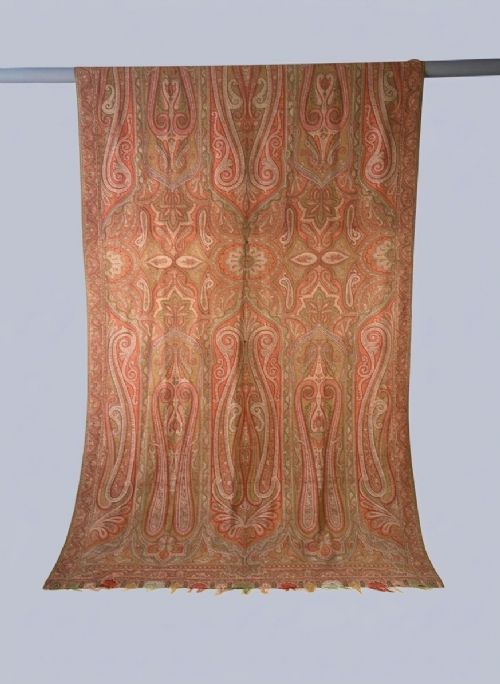
- A patterned wool textile featuring distinctive teardrop-shaped motifs, originating from the Scottish town of Paisley during the nineteenth century. These shawls emulated traditional Kashmiri designs.
Red Textile: Frequently Asked Questions
How do I hang a textile on the wall?
Wall hangings and embroideries require careful support to distribute weight evenly across the fabric without causing tearing or distortion. Professional framers often use non-damaging stitching methods to mount textiles onto conservation-grade backing boards.
Alternatively, a concealed fabric sleeve can be stitched to the reverse, allowing a slender wooden rod or metal bar to support the piece safely from brackets.
How were tribal bags originally used?
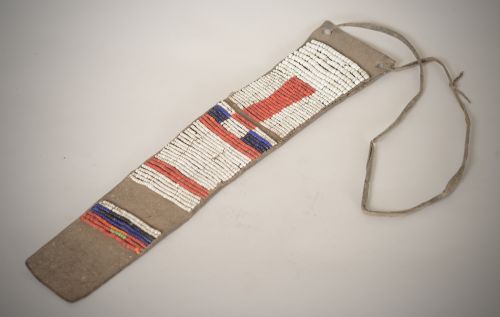
Nomadic groups utilised small bags and trappings for storage, transport, and domestic organisation inside tents and portable dwellings. Items such as salt bags, saddle bags, and camel decorations served practical daily functions while displaying tribal identity.
These functional objects were woven or embroidered as part of dowries and household furnishings, combining utility with symbolic protection and status.
What is the difference between a rug and a bagface?
A rug is woven as a flat, complete floor covering or hanging designed to be viewed in its entirety from a distance. A bagface represents the decorative front panel of a utilitarian storage sack, which was separated from its plain back during its history.
Bagfaces typically feature denser knotting or embroidery and distinct compositional framing intended to be seen while hanging inside a dwelling.