







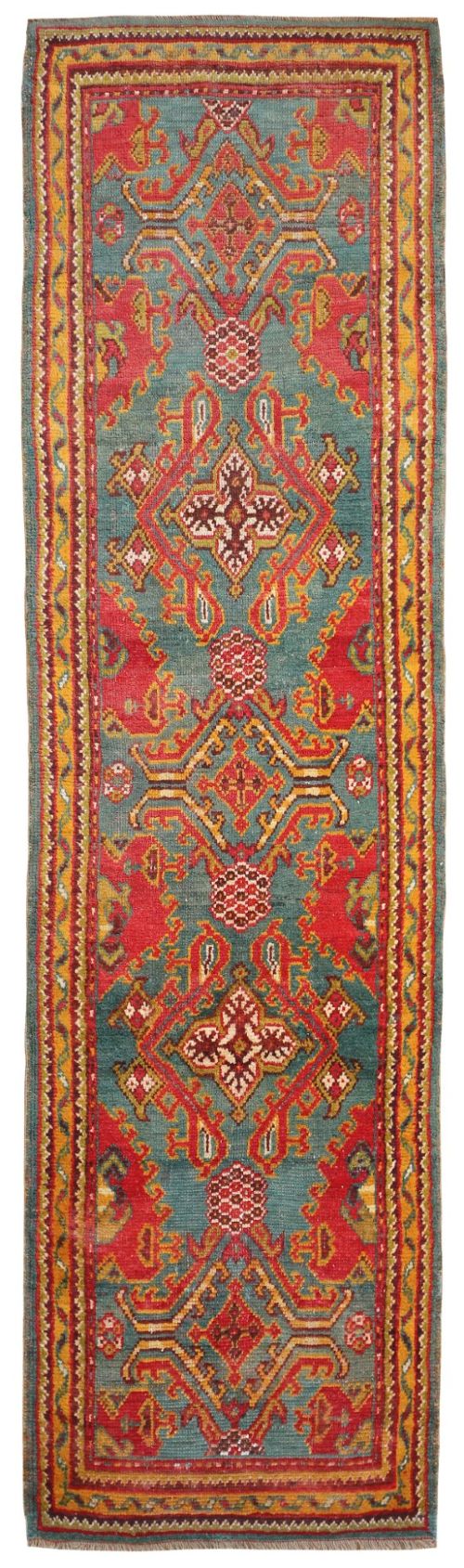
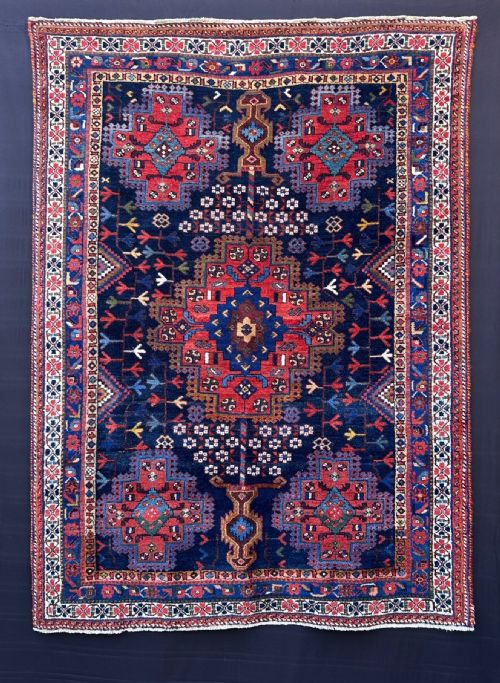
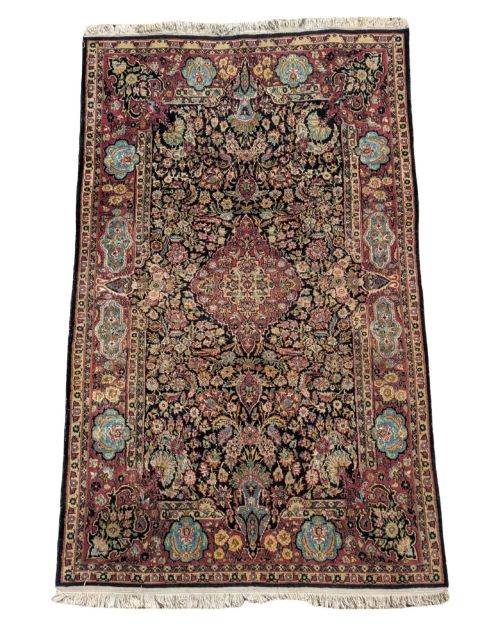
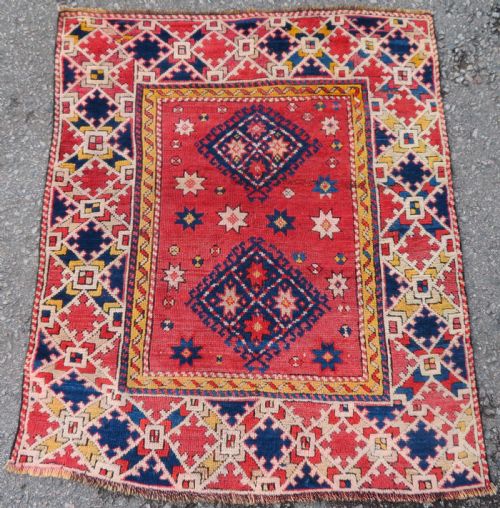
Red and Blue Wool Carpet
A red and blue wool carpet anchors a room with enduring pattern, bringing structured warmth and historic dye work to timber floors.
Red and Blue Wool Carpet
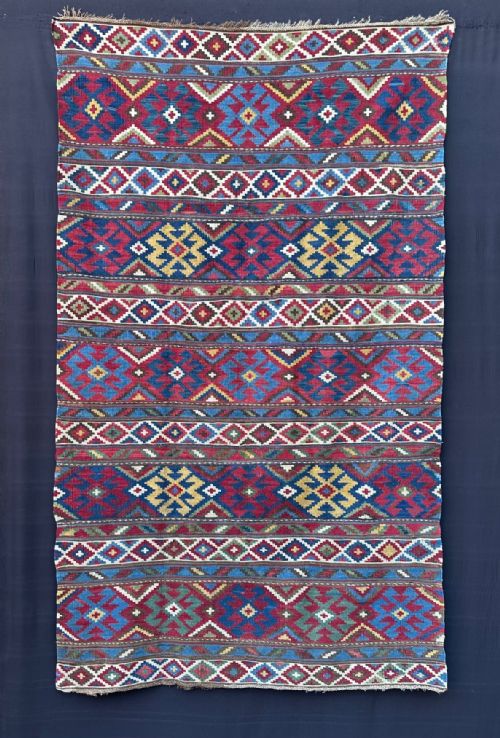
A red and blue wool carpet encompasses woven floor coverings originating mainly from Persian, Caucasian and Anatolian traditions, spanning the nineteenth and twentieth centuries.
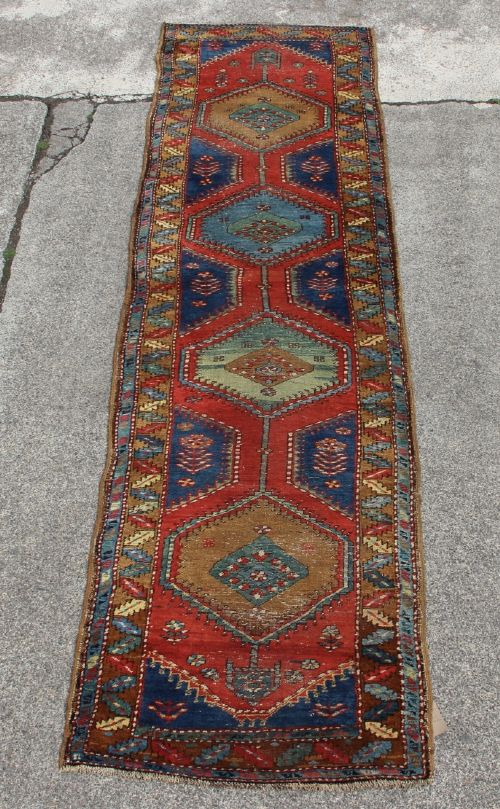
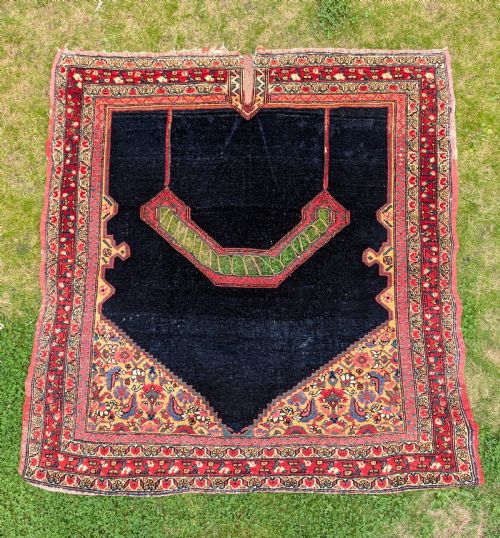
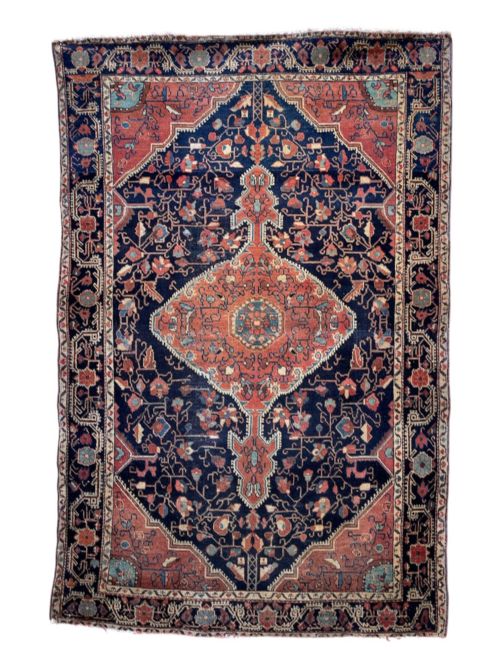
Buyers seeking a red and blue wool carpet encounter formats ranging from square area rugs and long corridor runners to specific regional prayer rugs and saddle covers.
The pieces available here represent diverse weaving centres, utilising distinct geometric, medallion and tribal motifs rendered in characteristic crimson and indigo palettes.
Materials and Construction
These floor coverings rely primarily on sheep wool, occasionally combined with cotton foundations or highlighted with silk details in specific regional workshops.
Weavers utilised hand-spun wool and natural dye sources to knot or weave complex pile and flatweave structures designed for heavy domestic use.
Certain runners stretch over six metres long, designed specifically to warm echoing historic corridors.
Evaluating Quality in Weaving
Quality separates by the precision of knotting density and the crispness of the geometric or floral drawing across the field.
The depth and permanence of natural indigo and madder dye work distinguish superior examples from simpler village output.
The Red and Blue Wool Carpet Glossary
- Pile
- The upright loops or cut ends of yarn that form the usable surface of a carpet. It provides softness and protects the structural foundation underneath.
- Medallion
- A large, distinct ornamental motif positioned at the centre of the carpet field. It often dictates the symmetry of the surrounding design.
- Runner
- A long, narrow carpet format traditionally suited for corridors, hallways or staircases. It guides movement through domestic spaces.
- Warp
- The vertical threads stretched tightly on the loom before weaving begins. The horizontal weft threads pass through these to secure the knots.
Red and Blue Wool Carpet: Frequently Asked Questions
How do I clean an antique wool carpet?
Regular gentle vacuuming without a beater bar removes surface grit from the wool pile safely.
Professional specialist washing remains essential for deep cleaning to protect historic natural dyes.
Where were these carpets originally made?
Production centres span traditional weaving regions including Persia, the Caucasus and Anatolia.
Village workshops and nomadic tribes produced distinct regional styles reflecting local cultural motifs.
Are these carpets suitable for heavy foot traffic?
Hand-knotted wool construction provides natural resilience and durability for everyday domestic environments.
Using a quality underlay beneath the carpet prevents slippage and reduces friction wear on floors.
How can I identify the age of a carpet?
Structural characteristics, regional weave density and the character of natural dyes offer primary clues to dating.
Comparing design motifs with documented examples from specific nineteenth or twentieth century periods aids attribution.