





Rectangular Pedestal Table
A rectangular pedestal table brings classical proportion and single-pillar support to dining rooms and libraries alike.
Rectangular Pedestal Table
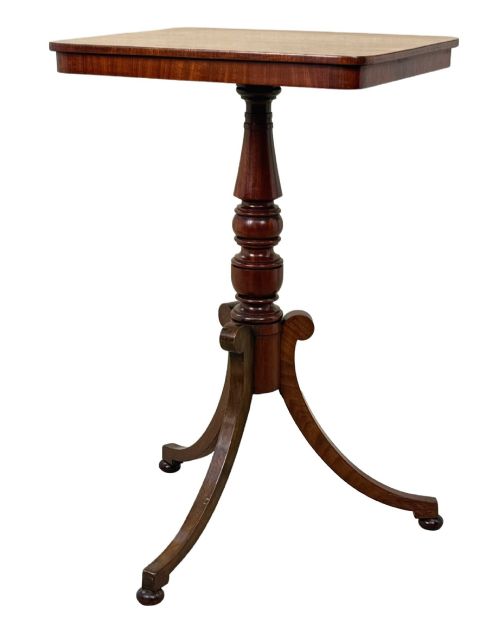
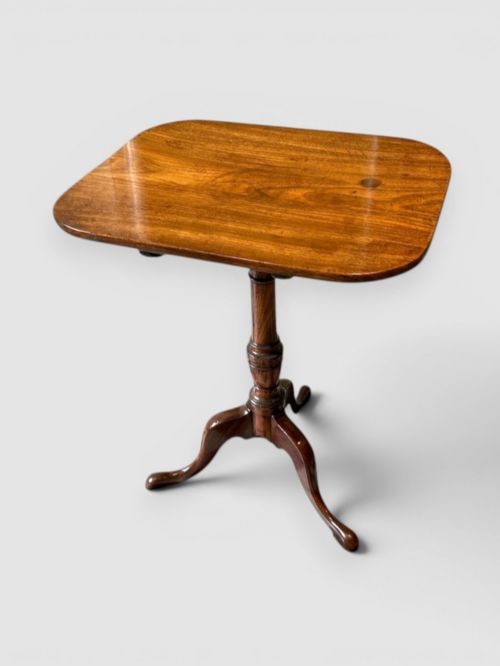
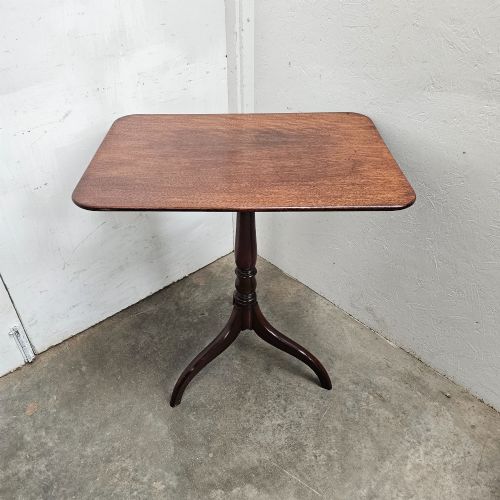
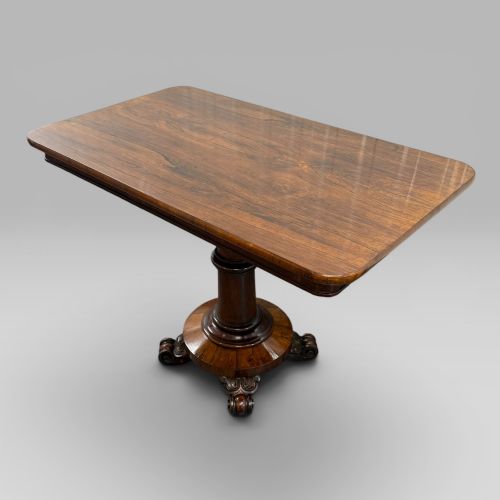
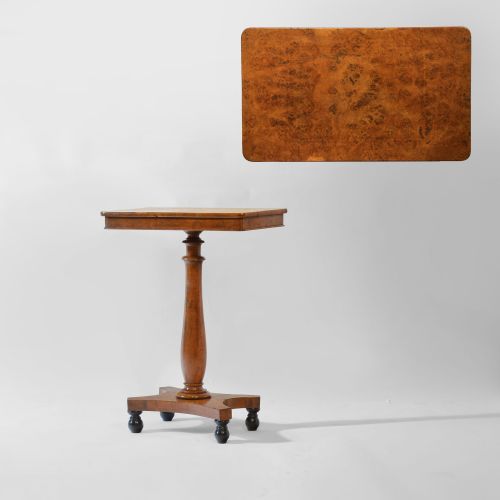
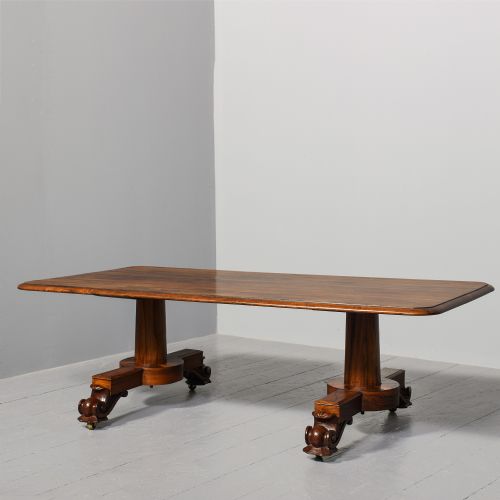
A rectangular pedestal table rests upon a central column or pillar rather than traditional corner legs, maximising legroom while offering a stable surface. The listings show forms ranging from small wine tables and lamp stands to large breakfast and dining tables.
The most common versions on this page date from the Georgian and Regency periods, alongside later 19th-century interpretations and early 20th-century Art Deco pieces. Makers constructed these tables primarily for flexible domestic use, allowing them to function as side pieces, breakfast tables, or centre tables.
Many examples feature tilting tops supported by bird-cage mechanisms, designed to save space when not in use. You will also encounter static dining versions standing on turned columns with splayed legs and brass castors.
Materials and Construction
Construction techniques combine traditional joinery with solid central pillars, sometimes incorporating intricate bird-cage supports that allow the rectangular top to pivot and fold flat.
The listings on this page span the 18th, 19th, and early 20th centuries, featuring materials from native oak and yew to imported rosewood and coromandel.
Judging Quality
Quality rests upon the selection of timber and the crispness of the carving on the central pillar and splayed legs. Dense, figured mahogany and well-matched rosewood veneers indicate superior workshop standards.
The engineering of the tilt mechanism and the integration of brass castors reveal the maker's competence. A stable pillar without wobble and smooth movement in the pivoting mechanism separate finer examples from standard production.
Wilkinson and Sons
The Rectangular Pedestal Table Glossary
- Tilt-top table
- A table with a hinged top that can be rotated to a vertical position when not in use. This mechanism allowed tables to be stored against walls in smaller rooms.
- Bird-cage
- A wooden framework beneath the table top that permits the top both to rotate and to tilt. It typically consists of two parallel boards connected by small vertical spindles.
- Pillar table
- Any small table supported by a single central column rising from a base of splayed legs or a platform. They emerge frequently in Georgian and Regency inventories.
- Pollard oak
- Oak timber taken from pollarded trees, yielding dense wood with distinctive clustered knots and intricate figuring. It appears on 19th-century centre tables.
Rectangular Pedestal Table: Frequently Asked Questions
What is a tilt top table used for?
These tables served multiple functions in domestic spaces, acting as breakfast, lamp, or occasional tables during the day. Their pivoting tops allowed them to be folded away against walls to clear floor space.
In modern rooms, they retain this versatility as compact side pieces or occasional dining tables where space efficiency matters.
How do I identify a Regency table?
Regency pieces often display dark exotic timbers like rosewood, clean classical lines, and brass details such as paw castors or inlaid strings. The pedestals frequently incorporate heavy turned columns or sabre legs.
Earlier Georgian examples tend to favour figured mahogany with tripod bases, while Victorian pieces often introduce bolder carving like barley twist columns.
What is a bird cage support?
A bird cage is a revolving wooden assembly fixed between the table top and the central pillar. It lets the top spin horizontally and tilt vertically.
This mechanism requires precise joinery to prevent looseness over time and indicates a higher standard of cabinetmaking.
Where should I place a pedestal table?
The central pillar design makes these tables ideal for centre placement in a room, as chairs tuck neatly around the column without corner legs obstructing them. They also sit comfortably beside sofas or as lamp tables in larger hallways.
Ensure the floor is level so the splayed legs rest evenly and the pillar remains plumb.