


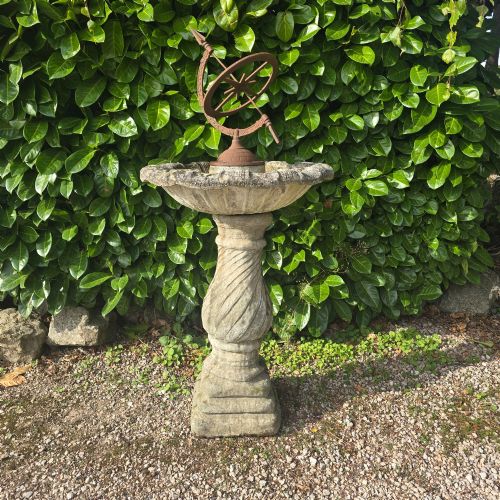
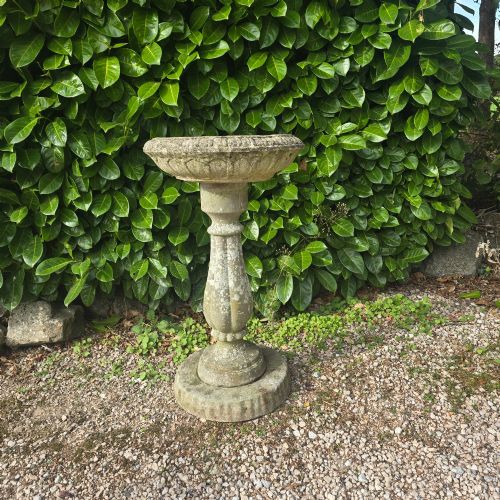
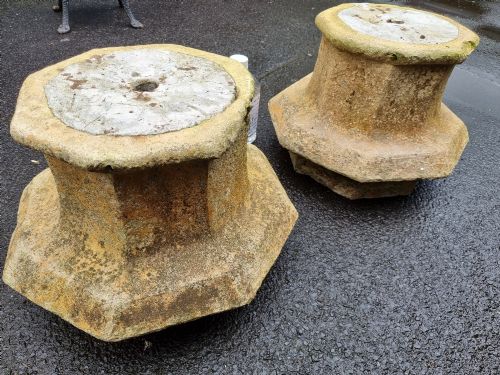

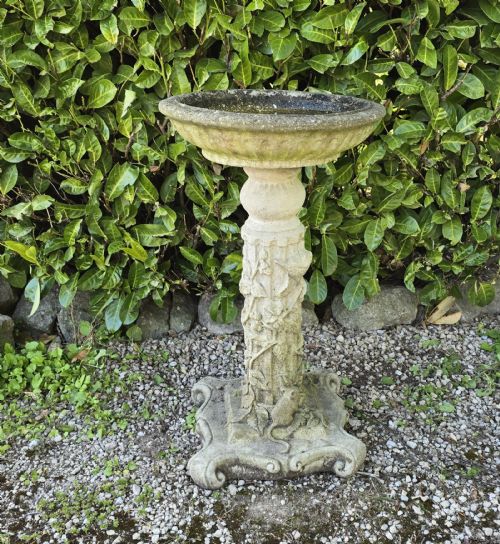

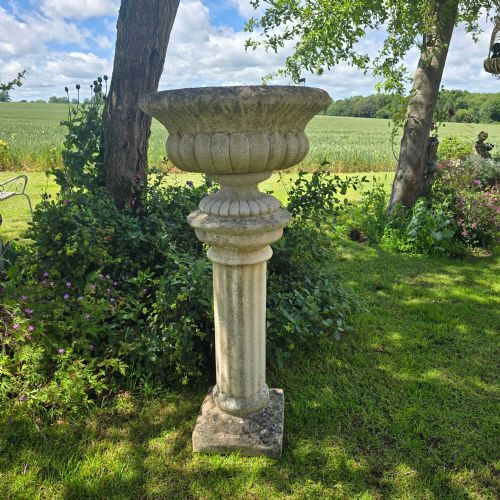

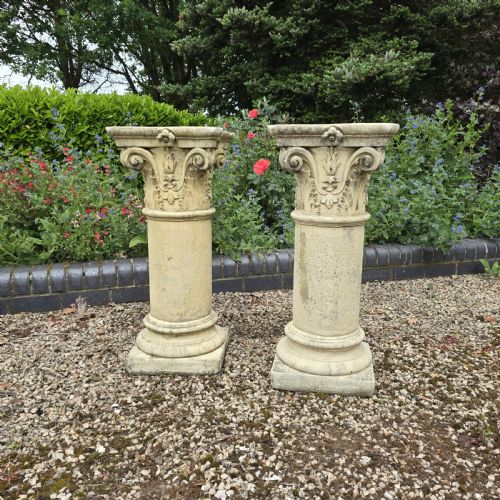


Reconstituted Stone Pedestal
A reconstituted stone pedestal anchors a garden display, elevating statues, urns or sun dials to give architectural structure to outdoor spaces.
Reconstituted Stone Pedestal
A reconstituted stone pedestal provides a sturdy support structure for garden ornaments, frequently appearing beneath urns, busts, or statues. These pieces originate from periods spanning the nineteenth century through the mid-twentieth century, including Edwardian examples.
Buyers frequently encounter pieces styled within the Classical Revival, Neoclassical, and Gothic Revival traditions. These designs reflect British garden aesthetics from the early twentieth century alongside nineteenth-century architectural elements.
Materials and Construction
These structural supports are manufactured using cast stone, composite stone, concrete, and reconstituted stone, moulded to replicate natural quarried rock. Selected pieces incorporate bronze elements, notably sundials mounted to the top surface.
The moulding process allows makers to achieve intricate architectural details, from Corinthian capitals to Gothic panelling, using aggregate mixtures that weather naturally in outdoor environments.
Reconstituted Stone Pedestal Retail Price Guide 2026
Typical asking prices for reconstituted stone pedestal among the pieces listed under this phrase on Sellingantiques today, from the lower quarter to the upper quarter. They describe what is for sale here now, not the wider market.
Listings feature items spanning the nineteenth century, Edwardian era, and the 1920s to 1950s, constructed from reconstituted stone, cast stone, composite stone, concrete, and bronze.
Factors Determining Quality
Quality depends upon the definition and crispness of the moulded ornamentation, such as acanthus leaves on Corinthian columns or the depth of relief on architectural panels. Sharper details indicate superior mould work and carefully graded aggregate mixtures.
Natural weathering and surface patination significantly influence visual appeal, as age-related lichens and mosses enhance the texture of composite stone. The solidity of the casting and proportion relative to the supported urn or bust also dictate overall merit.
The Reconstituted Stone Pedestal Glossary
- Reconstituted stone
- A manufactured material made from crushed stone or aggregate mixed with cement and moulded into architectural forms. It offers the appearance of natural stone while allowing complex shapes to be cast.
- Plinth
- A heavy rectangular or square base supporting a statue, column, or urn. This architectural member elevates garden ornaments above ground level.
- Composite stone
- A durable building material combining aggregate materials with a binding agent. It resists weathering in traditional British garden settings.
- Corinthian
- An ornate classical architectural order characterised by slender fluted columns and capitals decorated with acanthus leaves. Examples appear frequently in revival garden pieces.
- Gothic Revival
- An architectural style drawing inspiration from medieval design, featuring pointed arches and vertical lines. Pieces in this tradition often include characteristic tracery.
Reconstituted Stone Pedestal: Frequently Asked Questions
How do I clean a stone pedestal?
Gentle washing with water and a soft brush preserves the weathered surface patination. Avoid harsh chemical cleaners that strip away age-related lichens.
Allow the stone to dry naturally after cleaning to maintain its structural integrity outdoors.
Can these pedestals stay outside in winter?
Reconstituted stone withstands outdoor conditions well, though severe frost can occasionally affect saturated concrete. Ensuring proper drainage beneath the base prevents moisture accumulation during freezing weather.
Some collectors elevate bases slightly off wet ground during winter months.
What goes on top of a plinth?
Garden urns, classical busts, sundials, and stone figures traditionally sit upon these pedestals. Matching sets often pair specific statues with corresponding architectural bases.
Selecting a top ornament proportional to the width of the capital ensures stability.
How do I date a cast stone pedestal?
Surface wear, aggregate composition, and stylistic cues help determine the period of manufacture. Pieces from the nineteenth century often display different moulding techniques compared to Edwardian or 1950s examples.
Comparing the casting style to documented garden ornamentation narrows down the era.