


Reclining Reading Chair
A genuine reclining reading chair offers adjustable comfort for the library or study, spanning Regency innovation through to Arts and Crafts simplicity.
Reclining Reading Chair
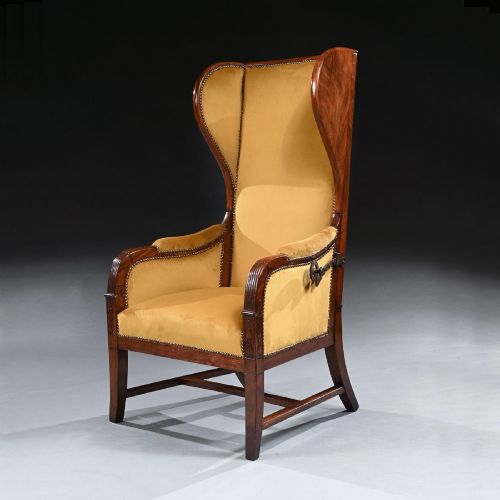
A reclining reading chair is a sophisticated seat designed to adjust for extended periods of study, rest, or convalescence. When you search for this phrase, you encounter heavy library chairs, campaign seating, and mechanical day beds from the nineteenth and early twentieth centuries.
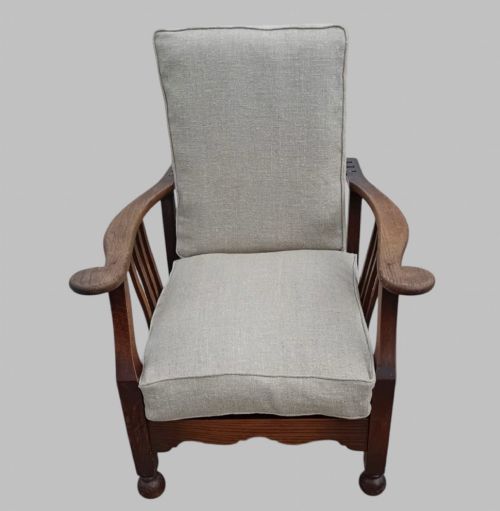
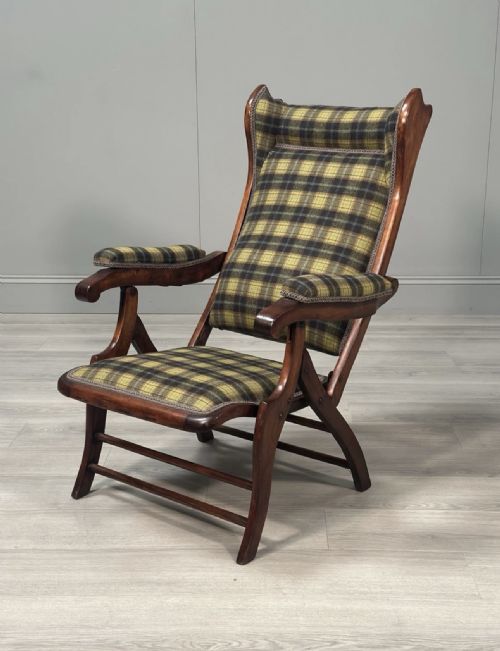
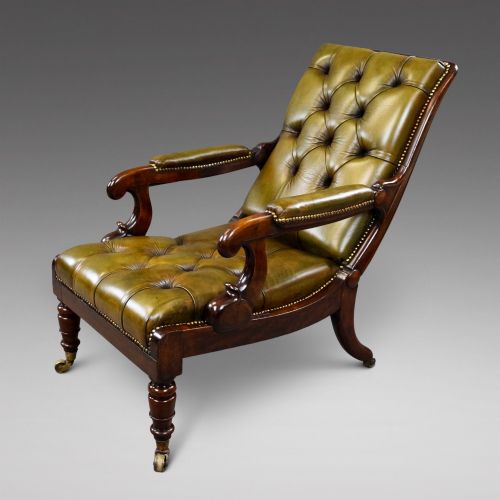
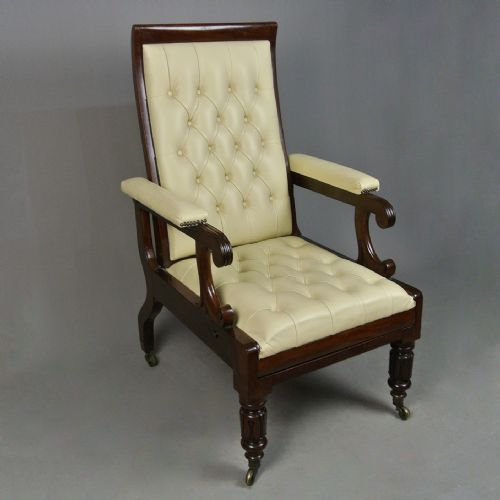
The versions most frequently met on this page date from the Victorian and William IV periods, often constructed in rich mahogany, walnut, or oak. These pieces range from formal button-leather library models to simpler folding frames intended for travel or domestic ease.
Materials and Mechanics
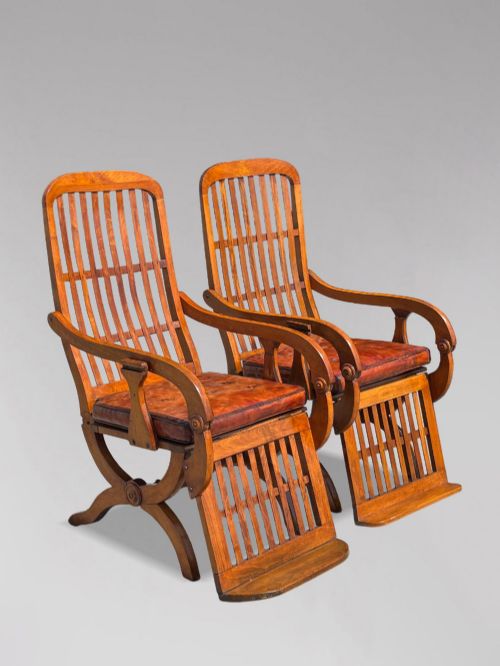
Timber frames in mahogany, oak, walnut, and teak provide the structural skeleton for these adjustable seats, frequently supported by hidden brass mechanisms or castors. Many examples integrate solid wood framing with turned supports and complex ratchets or hinges.
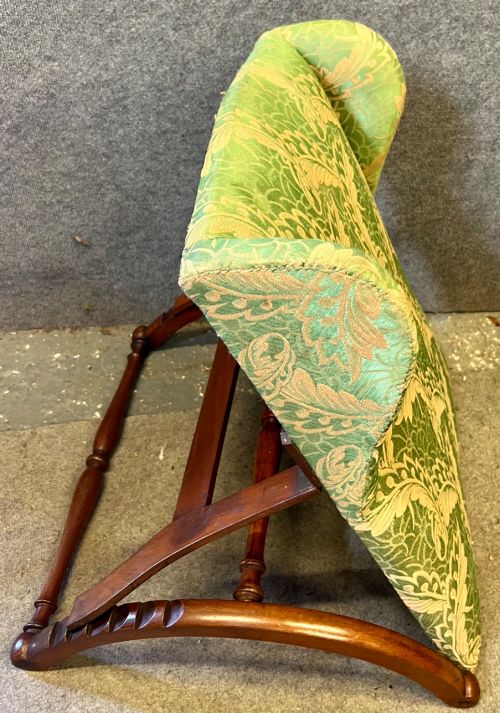
Upholstery relies on traditional stuffing enclosed in leather, velvet, fabric, or linen, with buttoning often used to secure the padding. Metal components in brass and iron facilitate the reclining action, allowing the backrest and footrest to shift smoothly.
Listings feature oak, mahogany, walnut, and teak frames paired with leather, velvet, fabric, and linen upholstery across the nineteenth and early twentieth centuries.
Evaluating the Build
Quality rests upon the ingenuity of the mechanical movement and the integrity of the timber frame. Pieces engineered with patent mechanisms by recognised makers demonstrate superior weight, smoother adjustment, and durable brass fittings.
The distinction between ordinary and exceptional chairs lies in the handling of the secondary woods, the depth and crispness of the carving, and the retention of original leather upholstery. Well-executed library chairs combine robust engineering with harmonious proportions.
Heals of London·John Ward·J Foot And Son·Robert Daws
The Reclining Reading Chair Glossary
- Campaign chair
- A portable folding seat designed for officers on military campaigns, featuring collapsible frames and durable materials like teak or mahogany. These pieces dismantle easily for transport.
- Metamorphic armchair
- A multi-functional piece of furniture that transforms from an ordinary chair into a chaise longue or reclining seat using hidden mechanical levers. This term highlights the ingenuity of Victorian design.
- X-frame
- A structural furniture base formed by intersecting curved or straight wooden members resembling the letter X. This configuration offers stability to library chairs.
- Ratchet mechanism
- A notched metal adjusting device concealed within the armrests or back supports to hold a reclining backrest at various angles. It allows the user to alter the seating position securely.
- Button leather
- Upholstery secured by deep tufting with buttons pulled tight into the leather to hold the interior stuffing in place. This technique creates distinct diamond patterns across the seat back.
Reclining Reading Chair: Frequently Asked Questions
How do these reclining mechanisms work?
Most antique reclining reading chairs rely on internal brass ratchets or mechanical hinges operated by shifting weight or adjusting side levers. These systems allow the backrest to lock securely at multiple angles.
More complex metamorphic examples transform entirely into day beds or incorporate pull-out footrests. The hardware remains robust, utilising heavy iron and brass components concealed within the wooden frame.
Where were these chairs used historically?
These seats originally belonged in gentleman's libraries, studies, or private withdrawing rooms where reading and writing took place over long periods. Convalescing patients also utilised specialised invalid versions for rest.
Campaign models travelled with officers across the British Empire, serving practical needs outdoors or in temporary quarters before returning to domestic homes.
How do I care for leather upholstery?
Antique leather requires gentle cleaning with specialised saddle soap and periodic conditioning to prevent the hide from drying out. Avoid harsh chemical cleaners and keep the leather away from direct sunlight.
Preserving the original patina involves minimal intervention, allowing natural wear and historic colour to remain visible across the surface.
How do I distinguish Regency from Victorian models?
Regency and William IV pieces typically display neoclassical restraint, utilising rich mahogany, crisp brass inlay, and heavier X-frame or sabre leg designs. Their profiles remain architectural and formal.
Victorian and Edwardian iterations introduce darker walnut, oak, and more robust button-leather upholstery alongside complex mechanical innovations. Arts and Crafts examples shift further toward plain oak frames and simpler upholstery.