


Quimper French Pottery
Quimper French pottery brings hand-painted Breton figures and tin-glazed earthenware into the home, offering collectors colourful folk art with a distinct regional history.
Quimper French Pottery
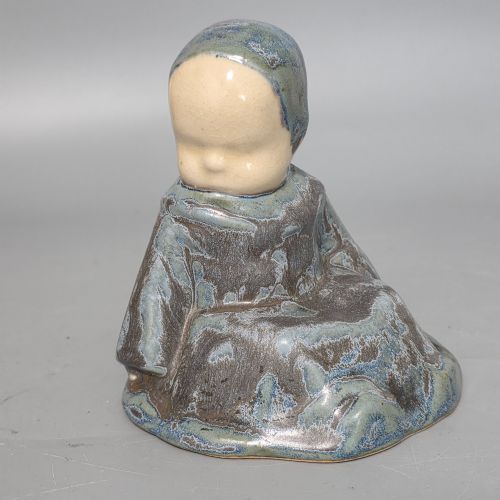
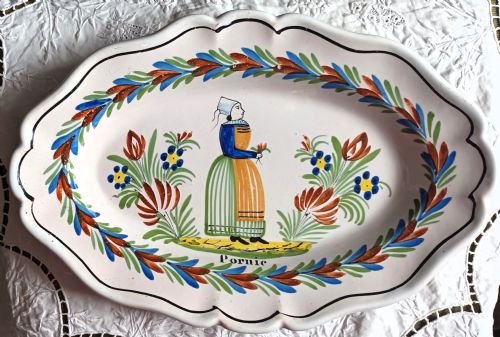
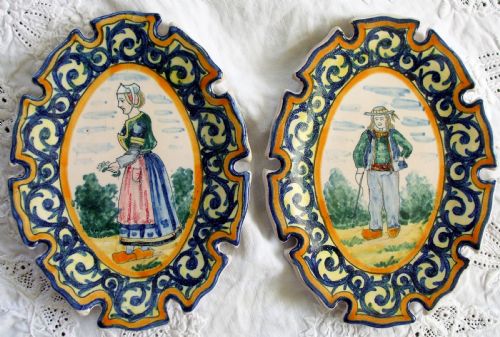
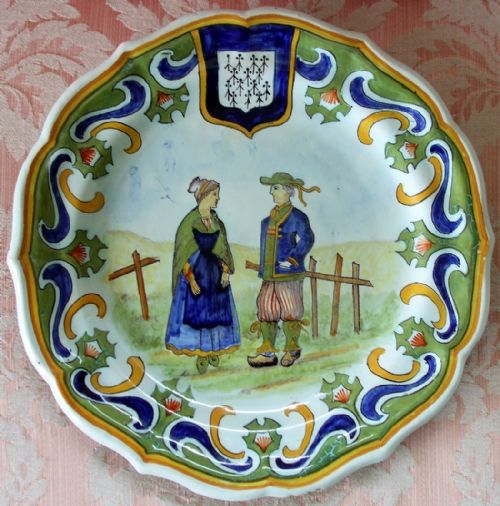
Quimper French pottery encompasses tin-glazed earthenware, ceramic, and stoneware objects produced in Brittany, featuring traditional figures, tableware, and decorative items. Buyers encounter pieces ranging from the nineteenth century through the early twentieth century, including the decades of 1900, 1910, 1920, and 1930.
Makers and marks such as HB, HR, and Berthe Savigny frequently define individual pieces, grounding them in specific historical workshops. These objects reflect French country and provincial styles alongside occasional Art Deco influences from the interwar period.
Assessing quality and execution
The clarity of the tin glaze and the crispness of the underlying moulded form also distinguish superior pieces. Well-defined marks from workshops such as HB or HR and identifiable artist attribution elevate the standing of an object.
A pottery cat wall pocket peers down from the wall, guarding the kitchen with fixed ceramic whiskers and nineteenth-century charm.
Berthe Savigny·HB Quimper·HR Quimper·Aladin
The Quimper French Pottery Glossary
- Faience
- Tin-glazed earthenware decorated with painted colours over an opaque white enamel glaze. This technique forms the basis for much of traditional European provincial pottery.
- Tin Glaze
- A lead glaze rendered white and opaque through the addition of tin oxide. It provides a smooth canvas for hand-painted ceramic decoration.
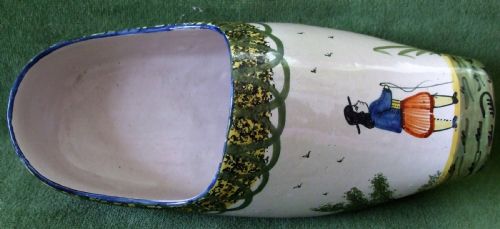
- Sabot
- A traditional wooden shoe shape translated here into ceramic or earthenware form. These decorative pieces often served as ornamental slippers or small containers.
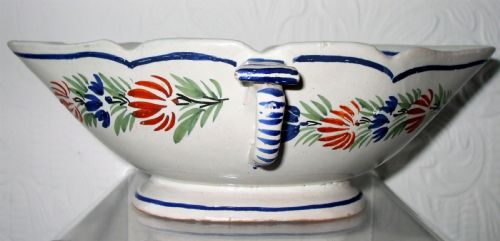
- Sauceboat
- A vessel designed for serving sauces or gravies at the table. Double versions feature two pouring spouts or compartments.
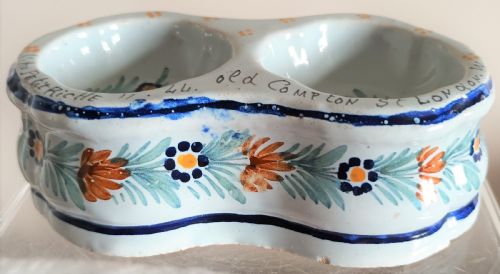
- Encrier
- A desk accessory designed to hold ink for writing. These inkwells often incorporated pen rests and sand containers.
Quimper French Pottery: Frequently Asked Questions
What is Quimper pottery?
Quimper pottery is tin-glazed earthenware and stoneware originating from the French town of Quimper in Brittany. The tradition is famous for hand-painted depictions of Breton peasants in regional dress.
Production spans several centuries, encompassing utilitarian table wares and decorative figures marked by distinct regional aesthetics.
How do I identify HB and HR marks?
HB and HR refer to the prominent pottery manufactories operating in Quimper, notably Porzay and Hubaudière-Bousquet. These initials appear painted or impressed on the underside of pieces.
Collectors use these factory ciphers alongside stylistic shifts to date individual examples accurately.
Are these pieces safe for food use?
Antique tin-glazed earthenware requires careful handling due to the fragile nature of historic ceramic bodies and glazes. Most collectors treat nineteenth and early twentieth-century examples as decorative display items.
Hand washing is essential to preserve the integrity of the tin glaze and the hand-painted pigments underneath.
How should I display Quimper pottery?
These colourful ceramics suit traditional dressers, plate racks, and mantelpieces where their folk art designs remain visible. Pairing plates with figurines creates a balanced display of Breton provincial craft.
Stable shelving away from direct sunlight protects the glaze and pigments from unnecessary wear over time.