



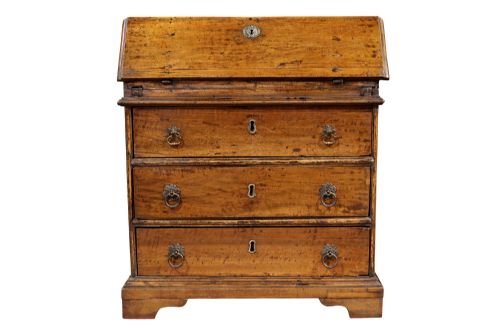


Queen Anne Slant Top Desk
A queen anne slant top desk offers a clever sloping writing flap that drops to reveal hidden drawers, combining practical workspace with refined walnut elegance.
Queen Anne Slant Top Desk
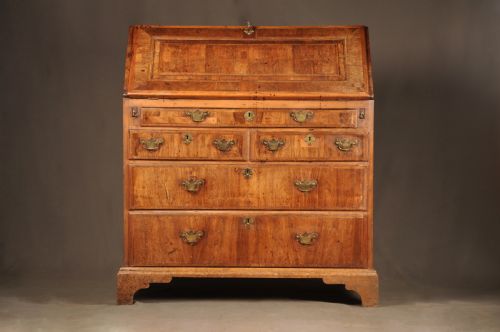
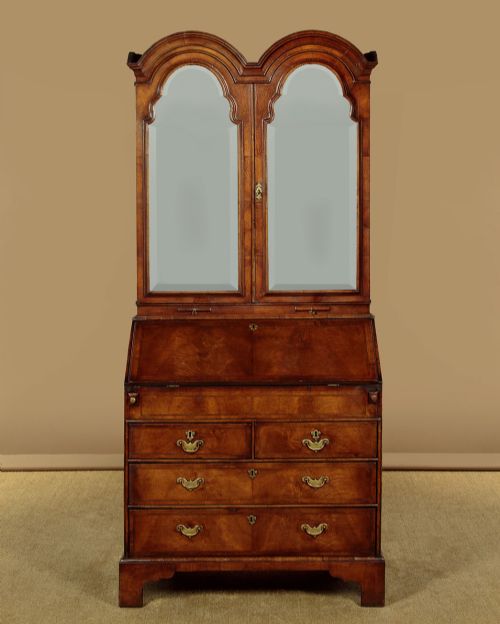
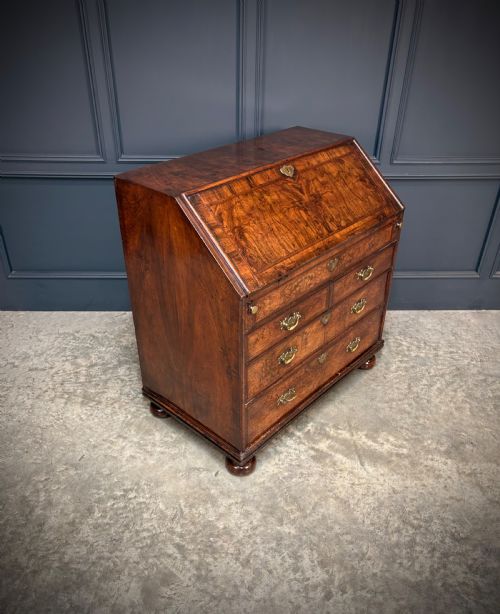
A queen anne slant top desk is primarily encountered here as a compact bureau or larger bureau bookcase featuring fitted interior compartments for correspondence and documents. These pieces span authentic eighteenth-century examples from the period itself alongside revival pieces made in the nineteenth and early twentieth centuries.
The surviving forms range from simple walnut slant fronts resting on stands to tall bureau cabinets and solid oak bookcases designed to house family archives. Most examples favour rich burr walnut or figured grain veneers, though occasional oak, yew, and elm variants appear across the selection.
While original pieces date from the early eighteenth century, revival interpretations from the Edwardian era and the nineteen-twenties provide similar proportions and writing surfaces for modern rooms. Each variation shares the characteristic sloping lid that conceals pigeonholes and small drawers behind a locked exterior.
Materials and construction
Makers constructed these desks using native hardwoods such as oak, elm, and yew alongside expensive imported timber veneers like walnut and burr walnut applied to carcass frames. The sloping fall-front required sturdy hinges and internal support brackets to bear the downward pressure of daily writing.
Cabinetmakers utilised cross-banding and book-matching techniques to create symmetrical decorative patterns across walnut drawer fronts and the main slant lid. Original ironwork hinges and brass handles completed the construction, securing the internal compartments and heavy timber panels.
Queen Anne Slant Top Desk Retail Price Guide 2026
Typical asking prices for queen anne slant top desk among the pieces listed under this phrase on Sellingantiques today, from the lower quarter to the upper quarter. They describe what is for sale here now, not the wider market.
Several pieces feature hidden compartments clever enough to hide secret love letters from an inquisitive spouse.
Assessing quality and execution
Quality in these desks rests on the choice of timber veneer and how cleanly the wood grain figures match across the slant lid and drawer fronts. Superior execution shows in crisp dovetail joints on the internal drawers and the survival of original brass or iron hardware.
The distinction between a top-tier eighteenth-century piece and a later revival version lies in the depth of the patination, the thickness of the timber, and the hand-cut precision of the internal pigeonholes. Lesser examples may exhibit heavy later alterations or replaced interior fittings that alter the original proportions.
The Queen Anne Slant Top Desk Glossary
- Bureau
- A writing desk with a sloping lid that covers a nest of small drawers and pigeonholes. This term frequently describes the core form of the slant top desk.
- Burr walnut
- A prized timber veneer taken from the wart-like growths on walnut trees, yielding highly decorative swirling grain patterns. It forms the primary visual surface on many fine desks.
- Bureau bookcase
- A tall cabinet combining a slant top desk base with upper shelving enclosed by doors. These large pieces served as multi-functional library and writing units.
- Dovetail
- A traditional interlocking joint used to construct drawer boxes securely without reliance on modern adhesives. Fine hand-cut dovetails indicate careful cabinetmaking.
- Patina
- The surface sheen and mellowing of colour developed by wood over centuries of handling and exposure to light. Original patination distinguishes untouched early pieces from stripped surfaces.
Queen Anne Slant Top Desk: Frequently Asked Questions
What is inside a queen anne slant top desk?
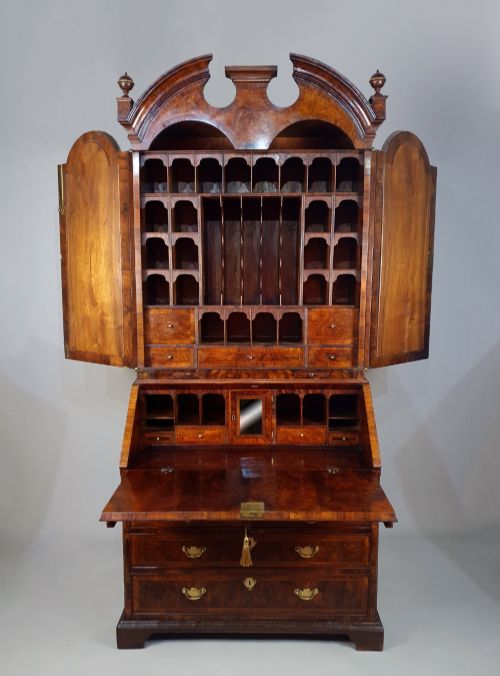
Lifting the sloping lid reveals an arrangement of small pigeonholes, secret compartments, and miniature drawers designed for storing letters, inkwells, and important documents.
These internal compartments often feature stepped tiers or central sliding wells that provide access to hidden spaces beneath the writing floor.
How do I tell an original from a revival desk?
Original eighteenth-century pieces display authentic hand-cut timber construction, period ironwork or brass hardware, and deep patination accumulated over generations. Revival desks made in the nineteenth or twentieth century usually feature machine-cut elements and cleaner, less aged timber surfaces.
Examining the secondary woods inside the drawer linings and checking the construction methods helps confirm whether a desk dates to the seventeen-hundreds or a later period.
Can I use a slant top desk for daily writing?
The sloping writing surface provides a comfortable angle for reading letters and writing by hand, much as it did three hundred years ago. The internal compartments keep stationery and modern pens organised within arm's reach.
Care should be taken to protect the antique wood finish from moisture and ink spills by using a suitable blotter or writing pad on the fall-front.
Why are some desks called bureau bookcases?
A bureau bookcase is a two-part furniture form that mounts a glazed or panelled shelving cabinet directly on top of the slant front desk base. This combination allowed owners to store their library collection above while writing letters below.
These taller forms required sturdy timber frames, such as solid oak or heavy walnut, to support the substantial weight of the upper bookcase section.