

Queen Anne Secretary
A queen anne secretary brings warm burr walnut and clever internal drawers into a room, offering a stately writing desk that doubles as a bookcase.
Queen Anne Secretary
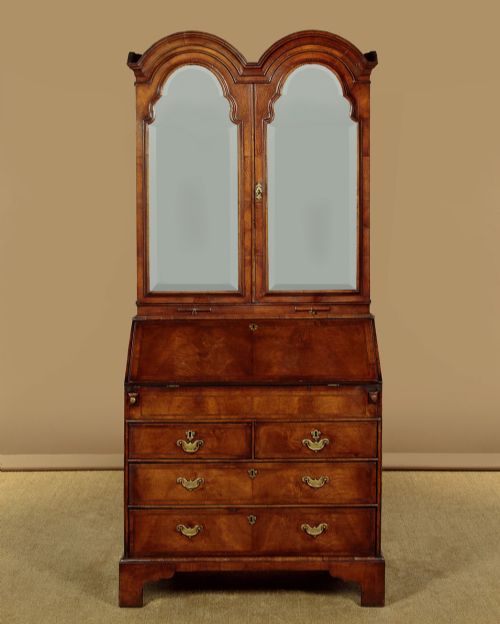
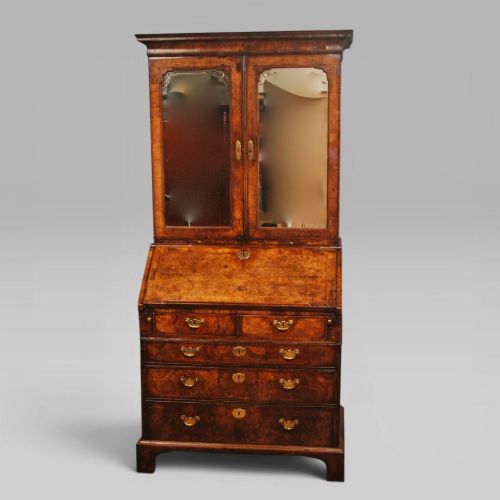
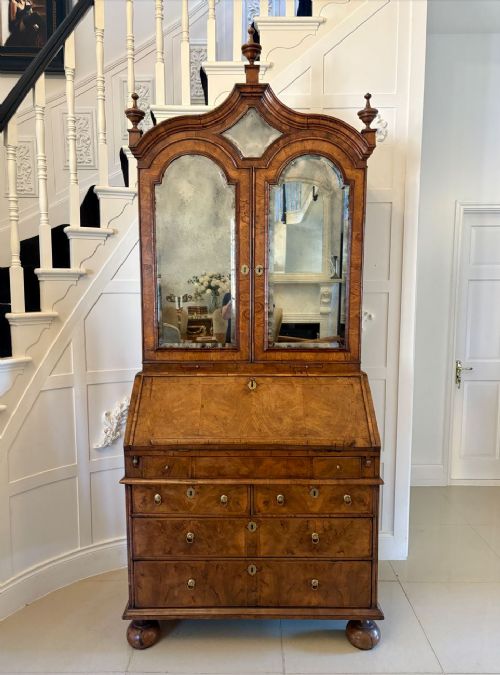
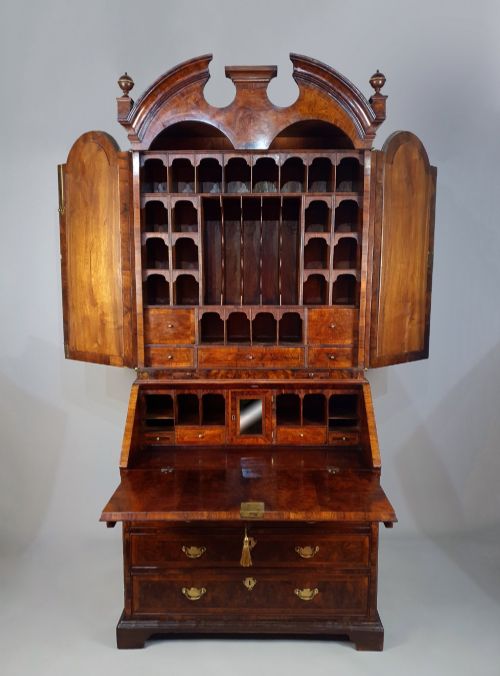
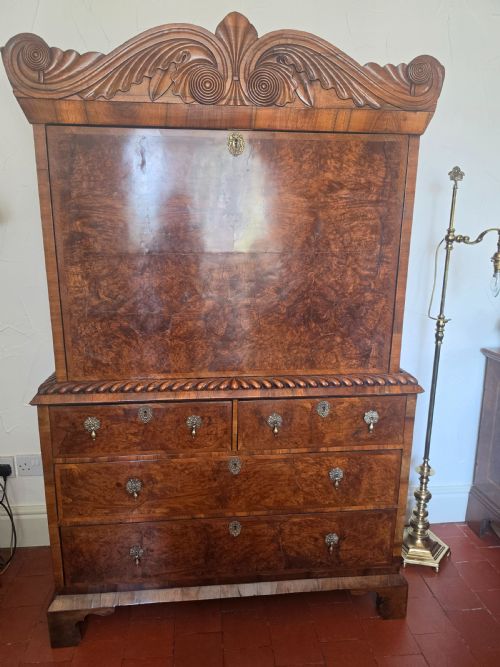
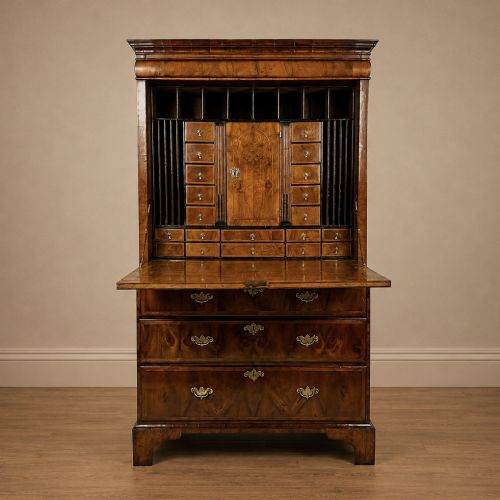
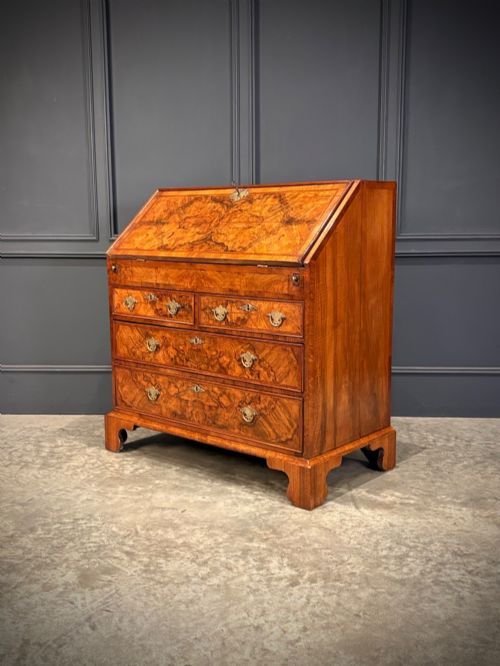
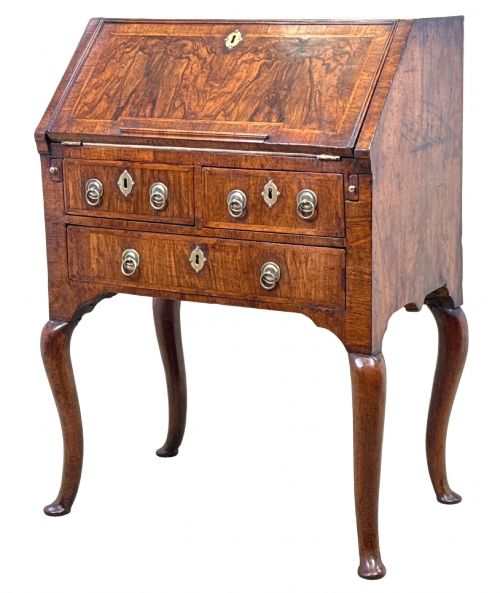
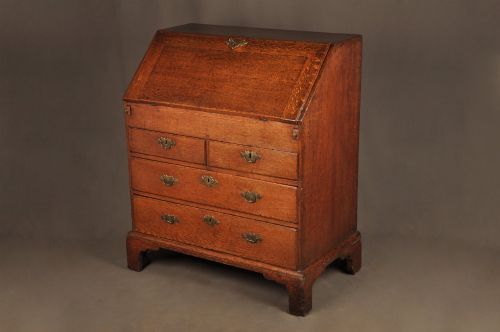
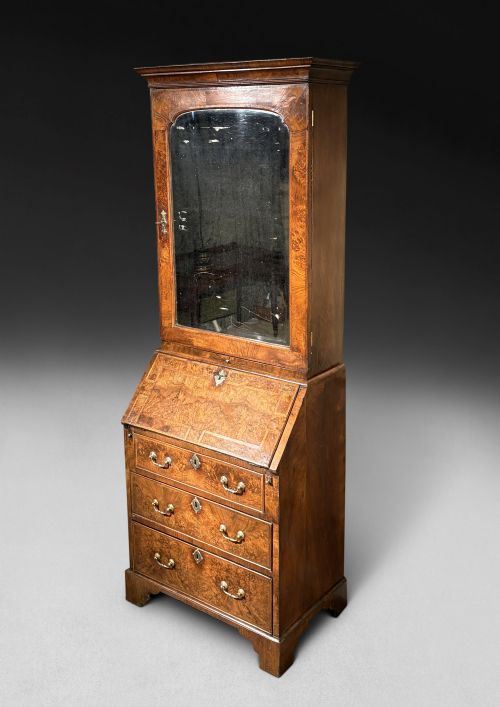
A queen anne secretary comprises a fitted writing cabinet, often paired with a glazed upper bookcase, sitting on bracket feet or a stand. The form developed at the turn of the eighteenth century, presenting a sloping fall front that conceals pigeonholes and small compartments.
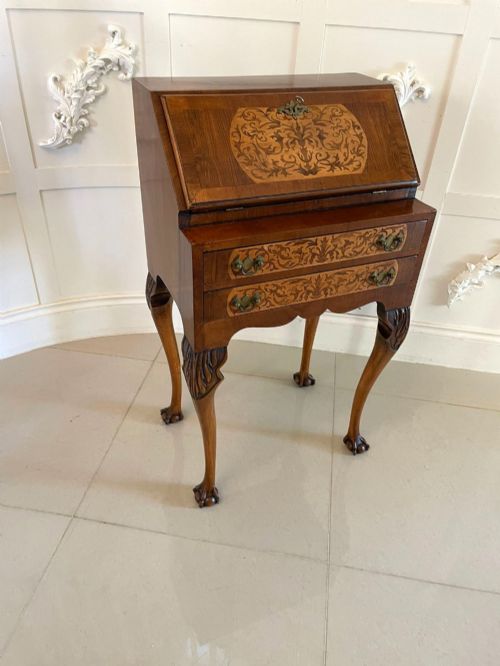
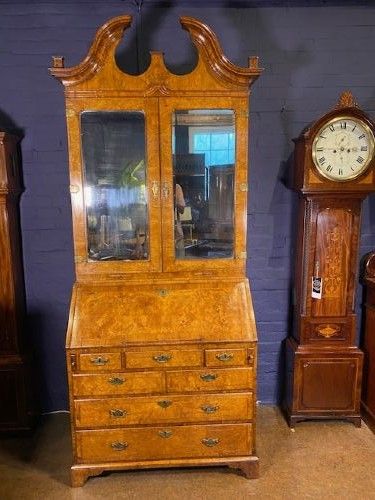
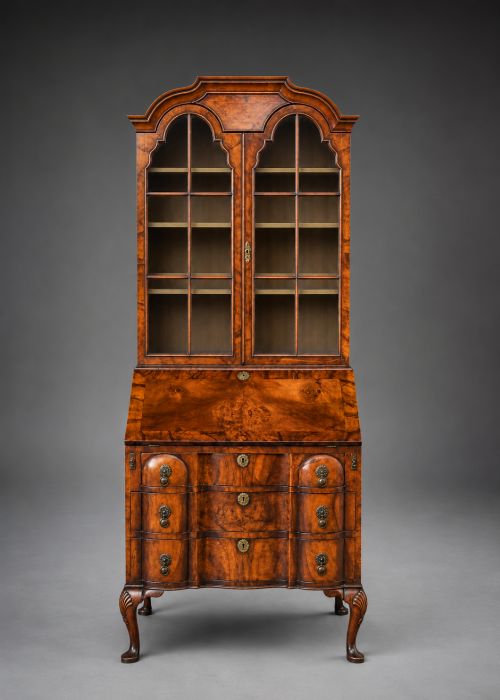
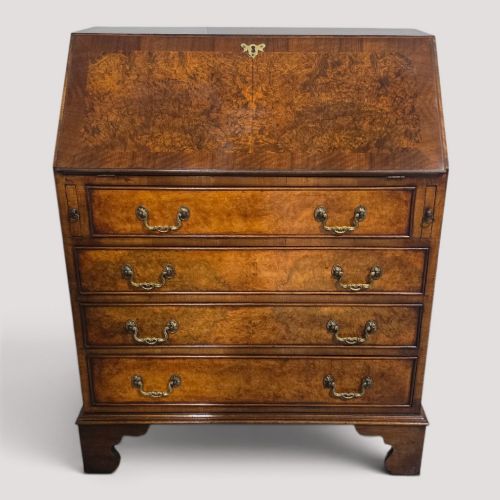
The pieces on this page span the original eighteenth-century period alongside later revivals from the nineteenth and twentieth centuries. Walnut and burr walnut dominate the selection, appearing in bureau bookcases, escritoires, and compact desks.
Makers working in the Queen Anne and Early Georgian styles utilised architectural proportions and harmonious grain patterns. Collectors encounter both diminutive fall-front desks and tall double-dome bookcase cabinets designed for serious correspondence and storage.
How they were made
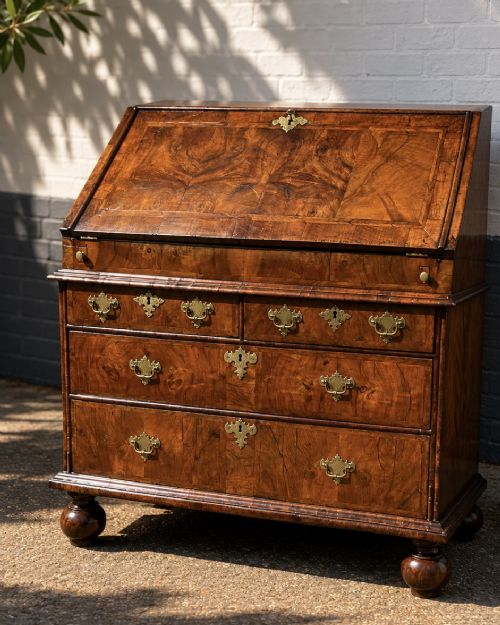
Cabinetmakers built these pieces using solid timbers and decorative veneers applied to secondary woods. Walnut, burr walnut, and burr elm provide richly figured surfaces, frequently enhanced with featherbanding or cross-banding around the drawer edges.
Construction relies on traditional dovetail joints for the drawers and pegged mortise and tenon frames for the carcase. Brass drop handles, escutcheons, and ironwork secure the doors and fall fronts, utilising hand-cast hardware suited to the period.
Brass hardware and ironwork secure the doors across these writing desks and bureau bookcases.
What varies in quality
The choice and matching of veneer timber determine the visual impact of the piece. Fine examples display symmetrical grain patterns across the fall front and drawer fronts, maintaining a cohesive appearance rather than haphazard timber placement.
Proportion and the retention of original surfaces separate standard items from superior works. Pieces featuring undisturbed patination, original brasses, and crisp interior drawer arrangements command greater appreciation among serious collectors.
The Queen Anne Secretary Glossary
- Fall front
- A hinged writing flap that pulls down to reveal the desk interior. When closed, it conceals the pigeonholes and drawers behind a vertical plane.
- Escritoire
- An early writing cabinet featuring a drop-down writing surface enclosed by a large vertical door rather than a sloping flap.
- Featherbanding
- A decorative inlay technique using small strips of veneer cut diagonally to form a herringbone pattern around the borders of panels.
- Burr walnut
- Wood taken from walnut tree growths that produces swirling, highly decorative grain patterns. It requires skilled cutting into thin veneers for cabinet fronts.
Queen Anne Secretary: Frequently Asked Questions
What is a queen anne secretary?
A queen anne secretary is a dual-purpose writing desk and cabinet featuring a sloping fall front and an upper bookcase section. These pieces originated in the early eighteenth century and emphasise figured walnut timbers and graceful proportions.
The form serves both daily correspondence and the display of bound volumes. Collectors prize them for their clever internal compartments and architectural presence.
How do I identify period pieces?
Distinguishing an eighteenth-century piece from a later revival involves examining construction methods, timber choice, and hardware. Original examples exhibit hand-cut dovetails, period locks, and timber patination that develops over centuries of use.
Revival pieces from the Edwardian era or the nineteen-twenties often use machine-cut elements or secondary woods atypical of the original period. Comparing internal secondary timbers provides clear clues to the actual date of manufacture.
Where were these desks placed?
These cabinets belonged in formal reception rooms, libraries, and private studies of large houses. Their dual function allowed owners to manage estate accounts and store reference books in a single piece of furniture.
Today, they suit similar roles in domestic interiors, fitting comfortably into living rooms or home offices where surface space and vertical storage are needed.
How should I care for walnut furniture?
Maintaining walnut and burr walnut surfaces requires stable room humidity and protection from direct sunlight. Excessive heat dries out the timber and causes the delicate veneers to lift from their carcase.
Applying a traditional beeswax polish occasionally helps nourish the wood and preserve the natural patination. Avoid silicone-based sprays that damage the historic polish finish.