




Queen Anne Desk Stand
A queen anne desk stand brings refined early eighteenth-century writing furniture into modern rooms with compact elegance and rich figured timber.
Queen Anne Desk Stand
A queen anne desk stand search uncovers compact writing furniture raised on legs or stands, combining a bureau body with a supportive underframe. The evidence shows these pieces span genuine eighteenth-century origins alongside later revivals from the nineteenth and twentieth centuries.
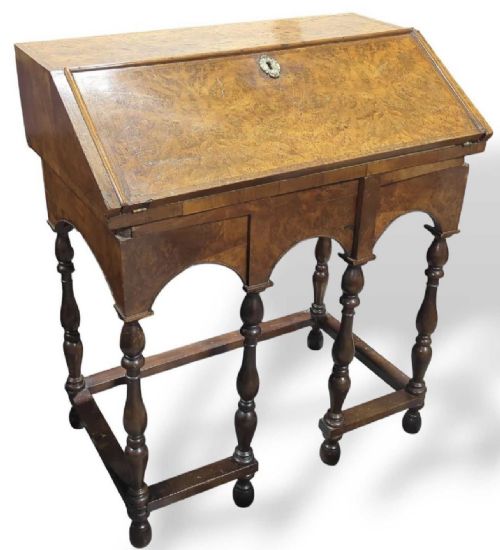
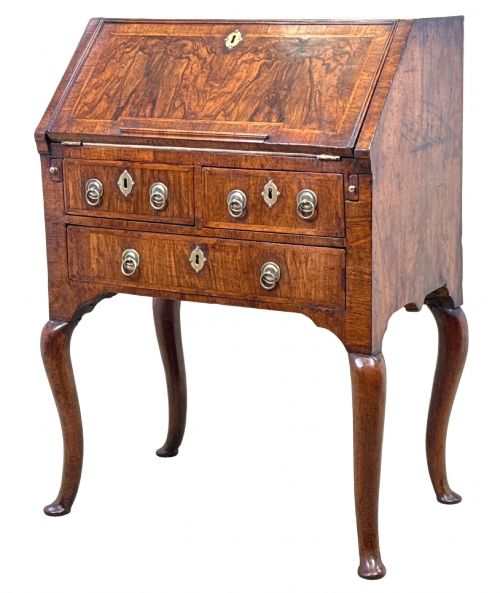
Most examples appearing here take the form of walnut or burr walnut bureaux on stands, occasionally rendered in yew, elm, or marquetry-inlaid timber. Makers across the Georgian, Victorian, and Edwardian periods drew directly upon Queen Anne and George I design principles to create these elevated writing surfaces.
How they were made
Cabinetmakers utilised figured veneers like burr walnut and burr elm laid over solid carcass timbers such as oak or pine, creating rich decorative surfaces. Marquetry inlay appears on select revival pieces to add intricate floral or geometric detail across the fall-front and drawer fronts.
Early cabinetmakers discovered that tree burls yielded the wildest grain patterns, ensuring no two fall-fronts ever shared the same natural fingerprint.
What varies in quality
The selection of timber grain dictates much of the visual depth, with tightly figured burr walnut and matched veneers commanding greater visual presence than plain surfaces. The crispness of marquetry inlay and the harmonious proportion between the upper bureau body and its supporting stand separate standard production from superior examples.
Period execution shows in the integration of secondary woods and the hand-cut dovetailing within internal compartments. Later revival pieces display varying degrees of fidelity to original Georgian joinery methods and proportion.
The Queen Anne Desk Stand Glossary
- Bureau
- A writing cabinet featuring a sloping flap that opens to reveal a fitted interior of small drawers and pigeonholes. This form provides a concealed workspace atop storage drawers.
- Burr walnut
- A highly prized wood harvested from walnut tree growths, displaying swirling, knotty grain patterns. Cabinetmakers sliced this timber into thin veneers to ornament prominent exterior surfaces.
- Marquetry
- The art of applying small pieces of veneer to a structure to form decorative patterns or pictures. Craftsmen often utilised contrasting timbers to achieve floral or abstract motifs.
- Stand
- The supporting frame or legs beneath a cabinet, chest, or bureau that elevates the main body off the floor. In Queen Anne design, these stands frequently feature slender legs terminating in pad feet.
- Escutcheon
- A flat plate of brass surrounding a keyhole to protect the surrounding wood from wear. These fittings serve both a functional and a decorative purpose on drawer fronts and fall-fronts.
Queen Anne Desk Stand: Frequently Asked Questions
What is a bureau on stand?
A bureau on stand consists of a compact writing cabinet mounted upon a distinct open frame or set of legs rather than resting directly on a chest of drawers. This elevated form lightens the visual weight of the furniture within a room.
Such pieces typically provide a sloping writing flap and internal compartments while maintaining a slender profile underneath.
How do I date a walnut bureau?
Dating relies upon examining construction methods, secondary timbers, and the specific characteristics of the veneer work. Eighteenth-century pieces display hand-cut joinery and native woods suited to the period.
Revival examples from the Victorian, Edwardian, or later eras often incorporate twentieth-century hardware or standardised internal framing while imitating earlier styles.
Where should I place a desk stand?
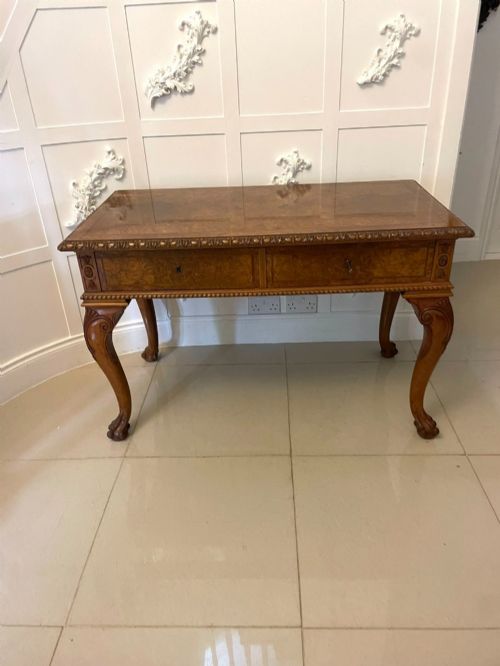
These compact writing pieces suit reception rooms, studies, or hallways where floor space is limited. Freestanding console versions and small bureaux fit well against plain walls or beside seating areas.
Positioning them away from direct sunlight protects the sensitive walnut veneers and polished finishes from fading.
What woods are typical for these pieces?
Walnut and burr walnut dominate the evidence, frequently paired with secondary woods like oak, elm, or yew. Selected pieces also incorporate exotic touches through Chinese export lacquer or intricate marquetry.
Brass hardware and glass elements complete the material palette across the various historical periods represented.