






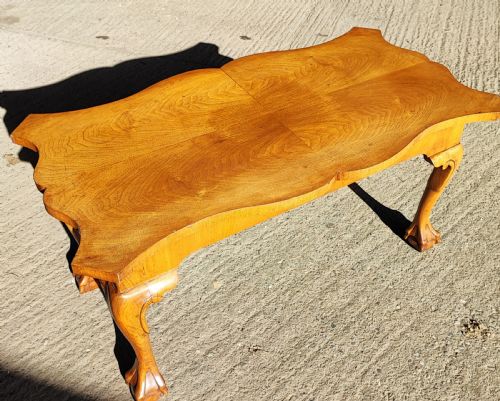
Queen Anne Cocktail Table
These queen anne cocktail table pieces offer low profiles and classic cabriole lines, bringing grounded utility and period elegance to any sitting room.
Queen Anne Cocktail Table
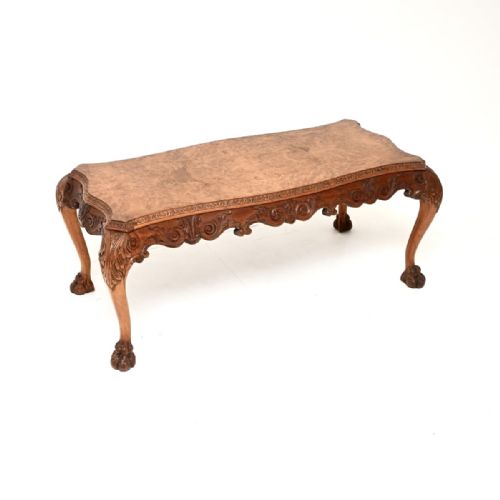
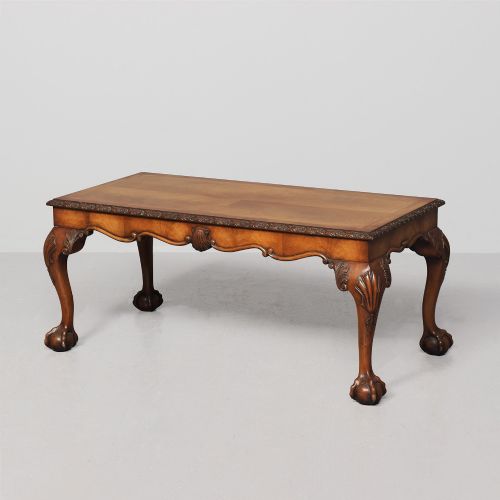
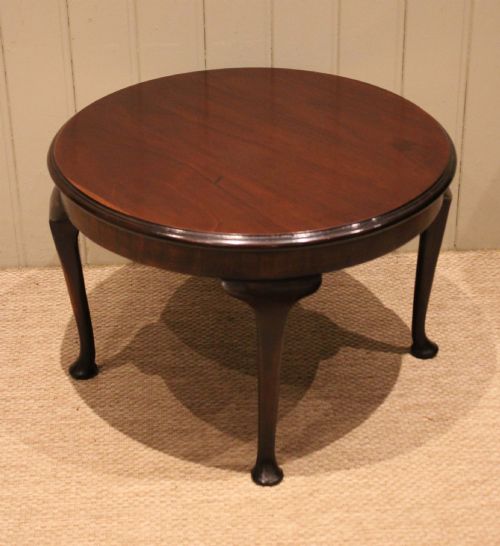
A queen anne cocktail table combines low proportions with traditional revival timber framing, serving as a central surface for the modern drawing room. These low tables take inspiration from eighteenth-century forms, adapted primarily during the early twentieth century and the interwar decades for domestic use.
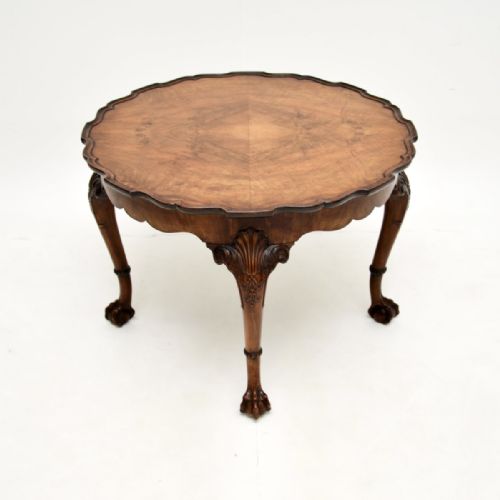
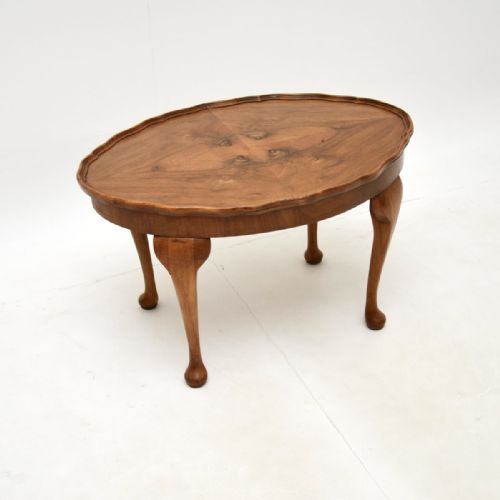
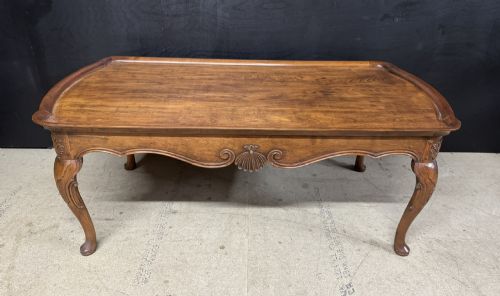
Most examples found here date from the 1920s and 1930s, alongside Edwardian and mid-century interpretations. Formats range from circular pie crust designs and oval tops to tray tops and carved mahogany or walnut frames.
The aesthetic leans heavily on Queen Anne Revival and Chippendale styles, occasionally branching into Chinoiserie decoration. Buyers encounter various timber grains and edge treatments rather than uniform standard models.
Materials and Construction
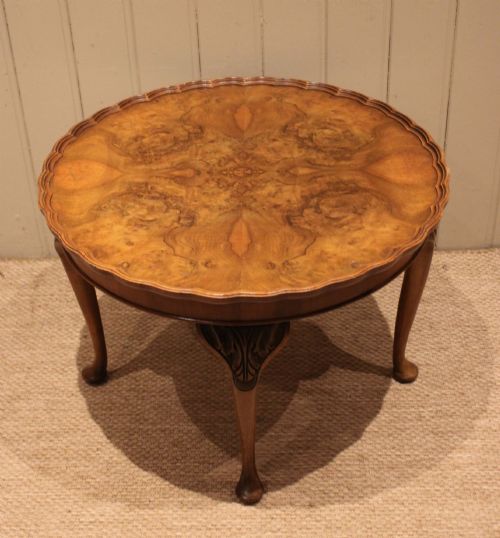
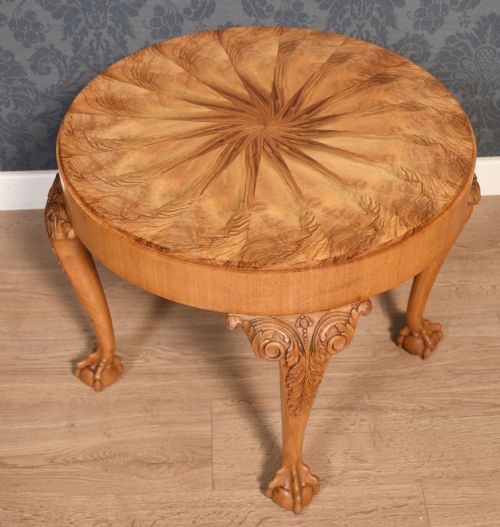
Cabinetmakers utilised solid woods such as mahogany and walnut alongside decorative veneers to build these low tables. Burr walnut and figured walnut veneers appear frequently, laid over core timbers to create rich, patterned surfaces on the top boards.
Surface treatments vary from polished wood finishes to lacquered wood on Chinoiserie pieces. Edge profiles such as pie crust carving demand skilled hand shaping, while cabriole legs provide the characteristic silhouette.
Queen Anne Cocktail Table Retail Price Guide 2026
Typical asking prices for queen anne cocktail table among the pieces listed under this phrase on Sellingantiques today, from the lower quarter to the upper quarter. They describe what is for sale here now, not the wider market.
The listings here draw predominantly from the 1920s and 1930s, constructed in walnut, burr walnut veneer, and mahogany.
Assessing Quality and Execution
Quality rests upon the selection of timber veneers and the crispness of carved details like pie crust edges. Burr and figured walnut surfaces display distinct grain patterns that elevate the visual weight of a low table.
Joinery execution and the integrity of the veneer work distinguish finer examples from standard production. Subtleties in leg curvature and the depth of surface polish separate workshop pieces from massed output.
The Queen Anne Cocktail Table Glossary
- Pie crust edge
- A raised, scalloped border carved along the rim of a circular tabletop. This detail resembles pastry work and keeps items from sliding.
- Cabriole leg
- A furniture leg that curves outward at the knee and tapers inward at the ankle, ending in a pad or foot. It derives from animal forms popular in classical design.
- Burr walnut
- Timber taken from a tree growth or burl, yielding swirling, knotty grain patterns. Cabinetmakers prize this wood for decorative veneering.
- Chinoiserie
- European artistic styles reflecting Chinese motifs and lacquer techniques. Artisans applied painted scenes and gold highlights to wood surfaces.
- Tray top
- A tabletop finished with a raised rim resembling a serving tray. This feature helps contain objects placed on the surface.
Queen Anne Cocktail Table: Frequently Asked Questions
What defines a queen anne cocktail table?
These pieces combine low coffee table heights with revival styling, typically featuring cabriole legs and traditional timber frames.
They emerged strongly during the early twentieth century as formal sitting rooms adopted lower central surfaces.
How do I care for a walnut surface?
Walnut and veneered surfaces benefit from regular dusting with a dry cloth and protection from direct sunlight.
Avoiding excessive moisture preserves the polish and prevents veneer lifting over time.
Are these tables from the eighteenth century?
Most examples originate from the early twentieth century, specifically the 1920s and 1930s, drawing on earlier design traditions.
Revival furniture reinterprets historical forms for modern domestic comfort rather than replicating strict period dates.