




Qing Dynasty Silk Painting
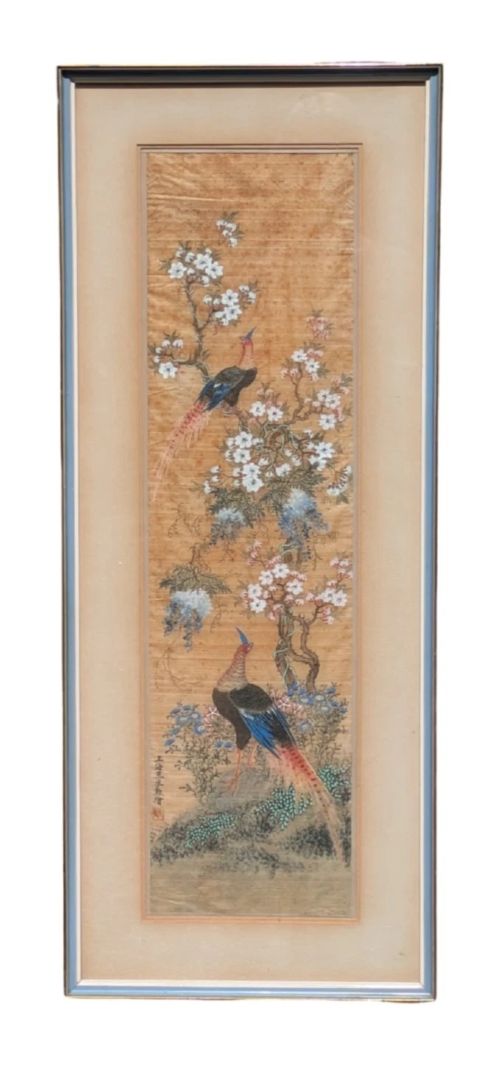
These Qing Dynasty silk painting pieces bring quiet historic presence to a room, offering traditional pigment work on silk fabric.
Qing Dynasty Silk Painting
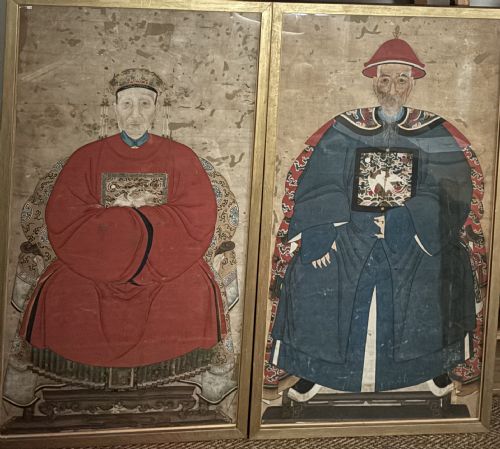
A qing dynasty silk painting is a traditional artwork executed on a textile support, commonly seen here in formats like framed wall art, ancestor portraits, scroll paintings, and large wall hangings. These pieces typically date from the nineteenth century and the early twentieth century, spanning periods such as 1850, 1890, 1900, and 1910.
Buyers will most frequently encounter nineteenth-century works and ancestor portraits on this page, often framed in wood or presented as large hanging scrolls. Styles range from authentic Qing Dynasty creations and Chinese export pieces to Chinoiserie interpretations and Qing Dynasty style works.
Subjects vary from individual ancestor portraits and group portraits to specific figures like the Daoist Immortal Jade Emperor. The physical formats include both vertical wall hangings and detailed watercolours or gouache works on silk.
Materials and construction
These works are painted on a silk base using water-based pigments, mineral pigments, and ink, sometimes supported by paper backing or housed behind glass within wooden frames. The combination of silk fabric and water-soluble or mineral colours creates the characteristic matte finish and subtle sheen typical of historic Asian textiles.
Framing and mounting techniques vary between original wooden frames, scroll mountings, and large wall hanging formats designed to display the textile securely. Pigments are applied directly to the woven silk surface, allowing the natural texture of the fabric to interact with the painted lines and washes.
Listings feature periods spanning from 1850 through 1910, utilising silk, paper, wood, glass, ink, and mineral pigments.
Assessing quality
The preservation of the silk textile itself and the presence of original mountings or frames contribute significantly to the character of each piece. Larger formats and group portraits or specific character depictions often demonstrate greater complexity in execution.
The Qing Dynasty Silk Painting Glossary
- Qing Dynasty
- The final imperial dynasty of China, lasting from 1644 until 1912. Pieces from this era often reflect traditional court or literati aesthetic standards.
- Scroll Painting
- A traditional East Asian format of painting executed on silk or paper, designed to be rolled up for storage or hung for display.
- Ancestor Portrait
- A formal commemorative painting depicting family forebears, often created for ritual veneration and distinguished by formal seating poses.
- Gouache
- An opaque water-based pigment used to achieve solid, vibrant areas of colour on textile or paper supports.
- Chinoiserie
- European artistic styles reflecting Chinese motifs and techniques, popular in decorative arts and paintings.
Qing Dynasty Silk Painting: Frequently Asked Questions
How do I hang a silk painting?
These framed or hanging pieces require stable wall placement away from direct sunlight to protect the silk support and pigments.
Ensure the hanging hardware suits the weight of the wooden frame or scroll mounting.
What is an ancestor portrait?
Ancestor portraits are formal depictions of family predecessors created during the imperial era for memorial purposes.
They usually feature subjects in stiff, frontal poses wearing detailed traditional robes.
Are these scrolls or framed art?
The selection includes both traditional scroll paintings and works presented in wooden frames or wall hangings.
Check individual descriptions to determine the specific mounting style of each piece.