



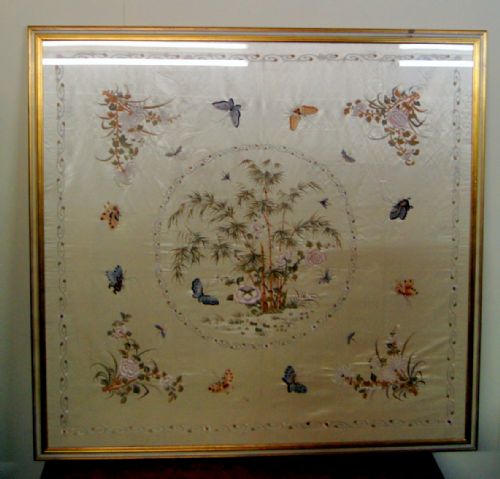
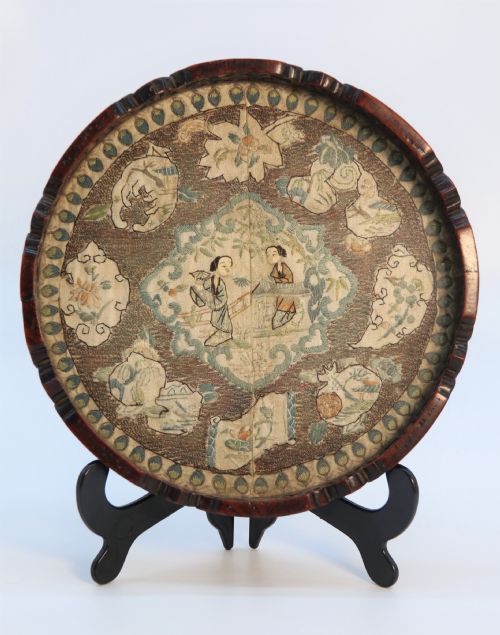
Qing Dynasty Embroidery Panel
A qing dynasty embroidery panel brings needlework of silk and metallic thread into your room, framed as wall art or mounted in carved hardwood.
Qing Dynasty Embroidery Panel
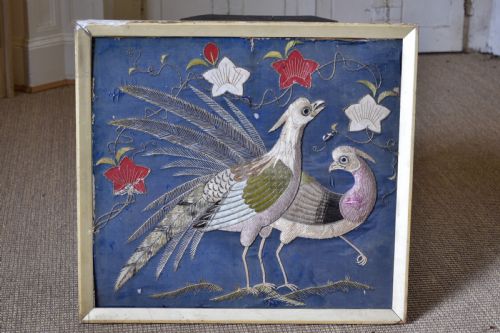
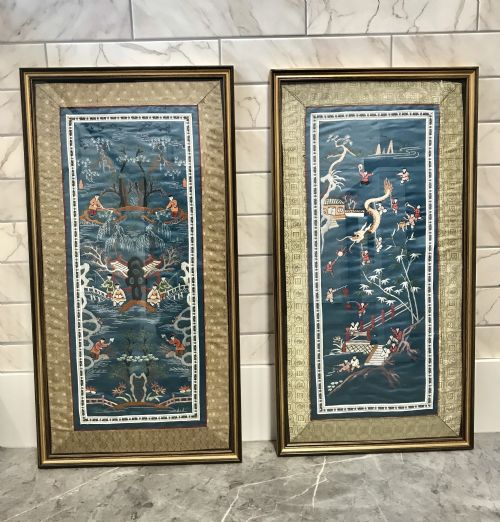
A qing dynasty embroidery panel comprises framed textile art, wall art, and mounted decorative objects originating from nineteenth century China. Buyers searching for a qing dynasty embroidery panel encounter hand sewn figures, dragons, trees, and flowers rendered on silk.
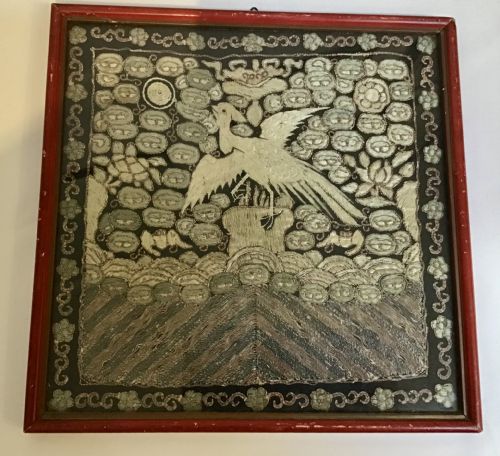
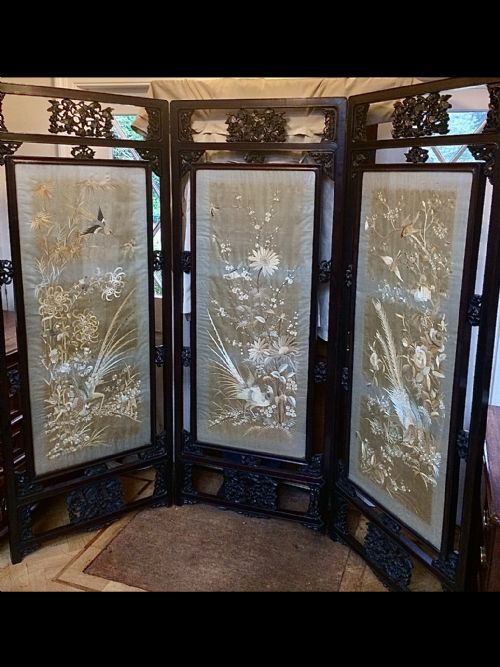
The selection includes rank badges, garden birds, mandarin ducks, and pheasant motifs framed under glass. Functional pieces also appear, taking the form of trays, table screens, and folding firescreens.
These works bridge textiles and furniture, uniting fine needlework with carved hardwood and gilt wood frames. The forms range from simple wall hangings to complex table screens with intricately carved stands.
How they were made
Makers utilised silk ground fabrics and fine thread alongside metallic thread to create detailed pictorial and symbolic imagery. Hand sewing techniques allowed artisans to build complex layers of figures, birds, and botanical motifs.
Many textile pieces were subsequently mounted behind glass within custom frames, trays, or freestanding screens. Structural mounts incorporated carved hardwood and gilt wood, requiring joinery skills to support the delicate embroideries.
Mandarin ducks stitch their way into your room alongside pheasants, bringing nineteenth century garden wildlife straight to your mantelpiece.
What varies in quality
The precision of the hand sewing and the complexity of the silk and metallic thread work dictate the visual impact of the piece. Greater density in the stitching and more intricate pictorial detail distinguish finer examples from simpler work.
The quality of the housing alters the overall stature, with intricately carved hardwood stands and frames elevating the textile. The integration between the embroidery and its protective glass or wooden surround shows the care taken during assembly.
The Qing Dynasty Embroidery Panel Glossary
- Rank badge
- A square embroidered patch worn on official robes to denote civil or military status. These badges are often framed separately as decorative textile art.
- Firescreen
- A standing piece of furniture designed to shield a person from the heat of an open fireplace. The central panel frequently displays decorative needlework or carved wooden panels.
- Table screen
- A portable decorative screen supported by a fitted stand, intended for display on a table or desk. The central viewing panel often encloses silk embroidery behind glass.
- Chinoiserie
- European artistic style reflecting Chinese motifs and decorative techniques. Pieces of this description imitate traditional Chinese aesthetics in furniture and frames.
Qing Dynasty Embroidery Panel: Frequently Asked Questions
What subjects appear on these panels?
Needlework typically displays figures, dragons, trees, flowers, garden birds, and mandarin ducks. Pheasants and official rank badges also feature prominently in the designs.
These subjects carry traditional symbolism and decorative value, rendered through careful hand sewing on silk grounds.
How were these textiles used originally?
Many textiles functioned as costume elements, such as rank badges sewn onto official garments. Other examples were created specifically as wall art, screens, or decorative furnishings.
Framed panels and screens served to ornament domestic interiors, combining textile craft with functional woodwork.
How do I care for silk embroidery?
Protect the silk and metallic thread from direct sunlight to prevent fading of the natural dyes. Keeping pieces behind glass helps shield the delicate fibres from dust and atmospheric moisture.
Stable indoor humidity preserves both the textile elements and the surrounding hardwood frames.
How do I date these pieces?
Dating relies on stylistic markers, framing methods, and material characteristics associated with the nineteenth century. Records point toward production dates spanning from eighteen sixty through nineteen hundred.
Changes in carving styles on the hardwood and the complexity of the silk work assist in establishing the era.