





Framed Bird Embroidery Art
These framed bird embroidery art pieces bring historic textile skill and avian subjects together, offering texture and colour for the wall.
Framed Bird Embroidery Art
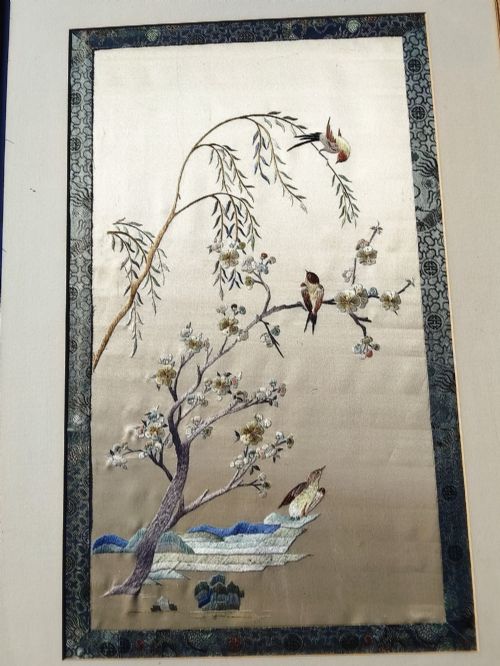
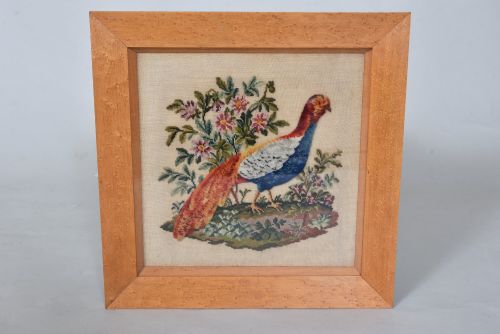
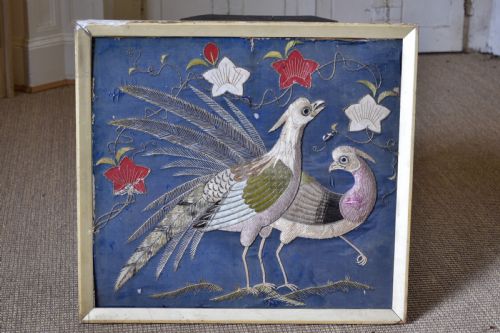
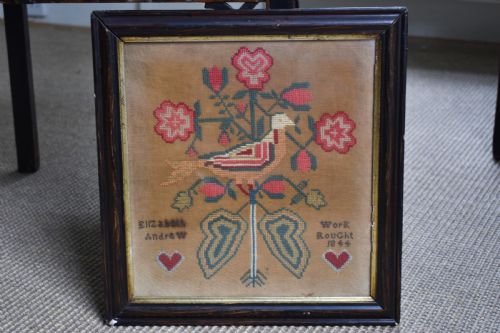
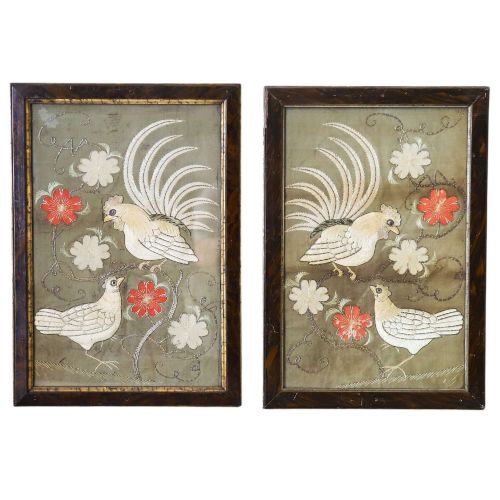
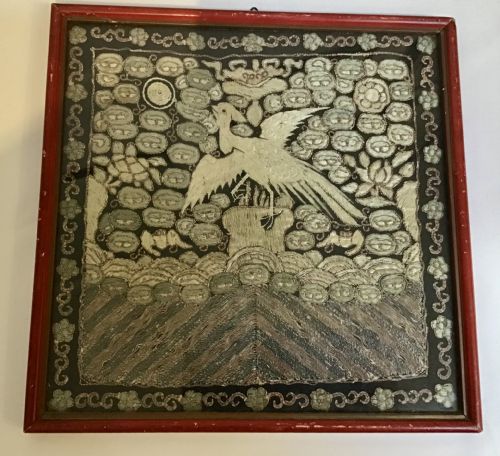
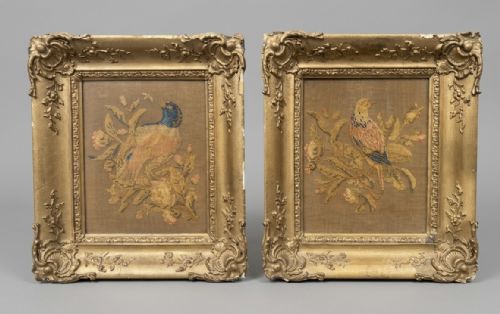
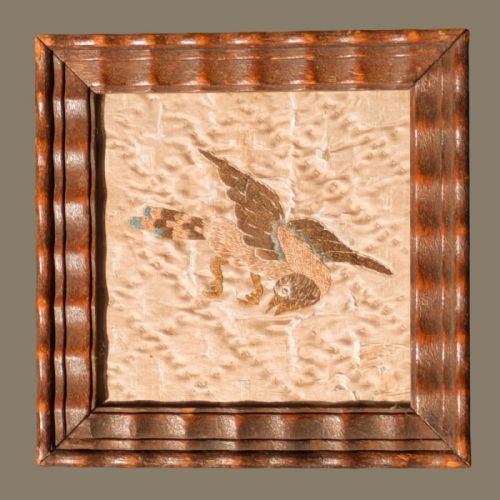
Framed bird embroidery art covers needlework panels created across various periods, featuring avian subjects presented behind glass. Buyers searching this phrase encounter textiles ranging from Victorian wool work and plushwork to Chinese silk rank badges and eighteenth-century examples.
The selection on this page leans heavily toward nineteenth-century British and continental European pieces, alongside Chinese and Japanese silk textiles. Common formats include pairs of cockerels, garden birds, mandarin ducks, and solitary pheasants mounted within wood, gilt, or faux tortoiseshell frames.
Object types span framed textile art, woolies, samplers, and textile panels. Each piece preserves historical needlecraft, capturing birds in flight or static poses using varied stitching techniques.
How they were made
Maker construction relies on natural textiles including silk, wool, linen, and canvas as the base ground. Artisans applied coloured threads, sometimes incorporating metallic thread and gold leaf highlights, to build up detailed plumage and scenery.
Finished embroideries were protected behind glass and housed in wooden frames, occasionally treated with gilt or faux tortoiseshell finishes. These framing choices served to preserve the delicate textile fibres from dust and handling.
Listings feature periods from the Georgian and Victorian eras up to nineteen-hundred, utilising silk, wool, linen, and canvas.
What varies in quality
Quality differences stem from the precision of the needlework and the complexity of the design. Finer pieces demonstrate intricate thread blending, realistic avian anatomy, and well-preserved ground materials without heavy fading.
The calibre of the framing also influences the overall standard of the piece. Period frames that complement the textile, such as original gilt or faux tortoiseshell surrounds, elevate the visual impact of the artwork.
The Framed Bird Embroidery Art Glossary
- Plushwork
- A raised embroidery technique using looped or cut pile stitches to create a tactile, three-dimensional texture. This method often appears in nineteenth-century animal depictions.
- Rank badge
- A square insignia worn on Chinese official robes to denote civil or military status. These embroidered panels are frequently framed as standalone artworks.
- Woolie
- A type of embroidery created by nineteenth-century sailors using coloured wool yarns. These maritime works often feature ships or coastal scenes but share techniques with textile art.
- Sampler
- A piece of needlework demonstrating a maker's proficiency with various stitches and alphabets. They serve as historical records of domestic education and skill.
- Chinoiserie
- A European artistic style reflecting Chinese aesthetic influences. This style appears in decorative motifs applied to textiles and furnishings.
Framed Bird Embroidery Art: Frequently Asked Questions
How old are these embroideries?
The pieces span multiple centuries, with examples originating from the eighteenth, nineteenth, and early twentieth centuries. Victorian and Georgian periods are particularly well represented among the listings.
Specific dates depend on the individual maker and style, ranging from early wool work samplers to later silk panels and rank badges.
What materials were used?
Makers utilised a foundation of silk, wool, linen, or canvas. Fine threads brought the avian subjects to life, sometimes incorporating metallic elements and gold leaf.
Finished works were protected behind glass and mounted within wood, gilt, or faux tortoiseshell frames.
Are they framed?
Yes, the listings comprise framed works designed for wall display. Frames vary from simple wooden surrounds to gilt mouldings and faux tortoiseshell cases.
Glass fronts protect the delicate textile surfaces from environmental damage while allowing clear viewing of the stitches.
What subjects besides birds appear?
While birds remain the primary focus, including pheasants, cockerels, geese, and mandarin ducks, other themes emerge. Examples include royal artillery commemoratives, love samplers, and Chinese rank badges.
Stitchers also incorporated floral elements, landscape backgrounds, and maritime subjects alongside the central avian figures.