





Framed Silk Needlework Picture
A framed silk needlework picture brings historical domestic artistry into a room, capturing centuries of meticulous hand stitching behind glass.
Framed Silk Needlework Picture
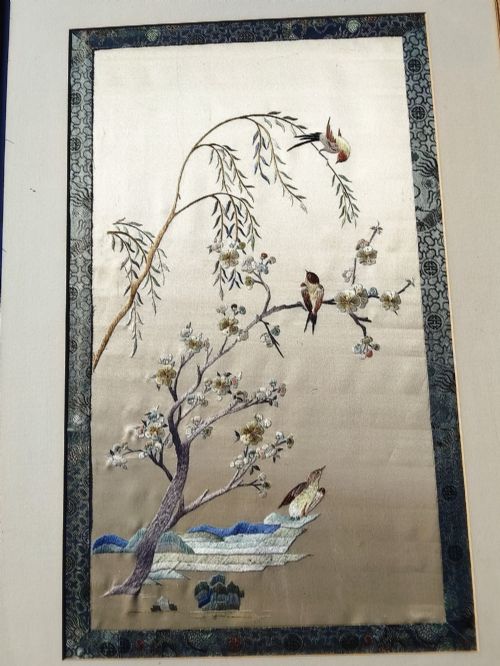
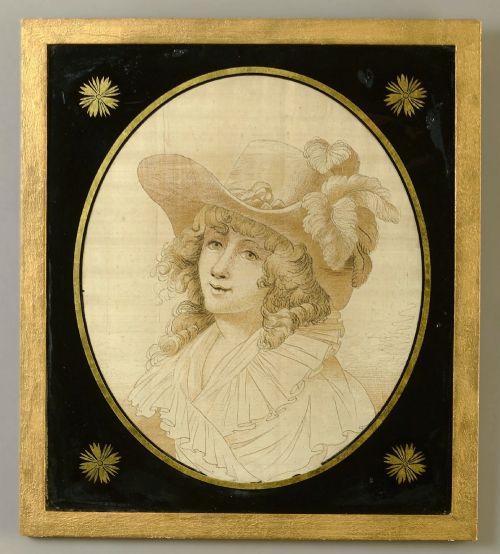
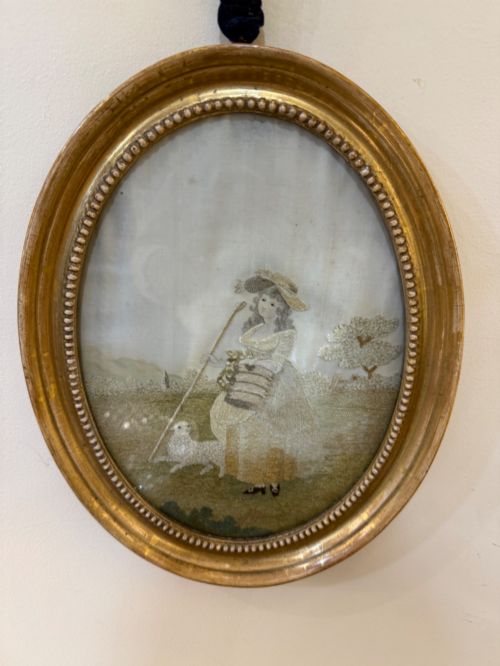
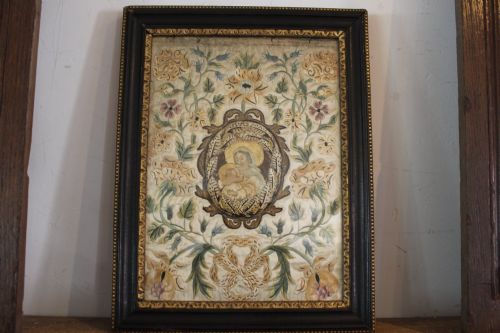
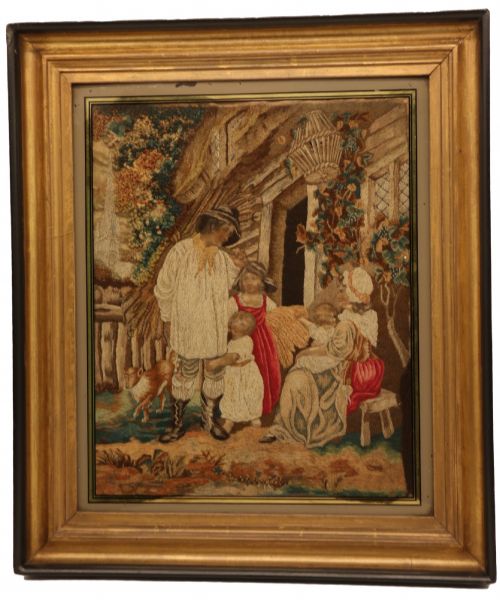
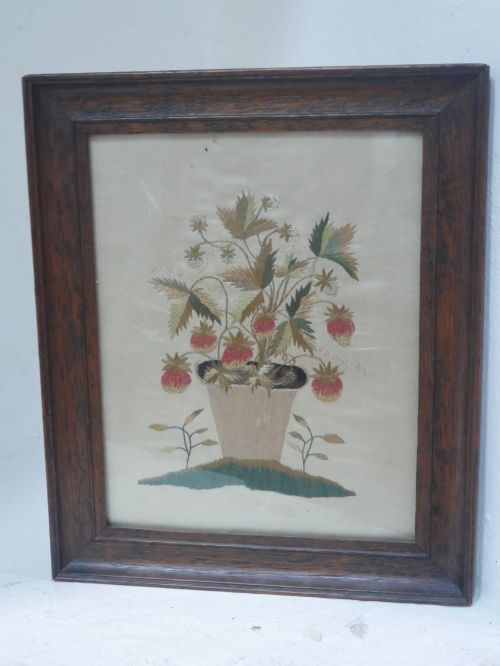
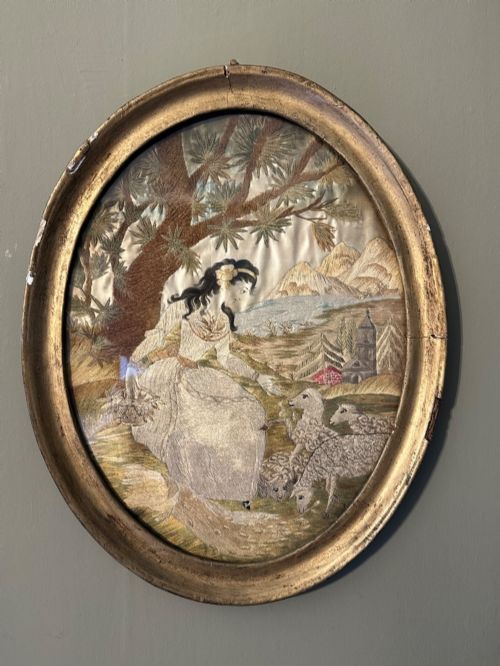
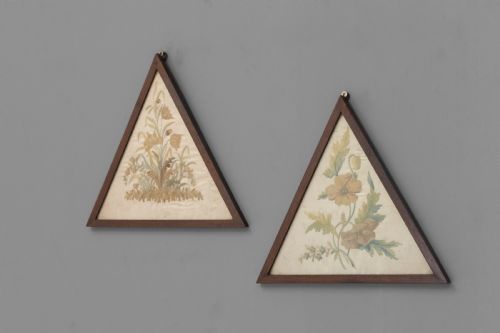
A framed silk needlework picture represents a tradition of decorative textile art preserved behind glass in wood or gilt frames. These works capture subjects ranging from pastoral farming scenes and portraits to biblical figures and botanical studies.
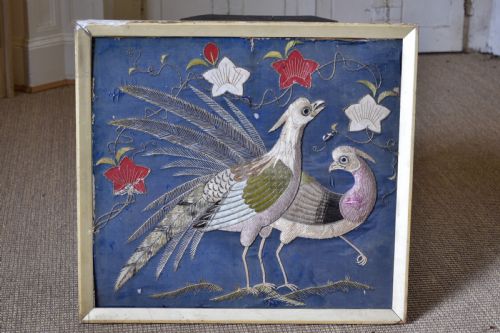
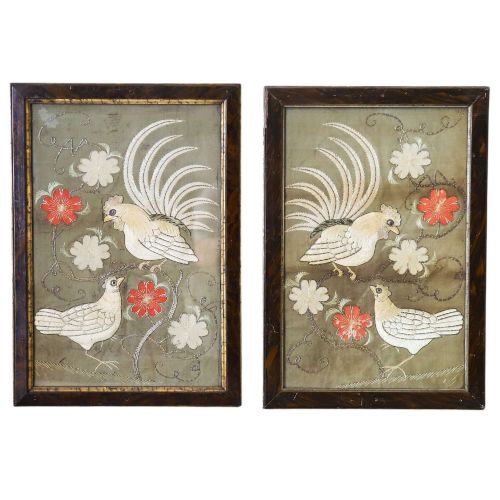
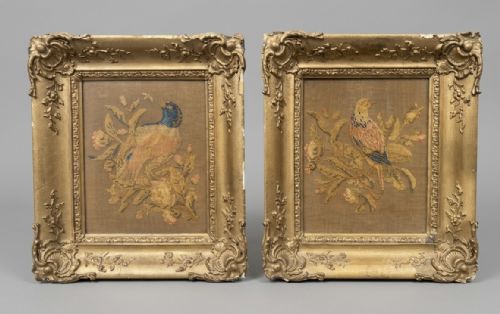
The pieces on this page span several centuries, with nineteenth-century examples and eighteenth-century works appearing frequently alongside seventeenth-century stumpwork panels. Buyers encounter everything from detailed maps and narrative story scenes to symmetrical pairs of birds and cockerels.
Makers utilised various textile forms, including samplers, long stitch panels, and mixed media compositions incorporating hand-painted silk and watercolour details. Each framed artwork preserves the deliberate needle skills of past makers.
What Varies in Quality
The definition and preservation of the original stitches separate standard pieces from superior examples. Skilled shading and complex thread work elevate the visual depth of historical panels.
The originality and condition of the period frame contribute significantly to the overall integrity of the textile. Intricate details such as specialised glass mounts and intact metallic thread elevate the work.
Materials documented across the pieces span silk floss, wool, linen, giltwood frames, and reverse-painted verre églomisé glass.
The Framed Silk Needlework Picture Glossary
- Stumpwork
- A raised embroidery style popular in the seventeenth century that uses padded underlays to create three-dimensional figures and motifs. This technique frequently depicts historical or biblical scenes.
- Verre Églomisé
- A process of applying cold gilding and painting on the reverse side of glass to create a decorative framing border. It often surrounds oval silhouette or pastoral portraits.
- Sampler
- A piece of needlework produced to demonstrate a variety of stitches, alphabets, or motifs. These often record the maker's name and age.
- Silk Floss
- An unspun silk thread used to achieve a smooth, glossy finish in fine needlework pictures. It reflects light differently than standard twisted thread.
Framed Silk Needlework Picture: Frequently Asked Questions
How should I hang a silk needlework picture?
Keep textile art away from direct sunlight to prevent the silk threads and painted details from fading over time. Ambient moisture should also be managed to protect fragile historical fibres.
Ensure the frame hangs securely on a stable wall using appropriate fixings. Professional framing backing helps prevent dust accumulation behind the glass.
What is a verre églomisé frame?
Verre églomisé involves painting and gilding designs onto the reverse side of glass to frame a central artwork. This technique produces a reflective, dark border that frames oval or rectangular pictures.
Historical examples provide a distinct aesthetic that complements eighteenth and nineteenth-century portraits. The glass protects the delicate edges of the needlework panel beneath.
Are these pictures handmade?
Historical needlework pictures were stitched by hand using traditional materials like silk, wool, and linen. Makers utilised specialised embroidery stitches to build complex pictorial compositions.
Individual variations in stitch direction and thread tension confirm the manual execution of each piece. Samplers and narrative panels often record the maker's dedication through detailed execution.