




Silk Thread Wall Art
Silk thread wall art brings historical textile craft into modern interiors through framed panels, embroidered pictures, and tribal hangings.
Silk Thread Wall Art
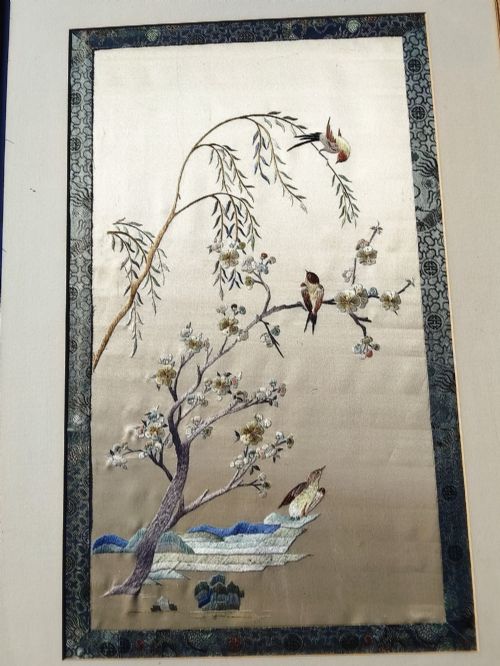
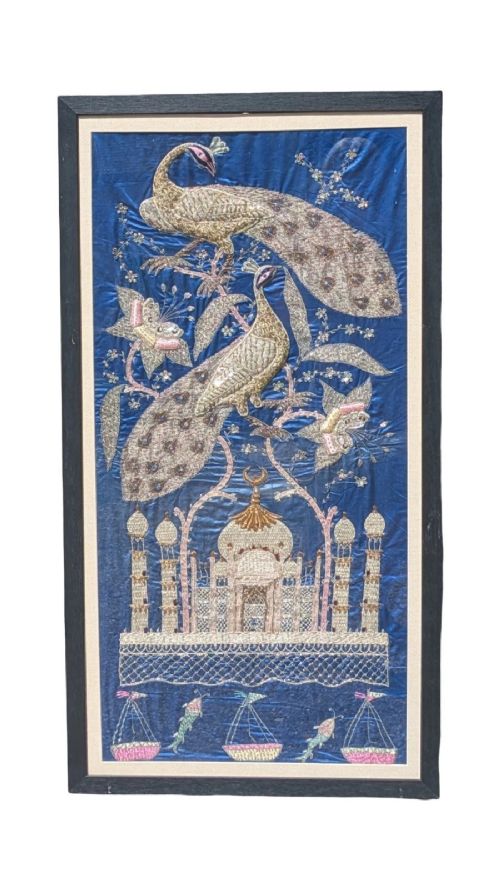
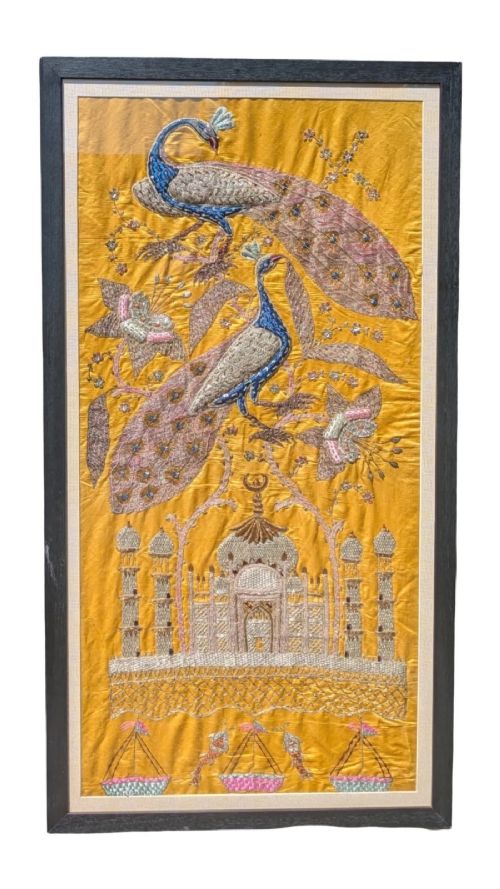
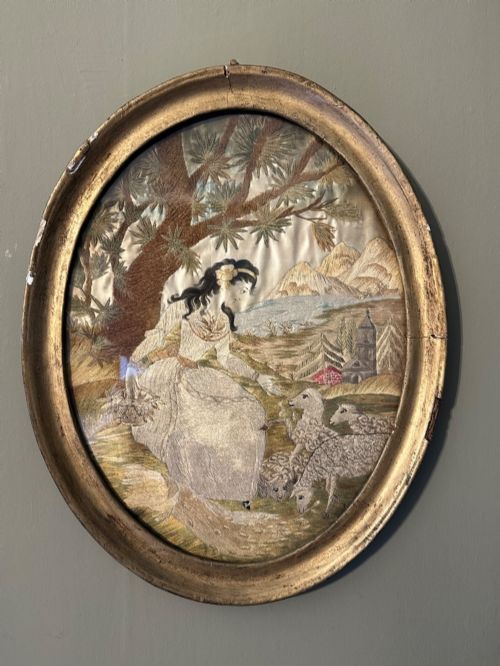
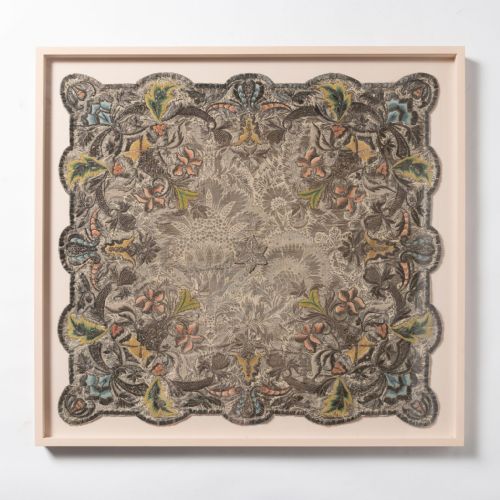
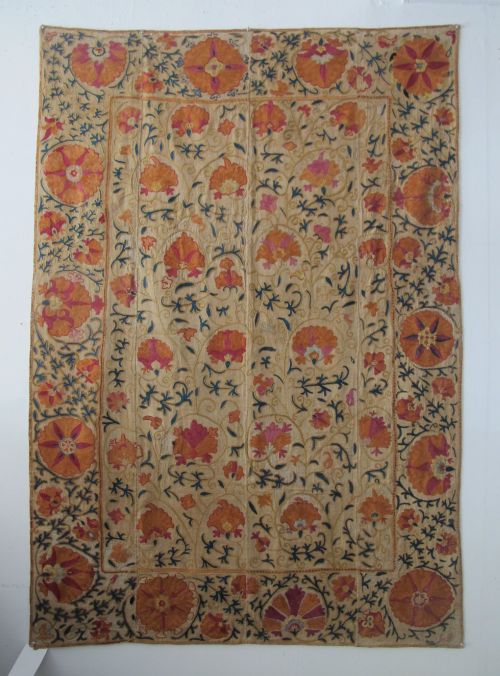
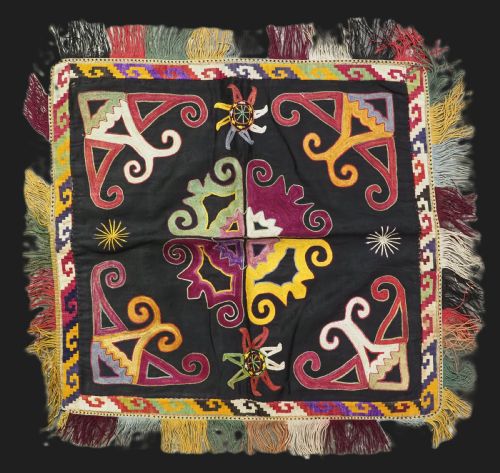
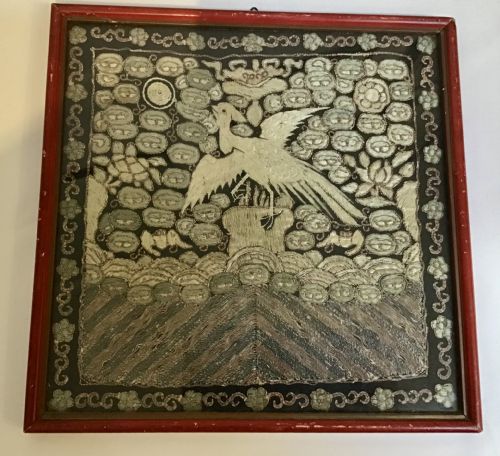
Silk thread wall art encompasses antique textile pieces designed for display, ranging from framed Georgian samplers to large Central Asian suzanis. Buyers searching for silk thread wall art encounter diverse cultural origins, including Indian peacock panels, Chinese rank badges, and Uzbek dowry embroideries.
How they were made
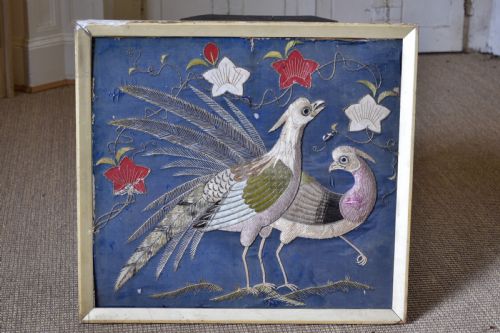
These works rely on needlework techniques executed with silk thread, frequently combined with metallic thread, cotton, or wool onto foundational fabrics like linen, cotton, and felt. Artisans stitched intricate pictorial scenes, geometric motifs, and floral patterns directly onto the backing material.
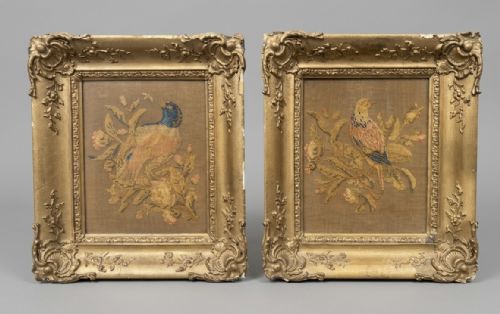
Framing methods vary from simple wood surrounds to ornate gilt frames, occasionally incorporating glass protection to preserve delicate fibres. Many items originate as functional household textiles, dowry components, or costume fragments before conversion into wall display pieces.
Geese in flight and oyster sellers share wall space with majestic tigers and peacocks.
What varies in quality
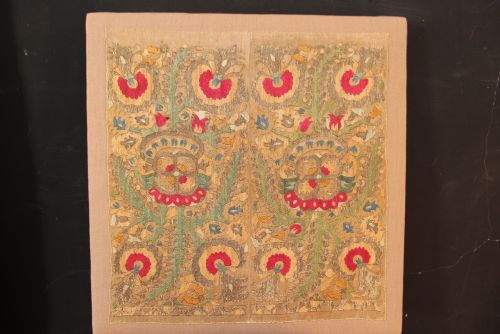
Quality rests upon the density of the stitching, the intricacy of the pictorial design, and the preservation of the original silk threads. Fully embroidered panels, such as Tashkent palak suzanis, demonstrate greater artisan investment than sparse needlework.
The integrity of the backing fabric and the retention of vibrant natural dye colours distinguish superior examples. Age-related wear remains common, but pieces maintaining crisp detail and structural stability command greater appreciation.
The Silk Thread Wall Art Glossary
- Suzani
- A type of embroidered tribal textile from Central Asia, traditionally made by brides as part of their dowry. These large wall hangings feature bold floral and geometric motifs stitched in silk.
- Rank badge
- A square embroidered insignia worn on Chinese official robes to denote civil or military status. These detailed panels are frequently framed for wall display.
- Sampler
- A piece of needlework produced by individuals to demonstrate proficiency in various stitches and alphabets. Georgian examples often include dates, maker names, and pastoral scenes.
- Long stitch
- An embroidery technique utilising elongated stitches to create smooth pictorial effects in silk pictures. This method produces painterly textures common in Regency and Georgian needlework.
- Ilgich
- A specific form of Central Asian embroidery used for wall hangings and domestic decoration. These tribal textiles display distinct regional patterns executed in vibrant threads.
Silk Thread Wall Art: Frequently Asked Questions
How do I hang antique textiles?
Framed pieces under glass hang securely using standard picture wire fixed to wooden or giltwood frames.
Unframed wall hangings like suzanis require professional mounting onto padded boards or subtle fabric casing systems to distribute weight evenly.
Are these pieces framed?
Many items arrive ready for display within period wooden frames, gilt surrounds, or protective glass cases.
Larger Central Asian textiles typically remain unmounted as flexible fabric panels suitable for wall suspension.
How do I clean silk wall art?
Dust accumulation requires gentle removal using a soft brush or low-suction vacuum through a protective mesh screen.
Water and chemical solvents damage delicate silk threads and historic backing fabrics, meaning professional textile conservation is necessary for deep cleaning.
How do I date an embroidery?
Needlework samplers frequently bear stitched names and precise years that simplify attribution.
Stylistic conventions, regional stitching techniques, and material analysis help establish timelines for pieces lacking explicit dates.