
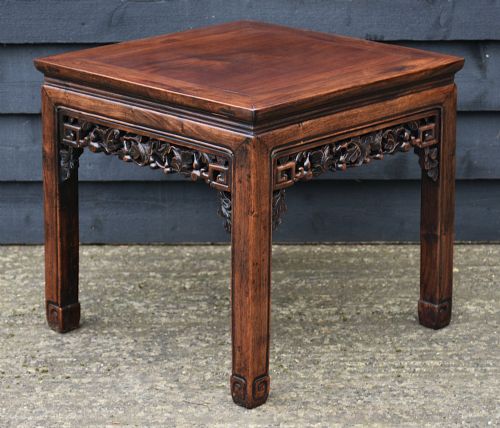
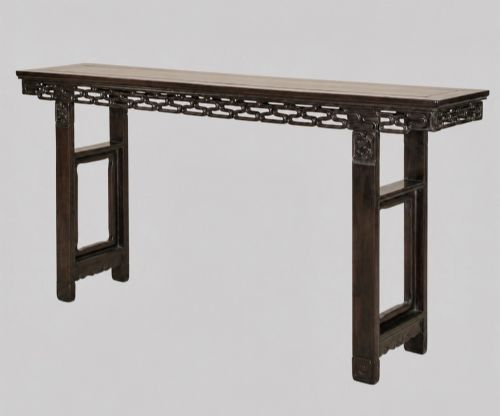
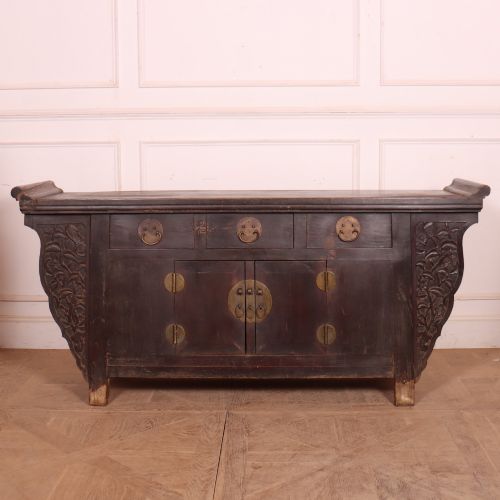
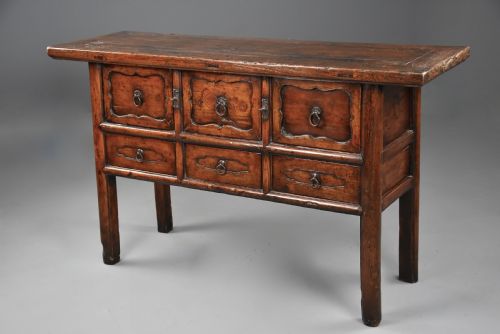
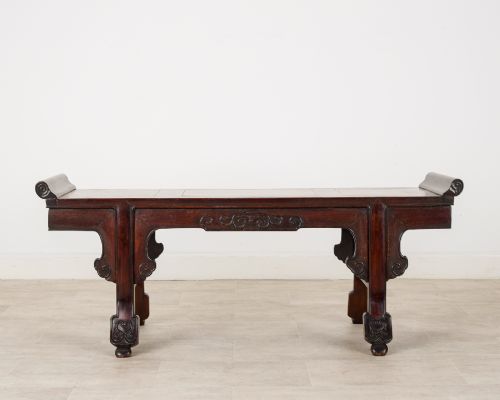
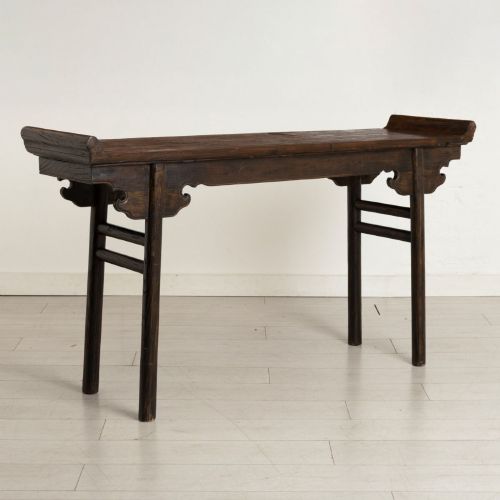
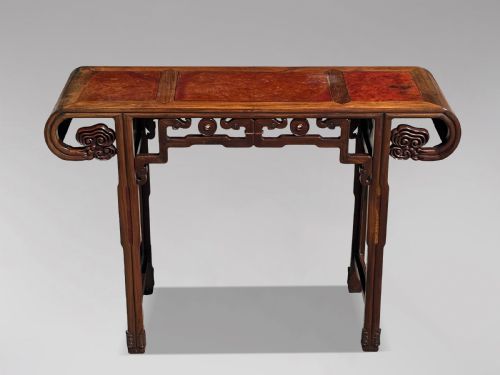
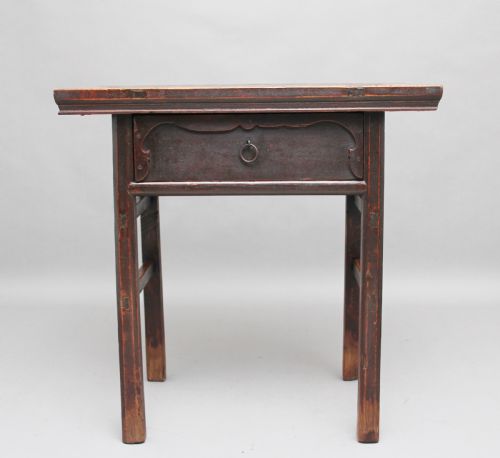


Qing Carved Altar Table
A qing carved altar table brings striking architectural presence and deep cultural history into a modern room.
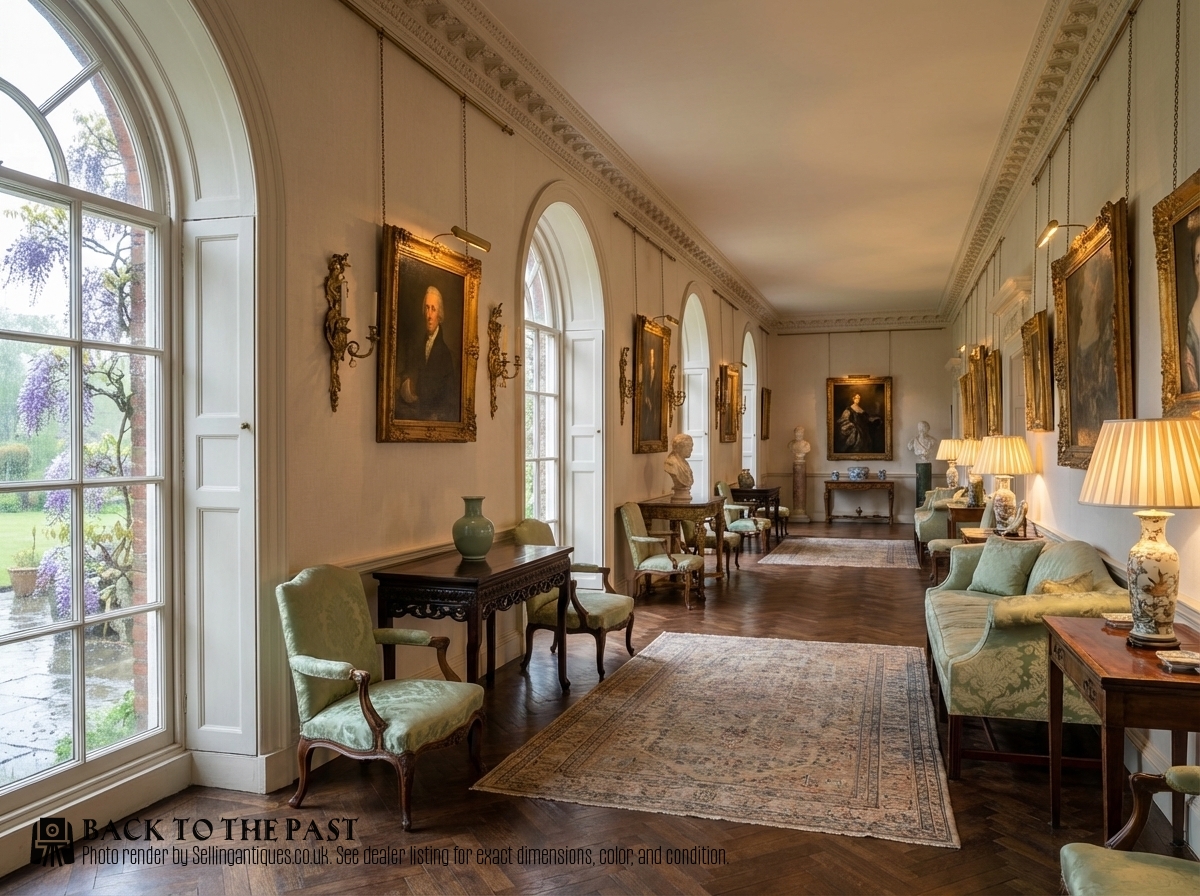
Qing Carved Altar Table
A qing carved altar table stands as a testament to traditional Chinese furniture design, originating primarily from the nineteenth century and earlier periods. These surfaces typically served ceremonial or domestic functions within homes and temples, often doubling as console tables or administrative desks.
Buyers encountering this selection will find pieces ranging from grand hongmu and rosewood examples to rustic elm and lacquered timber variants. Forms extend beyond standard tables to include low benches, sideboards, and scroll-ended variations designed for specific interior placements.
The aesthetic bridges formal Qing Dynasty aesthetics with provincial interpretations, showcasing rectangular proportions, inset marble panels, and structured framing. Each piece carries the distinct hallmarks of Chinese traditional woodworking passed down through generations.
Materials and Construction Techniques
Carpenters utilised dense hardwoods such as hongmu and rosewood alongside resilient domestic timbers like elm for structural integrity. Selected woods provided the necessary strength to support intricate joinery without relying on metal fixings.
Surfaces frequently received applications of red lacquer or detailed hand-carved motifs reflecting traditional Qing Dynasty design. Brass fittings and inset rouge marble panels occasionally completed the construction, adding textural contrast to the timber frames.
Certain elm tables retain traces of ancient lacquer hidden beneath centuries of dry wax, whispering secrets of forgotten tea ceremonies.
Distinctions in Quality
The hierarchy of quality rests primarily on the choice of timber and the precision of the carved detailing. Dense hardwoods like hongmu command greater attention than softer elm variants due to their durability and capacity to hold crisp, sculptural relief.
Proportion and integrity of the original surface finish dictate the standing of a piece within the market. Tables retaining deep patination and intact structural joinery demonstrate superior craftsmanship compared to heavily restored examples.
The Qing Carved Altar Table Glossary
- Hongmu
- A dense, dark tropical hardwood valued for its durability and rich natural grain. It frequently appears in formal Qing Dynasty furniture.
- Altar table
- A traditional Chinese table featuring an elevated rectangular surface, often with upturned ends or flange details. These pieces originated for ceremonial use before transitioning to domestic settings.
- Kang table
- A low miniature table traditionally placed on a heated brick bed for dining or writing. The form often mirrors the proportions of larger altar tables.
- Patina
- The surface sheen and coloration developed through age, handling, and use over centuries. A good patina indicates genuine historic wear rather than artificial distress.
- Elm
- A resilient domestic timber utilised in provincial Chinese cabinet-making. It provides a distinct fibrous grain suited to rustic tables and sideboards.
Qing Carved Altar Table: Frequently Asked Questions
How were altar tables used originally?
These tables originally held ritual objects, ancestral tablets, or decorative items within the main rooms of traditional Chinese homes. They occupied prominent positions against walls or in domestic halls.
Over time, their sculptural qualities made them desirable for general display and administrative writing tasks within scholar studios.
What wood is best for an altar table?
Hardwoods such as hongmu and rosewood represent the highest standard of material used in Qing furniture construction. They offer superior weight, rich natural colour, and longevity.
Elm provides a more provincial alternative, offering distinct grain patterns and robust utility for rustic interiors.
How do I date a Qing altar table?
Dating relies on examining the timber species, joinery methods, wear patterns, and stylistic details associated with the Qing Dynasty. Nineteenth-century examples often exhibit specific hand-carved motifs and traditional joinery.
Archival comparisons with dated pieces help confirm whether a table originates from the late nineteenth or early twentieth century.
Where should I place an altar table at home?
An altar table suits entrance halls, living spaces, or dining rooms functioning as a narrow console or side table. Its linear profile allows it to sit flat against a wall without dominating the room.
Placing lamps, ceramics, or books upon the surface highlights the traditional proportions and carved woodwork.