




Qashqai Medallion Rug
A qashqai medallion rug brings the rich nomadic heritage of south-west Persia directly into a room through geometric design and enduring wool.
Qashqai Medallion Rug
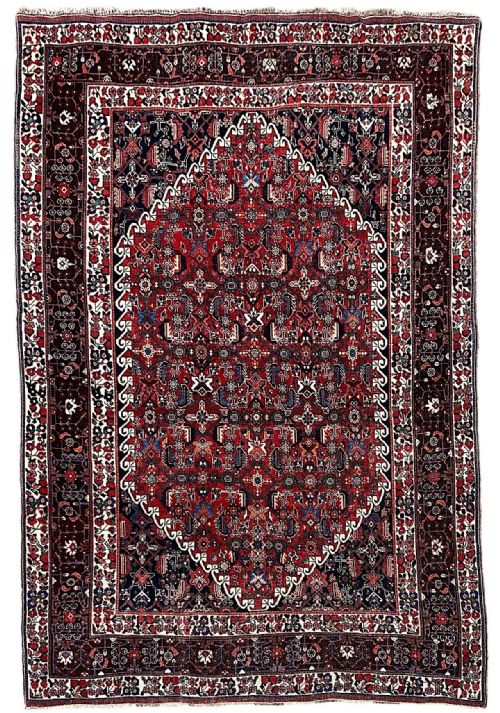
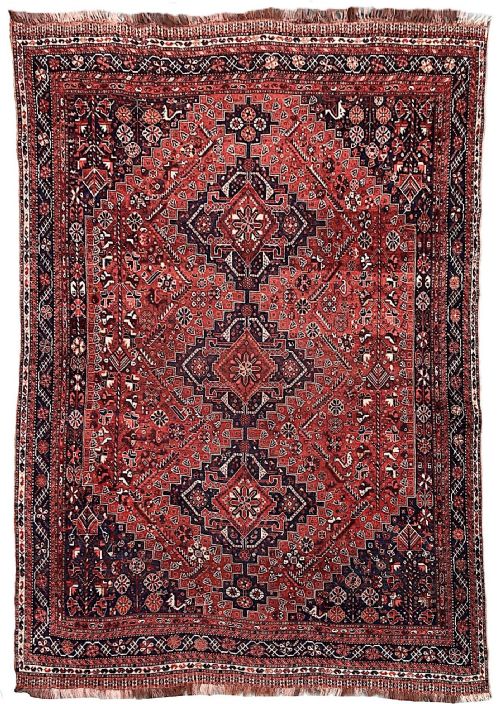
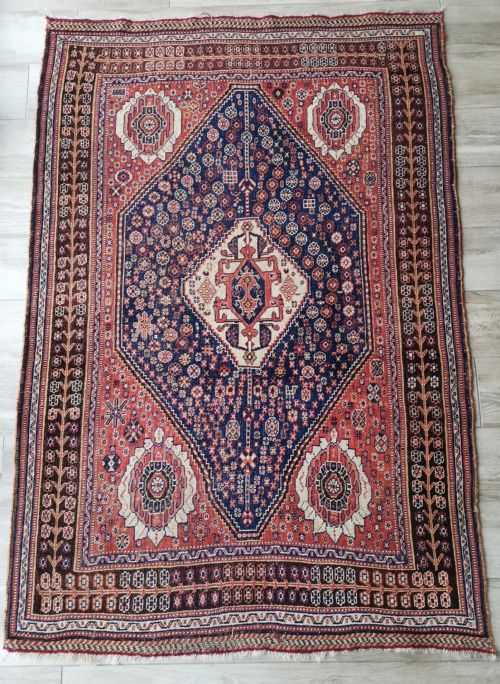
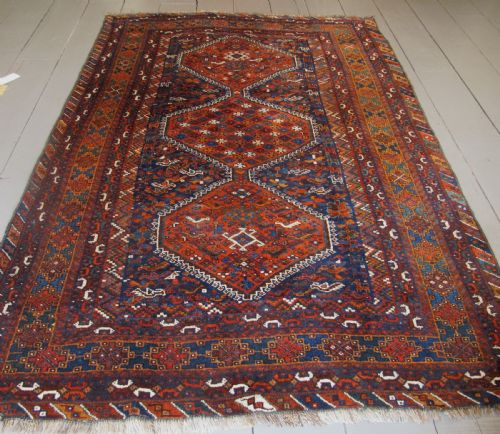
When searching for a qashqai medallion rug, collectors encounter tribal floor coverings originating from the Fars province of Persia. The selection spans the nineteenth and early twentieth centuries, encompassing smaller formats alongside larger main carpets.
The versions most commonly met on this page are hand-knotted tribal pieces bearing single, triple, or repeat medallions. These range from intimate bag faces to room-sized carpets woven by nomadic and village weavers.
How they were made
The pieces recorded in the evidence utilise natural dyes applied to wool pile structures, frequently set upon cotton foundations. Weavers knotted these materials by hand to produce dense, durable surfaces capable of withstanding generations of use.
Nomadic workshops employed traditional techniques passed through generations, incorporating local animal hair and plant extracts. This method resulted in varied pile depths and distinct regional styling unique to south-west Persian weavers.
Qashqai Medallion Rug Retail Price Guide 2026
Typical asking prices for qashqai medallion rug among the pieces listed under this phrase on Sellingantiques today, from the lower quarter to the upper quarter. They describe what is for sale here now, not the wider market.
Listings span the nineteenth and early twentieth centuries, featuring wool pile construction on cotton foundations with natural dyes.
What varies in quality
Quality in these floor coverings rests upon the saturation and subtlety of the natural dyes, alongside the precision of the tribal motifs. Superior examples display harmonious colour palettes and finely rendered geometric patterns.
The integrity of the wool pile and the tightness of the knotting further distinguish finer specimens from standard utility weaves. Condition and structural preservation ultimately separate the ordinary from the exceptional.
The Qashqai Medallion Rug Glossary
- Medallion
- A central ornamental motif placed in the field of a rug. It anchors the geometric composition of nomadic weaving.
- Gabbeh
- A coarsely knotted, thick-piled tribal rug with minimal design. These pieces often showcase large areas of unadorned dyed wool.
- Khamseh
- A confederation of Persian tribes producing textiles related to Qashqai work. Their rugs frequently share similar border systems and animal motifs.
- Shiraz
- A major trading town in south-west Persia that marketed tribal rugs from the surrounding region. Many pieces from the area take this broader geographical attribution.
- Kashkuli
- A sub-tribe of the Qashqai known for producing finely knotted textiles with particularly smooth wool. Collectors prize these for their delicate handling of traditional designs.
Qashqai Medallion Rug: Frequently Asked Questions
What is a qashqai medallion rug?
It is a hand-knotted tribal textile originating from south-west Persia, characterised by geometric central motifs. These pieces reflect the artistic traditions of nomadic weavers.
They serve as decorative floor coverings or wall hangings, bringing historical depth and warmth into domestic spaces.
How do I care for an antique rug?
Protect the natural wool pile by avoiding direct harsh sunlight and placing a suitable underlay beneath the piece. Regular gentle vacuuming without a beater bar maintains the fibre integrity.
Professional cleaning should occur only when necessary, utilising specialists experienced in antique Persian textiles.
How do I date these carpets?
Dating relies on examining the natural dye palette, wool quality, and structural characteristics such as selvedges and end finishes. Nineteenth-century examples often exhibit softer tones and finer handling.
Comparing motif execution against established regional styles helps narrow the period of origin within the late nineteenth to early twentieth centuries.
What motifs appear on these rugs?
Designs commonly feature central medallions flanked by stylised peacocks, chickens, and geometric tribal symbols. Borders often incorporate the Shekarlu pattern and repeated hooked figures.
These elements tell visual stories rooted in the daily lives and natural surroundings of the nomadic creators.