






Putti Ormolu Candlesticks
Putti ormolu candlesticks bring sculptural bronze figures and gleaming gilded metal together to hold light, capturing the theatrical elegance of nineteenth-century French interiors.
Putti Ormolu Candlesticks
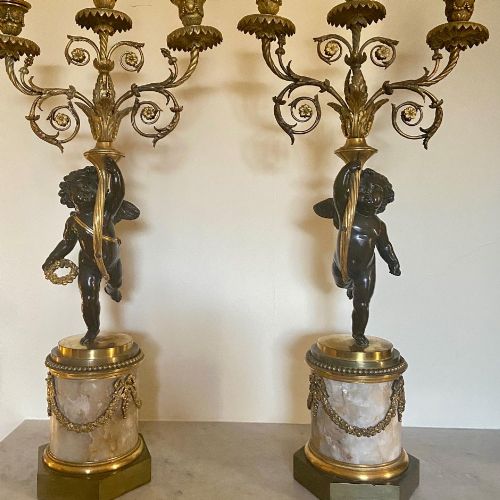
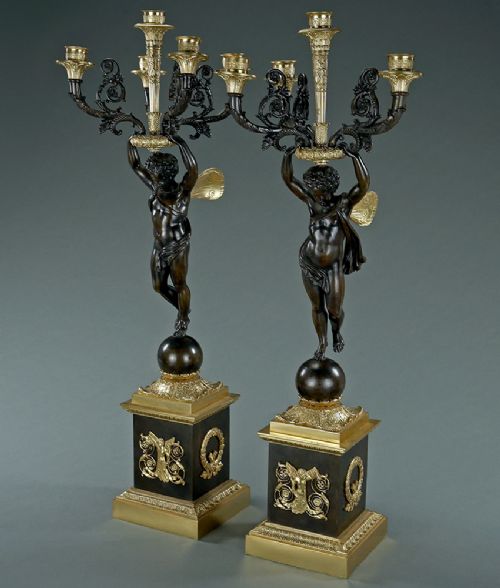
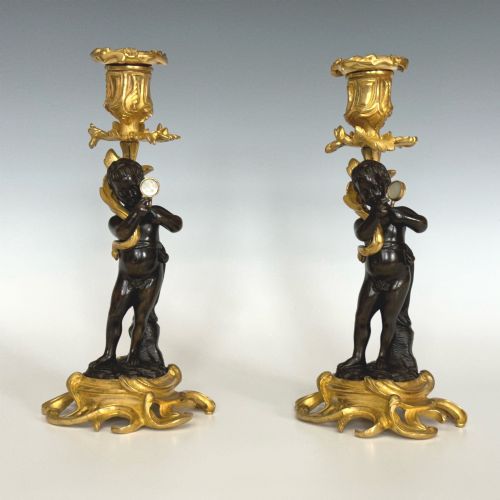
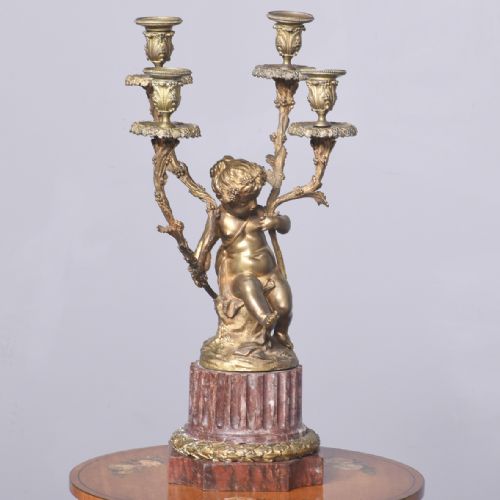
Putti ormolu candlesticks present winged cherubs or children cast in bronze, frequently supporting candle branches or standing upon elaborate plinths. When searching for putti ormolu candlesticks, collectors generally encounter pairs originating from nineteenth-century France, spanning the Regency, Victorian, and Napoleon III eras.
The designs draw heavily upon French Rococo Revival, Louis XVI style, and French Empire aesthetics, reflecting classical motifs and exuberant ornamentation. These pieces function both as functional lighting and as decorative sculpture for mantelpieces and tables.
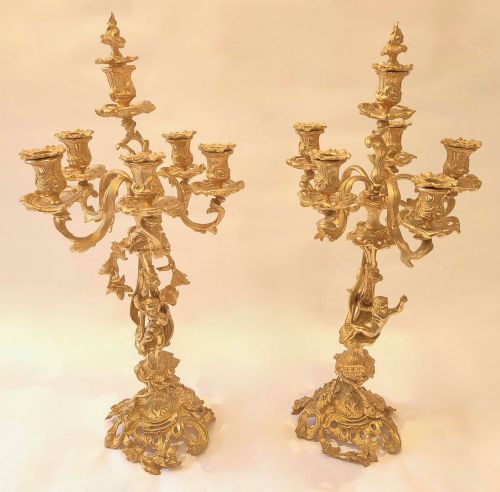
Most examples combine gilded and patinated surfaces to create visual depth, often pairing the metal figures with contrasting bases made of marble or fluorspar. The forms range from single desk candlesticks to large multi-arm candelabra accommodating several candles.
Materials and Construction
The manufacture of these objects relies primarily on bronze casting, utilising both patinated dark bronze and gilded ormolu finishes. Ormolu, or ground gold applied to bronze through mercury amalgamation or electrogilding, provides the bright, durable golden highlights characteristic of the style.
Sculptural figures of cherubs are cast in sections, chased with fine detail to render hair and wings, and assembled alongside turned metal stems and nozzles. Bases frequently incorporate heavy natural materials such as marble or fluorspar to anchor the weight of the bronzework.
Listings feature 19th-century French pieces in styles including Louis XVI, Empire, and Rococo Revival, incorporating marble and silk elements.
Distinctions in Quality
Francois Redmond·Claude Clodion
The Putti Ormolu Candlesticks Glossary
- Ormolu
- Gilded bronze, produced by applying an amalgam of gold and mercury to a bronze base and heating it. This technique gives the metal its bright golden surface.
- Putti
- Plural of putto, representing plump, winged male infants or cherubs derived from classical art. They appear frequently in Renaissance and nineteenth-century decorative schemes.
- Patinated Bronze
- Bronze treated with chemical solutions to darken its surface into deep browns or greens. This dark finish provides contrast against the brightness of ormolu.
- Candelabra
- A branched candlestick holding multiple candles. These pieces often feature removable arms to convert into single sticks.
- Fluorspar
- A colourful mineral occasionally used for the bases of decorative objects. Its crystalline structure offers unique banding and coloration beneath the bronze mounts.
Putti Ormolu Candlesticks: Frequently Asked Questions
How do I clean ormolu safely?
Dust gently with a soft, dry cloth to prevent the accumulation of dirt within the chased details.
Avoid commercial metal polishes, abrasive cloths, and water, as these substances can strip the delicate gold layer from the bronze beneath.
Are these pieces wired for electricity?
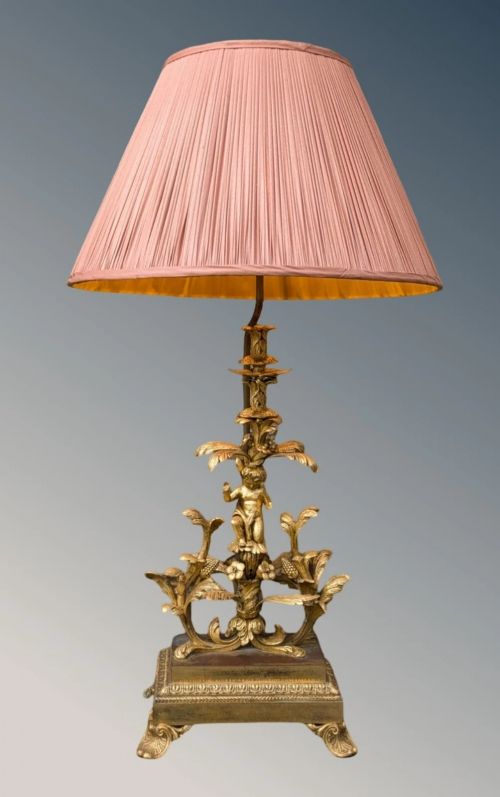
Most historic examples retain their original configuration designed strictly for wax candles. Some have been converted into table lamps over time through professional wiring.
Collectors often prefer unaltered pieces that preserve the original candle nozzles and drip pans.
How can I identify nineteenth-century French work?
Look for the characteristic weight of cast bronze combined with hand-chased surface details and fire-gilded ormolu. The stylistic vocabulary typically draws on Louis XVI revival or Napoleon III design.
Base materials like veined marble and the specific patination on the bronze figures offer further clues to their period of origin.
Where should I place these in a room?
These decorative objects work well as symmetrical pairs upon mantelpieces, sideboards, or large entry tables. Their reflective surfaces catch natural and artificial light effectively.
Keep them away from direct heat sources and excessive moisture to protect the fragile gilded and patinated finishes.